Sunday, 28 February 2021

Jan de Jong's Birthday and Legacy

Jan de Jong OAM 9th Dan would have been 100 years old on 6 February 2021, as we were reminded by various posts on Facebook. This got me thinking about the last time I saw JDJ.

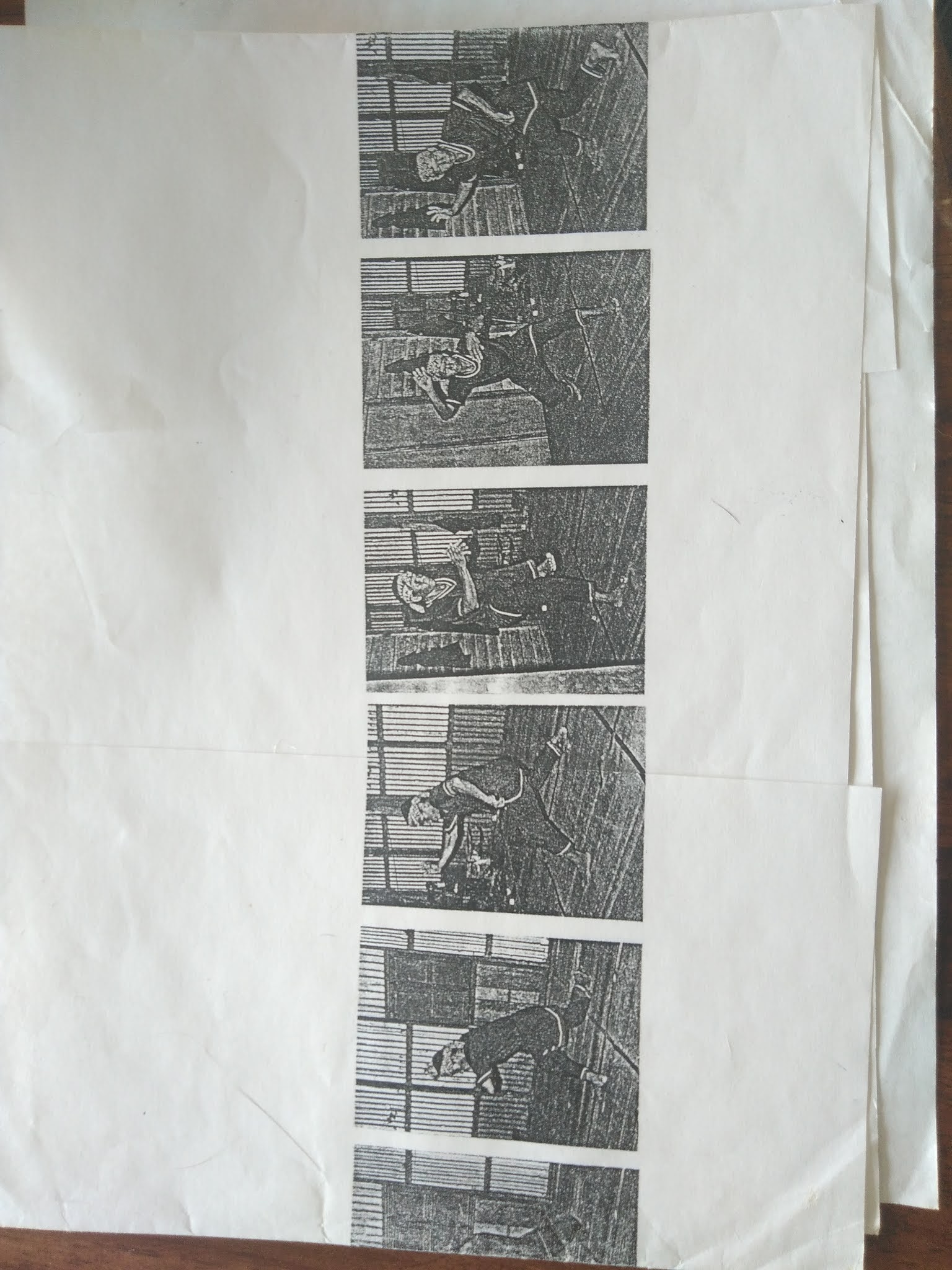
I visited JDJ about three weeks before he passed away. As always it was a meeting of minds. During our time together, JDJ gave me a scroll. Martial arts tragics might be thinking, 'scroll', the anointed one! No. It was a series of photographs photocopied from a book for a kembagan (kata) that JDJ wanted me to learn and teach to the pencak silat instructors class. There is a lot more to that seemingly simple gesture than meets the eye.

JDJ developed the entire jujutsu (aikido and pencak silat) grading system that he used in his school. A feature of that development was that JDJ COLLECTED techniques/defences. He added to his teachings, all the way up until his passing. He was Dutch; they collect things.

The scroll is an addition to his pencak silat teachings. Before that, a host of dasar etc were added to his silat teachings. They were added because of a Dutch book on Seita Hati pencak silat that I gave to him. JDJ included me in the pencak silat instructors class when he was introducing those dasar because he knew that (a) I had studied those dasar in the book, and (b) I had trained in that 'style' of pencak silat while I was living in London and in my travels in Europe. Now he wanted to introduce a new kembangan based on that 'style' of pencak silat.

In like fashion, JDJ did some 'training' with me during our last time together. He was showing me the miji gyaku (?) defences that he was 'developing' and teaching to the jujutsu instructors class. Unbeknown to the class, (a) the defences were taken from a book by Bruce Tegner that I'd given to JDJ (Tegner having been a student of Mochizuki), and (b) that JDJ studied with the aid of Adrian Dobson and Keith Hickey for months with early morning training sessions. Adrian had hours, literally hundreds of hours, of video of these training sessions that JDJ engaged in with them in order to understand these defences before they were introduced to the jujutsu instructors/black belt class.

 JDJ developed an amazing grading system, but, we don't need another JDJ. We don't need another JDJ that finds more and more techniques and defences to be added to his teachings. What we need is a JDJ that focuses on refinement. That seeks to find a 'system' rather than a collection of 'tricks', as a collection of unrelated techniques is.

Some are teaching what JDJ taught (to varying degrees). Some are tinkering around the edges. One has eliminated the mon system that JDJ introduced based on his Yoseikan experience. That person said he did so in order to get back to the 'original' Tsutsumi Hozan ryu jujutsu. That person is seriously deluded and is only interested in trying to associated themselves with a samurai warrior tradition that may not exist. One person - one person has attempted a serious revision. I may not agree with the revision process but I do applaud their attempt at using what JDJ developed to develop something better.


Tuesday, 20 October 2020

Shodan Requirement: The History of Jujutsu


One of the gradings for shodan in the Jan de Jong jujutsu grading system involves an essay on the history of jujutsu. The idea behind this grading is that an instructor should be able to explain what jujutsu is to others. Does this grading achieve that objective? No.

When I started writing my now shelved book on the jujutsu taught by JDJ, the first chapter was devoted to explaining jujutsu. After many failed attempts, I finally adopted the late and great Donn F. Dreager's approach to explaining jujutsu. He always explained jujutsu in terms of the generic nature of the term, its technical content and history, and the practical application of the philosophical concept of ju. This provides a complete explanation and understanding of jujutsu.

To paraphrase the advertising phrase of the now defunct international accounting firm, Andersons, 'not all jujutsu is the same.' In Legacies of the Sword, Friday explains the importance of understanding the generic nature of a term:

Analysing and explaining the bugei in generic terms is a bit like conceptualising world history, world literature, or world religion in similar fashion. Standing back far enough to examine the phenomenon in toto permits one to describe its outlines, but seeking deeper insights about its essence forces one to grapple with a volume of diversity and detail that quickly becomes overwhelming.

To provide a deeper understanding of jujutsu it is useful to use the 'core of all learning.' The core of all learning is the identification of similarities and differences. There are four proven highly effective ways of identifying similarities and differences: comparison, classification, creating metaphors, and creating analogies. More can be learned about jujutsu by comparing it to different jujutsu systems (see above re the generic nature of the term) and to different martial arts.

The technical content of jujutsu exceeds that of the striking based marital arts. The technical content of striking based martial arts is primarily comprised of percussion techniques, however, jujutsu emphasises those techniques along with throwing, takedown, joint-locking, strangulation, nerve-point, unbalancing, and breakfalling techniques. Friday provides an explanation for this difference in terms of the core of all learning:

To be sure, all such 'martial arts' as forms of single combat, share some commonality of function - but then, so do Chinese t'ai chi ch'uan and U.S. Air Force fighter tactics. They also, as arts developed in neighbouring countries through which individuals - and armies - regularly traveled back and forth, show some degree of cross influence and even some common vocabulary. But the historical purposes they served, and the statuses they assumed in their respective cultures diverged in fundamental ways.

Chinese, Korean, and Okinawan boxing arts represent an independent tradition from the battlefield disciplines developed by Chinese and Korean armies. The latter were warrior arts in the strict sense of the term, but the former had multiple, overlapping personalities: part self-defence, part competitive sport, part performance art, and part regimen for promoting physiological health and longevity. The traditional warrior arts became extinct when modern weapons rendered swords, spears, and halberds obsolete, but the boxing forms survive and prosper. Japan, however, had no counterpart to Chinese boxing - at least not until modern times. The bugei practiced in Japan today descend directly from arts developed for the battlefield. Furthermore, until modern times the Japanese fighting arts were more or less the exclusive property of the samurai, the ruling class throughout the period in which the disciplines matured. Chinese, Okinawan, and Korean boxing forms, by contrast, were created by tradesmen, peasants, ascetics, entertainers, monks, rebels, bandits, and other political have-nots. And, as we shall see later in this study, the special character and status of the Japanese bugei emerged precisely because of their ancestry and parentage.

This conveniently leads into Dreager's third element when explaining jujutsu - history. History looks at the past. What is important in the past that needs to be included when explaining the history of jujutsu? That is a question that I continually came across when attempting to write the abovementioned chapter in the abovementioned book. Eventually I adopted an 'evolutionary' approach. An evolutionary approach looks at the same period as a historical approach but with a clear focus on functionality. The focus is clearly on using the past to explain the present. Why is jujutsu what it is today? What shaped jujutsu? Why is it different to other martial arts? Why is the jujutsu taught by JDJ different to Brazilian Ju Jitsu? These questions are answered directly by adopting an evolutionary approach to explain phenomena of today, in this case jujutsu.

The last of Dreager's elements in explaining jujutsu is the practical application of the principle of ju. All other Japanese martial arts are named after the weapon employed, e.g., kenjutsu (sword art). Jujutsu is named after a philisophical principle. You could argue a tactical principle. The point is to include this element in the explanation of jujutsu for a complete understanding of the subject.

Here I warn against the tendency to 'shoehorn.' Forcing something fit. That was a common feature at the Jan de Jong Self Defence School when using theory to explain practice and when explaining the history or origins of what we teach. Do not shoehorn! Adopt Klein's approach to gaining insight which produces a new and better understanding that transforms the way we understand, think, feel, behave, and want. Ask, 'What's going on here?' when theory and practice do not fit, and then go in search of an answer. No a shoehorn answer but a real answer.

JDJ's grading sheets included recommended texts for his history examination. This is in serious need of updating. Included would be any and all works by Dreager on the Japanese martial arts. Friday (see above) of course. Cameron Hurst III's The Armed Martial Arts of Japan. I am eagerly awaiting his promised follow up text, The Unarmed Martial Arts of Japan. Serge Mol's Classical Fighting Arts of Japan: A Complete Guide to Koryu Jujutsu. In that book, Mol refers to Tsutsumi Ryu and Tsutsumi Hozan Ryu as separate schools and how there are no extant schools of those systems. This is a subject that an instructor following the JDJ tradition should be able to address in an informed and authoritative manner (no shoehorning).

The Classical Warrior Traditions of Japan book series edited by Diane Skoss are also a must read. Nothing by Stephen Turnbull. His samurai history is not samurai history as so much the use of the war tales written hundreds of years after the events they purport to describe.

There is also Giving Up the Gun by Noel Perrin, however, read it with an understanding of the concept of speciation in evolutionary theory. This small book, along with the aforementioned knowledge, supports Friday's explanation of the uniqueness of the Japanese warrior/martial arts.

Finally, William W. Farris's Heavenly Warriors: The Evolution of Japan's Military, 500-1300 and in particular his explanation of the principle of counter response and symmetry. There is an evolutionary ring to that principle that helps explain the continued evolution of all fighting arts. Much of Friday's work on the bugei fits into this discussion.

As I've written in previous posts, JDJ did an amazing job in developing his grading system which is far more comprehensive then any that I have seen, however, it was also only a first attempt. We can build on his work by studying his work and improving on it. We can see further than JDJ by standing on the shoulder's of the giant that he was/is.

Monday, 14 September 2020

Life in the Dutch Underground

 Followers of the blog will know that I've shared posts concerning Jan de Jong's experience in Holland during WWII and those of the remarkable Hannie Schaft, and Freddie and Truss Oversteegen. I came across a blog that studies these times in this place.

Outbursts of defiant behavior soon became commonplace as stricter laws were imposed in regard to civil disobedience. One of many such incidents occurred when John was attending a martial arts class in Leiden. To a man, the students were intensely anti-Nazi, as evidenced by the following blow-up on a busy city street in broad daylight.

 Kapteyn:  “On the last day I attended this course, one of the students – who was also the teacher’s assistant – came running into the building all out of breath and told us to get out, shouting:  ‘And don’t come back!’  He’d been outside walking with the teacher some blocks away. The teacher was notoriously short-tempered, and when two German soldiers approached from the opposite direction, a sidewalk collision was barely avoided. The soldiers roughly pushed their opponents aside – at which point the teacher, a Jiu-Jitsu expert — angrily grabbed one of the soldiers and tossed him over his shoulder onto the pavement.  Without hesitation, the second soldier drew his revolver and shot the teacher dead.  His assistant escaped and came running to tell us the Germans might show up at any moment.  As the entire class fled out the back door, one of the students grabbed the enrollment records containing the names and addresses of everyone in the class  – quick thinking on his part.”

Go here to read the entire post and other posts on that blog.

Monday, 17 August 2020

K. Saito

 This is a photo that was recently posted on the Facebook page of a school that was founded by a student of an instructor of Jan de Jong's who founded his own school after JDJ passed away.

The caption to the above photo posted on the abovementioned Facebook page read: 'Possibly K.Saito, in this Photo. Instructor of Master Jan de Jong.'

Oral history tells us that JDJ was originally instructed by 'the Saito brothers' - S. Saito (8th dan) and K. Saito (7th Dan). 

Why is the K. Saito in the photo possibly the instructor of JDJ? Is it because he's Japanese and is in a martial arts outfit?

Saito is apparently the 20th most common name in Japan!

I understand that the martial arts is a bastion of anti-intellectualism, but please, at least apply a modicum of intellectual effort.

The person who posted this photo would not appear to have the faintest idea where the photo came from or even what era it came from. Thank God there was a Western person in the photo to possibly narrow the era down to, what, late 1800s-early 1900s. If he wasn't there, would this still possibly be K. Saito, the instructor of JDJ?

The photo is included in Jiu-Jitsu Tricks: The Secret Science of the Japanese Against Which Weight and Strength Does Not Count, K. Saito, New York: R.F. Fox, 1905. There is no information in that book about the author - K. Saito. In fact, given the time and that R.F. Fox published a number of articles and books about jujutsu at that time, one could question the 'authorship' of K. Saito.

I tried to inform the abovementioned Facebook party that the K. Saito they were referring to was not JDJ's instructor. How do I know for certain? Because JDJ told me so himself. He had a copy of the abovementioned book and when I raised it with him, he brought it out of his library and told me that that K. Saito was not his instructor. The aforementioned Facebook party deleted that comment as it would not appear to support their efforts of establishing credibility through dubious means. They were also the ones misappropriating images from this blog to promote themselves and their school. A subject of a post that I have subsequently deleted when they 'saw sense' and deleted their misappropriated images. No need to continue to beat someone when they appear to have learned the lesson.

By the way, the Western gentleman in the photo is not the legendary E.J. Harrison as he explains in a letter to Robert W. Smith in a letter on October 20, 1957. It may have been the gentleman that went on to introduce jujutsu to President Theodore Roosevelt.

While we can learn very little from the lazy and ignorant directly, we can learn from them by investigating their unfounded assertions.

Did JDJ learn jujutsu from the Saito brothers? Firstly, why would he credit them with his early training if nobody knows anything about them? He could have picked any number of Japanese names if he needed a Japanese origin to gain credibility.

We do know for a fact that there were Japanese brothers living in Semarang at that time, one of which was a photographer and the other a florist, which is how JDJ described the Saito brothers. That independent source is provided in Jan Ruff-O'Herne's harrowing 50 Years of Silence. Shortly before JDJ passed away, JDJ also showed me a photographic book with a photo in Semarang taken by a K. Saito. The photo was of a market place at the bottom of a hill which JDJ said they used to ride either their bikes or go-carts down and crash into market stalls. JDJ said that that photo was taken by his K. Saito.

And now for something ENTIRELY new that God forbid someone might follow up on:

Kōji Saitō (斎藤 鵠児, Saitō Kōji, born 1893, date of death unknown) was a Japanese photographer.[1]

  (in Japanese) Tokyo Metropolitan Museum of Photography, editor. 328 Outstanding Japanese Photographers (『日本写真家事典』, Nihon shashinka jiten). Kyoto: Tankōsha, 2000. ISBN 4-473-01750-8 

Is this the FIRST time we have a name for the 'K' in name of the K. Saito that was one of JDJ's jujutsu instructors?

Sunday, 16 August 2020

The Quandry of Advanced Adolescent Students

The following is another couple of photos in the series of photos that Sensei Dan Newcombe, founder of Self Defence Central Dojo and Tsutsumi Hozan Ryu International, generously contributed to this blog for those interested in the Jan de Jong story.

If I remember correctly, the front row from right to left is, Jan de Jong, Dan's father, and Dan's uncle. I could be wrong (not about JDJ of course) and I expect Dan to correct me if I am. Can anyone identify any of the students in the back line? You will of course notice that the badges on the uniforms are not so uniform.

The photo was taken at the Swan River Rowing Club dojo so the photo was taken mid to late 1950s.

Tori in the above photo is Dan's father from the previous photo and uke is a teenage Margaret Kellond who would go on to become Margaret de Jong.

When I look at that photo, I see a kid executing a good throw on an older and larger opponent. This reminded me of an issue we had at the Jan de Jong Self Defence School. How do you retain advanced adolescent students?

I remember training in Saturday afternoon classes under Sensei Peter Clarke and one of the advanced students was a young lad that resembles Dan's father above. He was orange belt as we all were but he was half our size and a lot younger. His straight punch would hit me, literally, just above my groin he was that short. He ended up leaving the club after becoming frustrated training with adults.

How does an advanced adolescent student continue to advance? Or is it expected that they 'stay put' until their bodies catch up with their advanced grading standing?

I know some schools have a 'kids' system even right up to black belt, but is that the way? Only those in that school would understand a junior black belt is different to a senior black belt.

I taught the only teenager's class in the JDJSDS. It was conducted late on Saturday mornings and had the most consistent and longest serving body of students in the school. They were all small teenagers, male and female (in truth the females were better technically and in terms of fighting attitude), and all were advancing. I didn't just teach them, I trained them. We had good teachers in the school but very few who could train students. The last grading I trained them for, as a class, was blue or green belt. Unheard of in the school, the entire class graded together and excelled together. Jan de Jong was mightly impressed.

I then had to have surgery on both shoulders, separately because I agreed with the surgeon that I did not have any friends who would be prepared to wipe my backside after going to the toilet if I had both shoulders operated on at the same time. Maggie de Jong disbanded the class. Her reasoning was that at that level they should be training in the advanced adult classes ... but their bodies were not ready for it. They would have to have made adjustments to most if not all techniques if they were to train with adults. Within three months, none of the students remained with the school.

It is a dilemma. How do you retain advanced adolescent students?


Sunday, 9 August 2020

The Infamous Ear Throw

This was a photo of the infamous ear throw that Shihan Jan de Jong shared with me for inclusion in the Jan de Jong: The man, his school and his ju jitsu system book that I wrote for him.

Well, this was not an isolated incident, as the photos generously shared by Sensei Dan Newcombe, founder of Self Defence Central Dojo and Tsutsumi Hozan Ryu International, shows.


First, the challenge, as is so popular of Facebook these days. Who from the Jan de Jong tradition is prepared to attempt such a throw and share photos of that throw on this blog? :)

Second, why is the uke in the second photo wearing a stencil or badge on the back of the right shoulder of his gi?


Tuesday, 4 August 2020

Misappropriation - dishonestly or unfairly take for one's own use

'Misappropriate' - dishonestly or unfairly take for one's own use (Oxford Dictionary)

It has been brought to my attention that an individual has misappropriated numerous images from posts in this blog in order to promote himself and his school.

This blog was initiated in response to enormous interest in the Jan de Jong story, particularly from those that were/are a part of that story. Based on feedback received, the material posted on this blog has been well received.

As has been stated in previous posts, this blog has become a lighting rod for others to share their memories about their time with Jan de Jong and some have kindly shared photographs of those times and given me permission to share those with the larger Jan de Jong community through this blog.

The abovementioned individual went to a great deal of effort to misappropriate those photographs in order to post them on his school's Facebook page without acknowledging their source. He copied numerous photographs and images from numerous posts on this blog in order to then post them on his Facebook page and in some instances comment on them, all without acknowledging their source or gaining permission to reproduce those photographs.

J.H.G. Smits based a lot of his chapter on Jan de Jong in his Naverteld verleden: Jiujitsu in het verzet in Nederland 1940-1945 on the material from this blog. Before doing so, the author requested permission and acknowledged the source of that material in his book. I nor any of the contributors to this blog have any problems with being associated with the greater Jan de Jong story, however, we do have a problem with material being misappropriated by an individual in order to promote himself and his school.

Others have shared the posts from this blog on their Facebook page and webpages. I have no problem with that and neither do the contributors to this blog. Those same people are not happy that this individual is misappropriating their photographs in order to promote himself and his school.

This misappropriation of photographs and images is all the more disappointing because the perpetrator is associated with Jan de Jong, albeit very remotely. This individual had very little contact with Jan de Jong when he was alive and was awarded all of his senior grades through an offshoot school after Jan de Jong had passed away. This misappropriation and misrepresentation is disappointing because it is definitely not in the tradition of Jan de Jong.

Technically this would not appear to be a breach of copyright law, however, it definitely infringes upon the spirit of that law. The legal advice is to initially contact the offender and provide them with an opportunity of amending their error.

I have contacted this individual on numerous occasions to point out this 'mistake' and eventually to request those images be removed because he did not attempt to address the issue. I informed said individual that he could, as others have done, share the blog posts in their entirety on his Facebook page. The individual has not bothered to respond to those messages nor to address the issue.

I apologise to the contributors to this blog whose photographs and images have been misappropriated by this individual. I have not named this individual at this point in time as would be Jan de Jong's process, however, I will do so if he continues in this manner. I urge this individual to refrain from this type of behaviour, attempting to profit of my work and the generosity of former members, as it is unbefitting for someone who purports to be a part of the Jan de Jong tradition.