Showing posts with label Jan-Erik Karlsson. Show all posts

Wednesday, 13 March 2024

The Development of the Jan de Jong Jujutsu Grading System 5.0: Sandan Part 1

The final technical grading in the Jan de Jong (JDJ) jujutsu grading system is sandan.

This fits with the narrative that the final technical grading in the Tsutsumi Hozan Ryu (THR) jujutsu grading system that JDJ was involved in with his original jujutsu instructors, the Saito brothers, was sandan.

There are only five people who have completed the technical grading system of the jujutsu taught by JDJ under JDJ, and which is apparently part of the THR tradition, are Peter Clarke, Robert Hymas, Paul Connolly, Greg Palmer, and myself. Me - their student. The only 'student' to complete the JDJ jujutsu grading system under JDJ.

Left to right: Peter Clarke, JDJ, Robert Hymas, and Paul Connolly.

Standing and not standing, Greg Palmer and me respectively.

There are some other 'students' that have been graded sandan, and higher, in the JDJ tradition through a JDJ ryuha, however, that grading system is compromised in relation to JDJ's grading system because the head of that ryuha did not grade above shodan under JDJ. Consequently, their nidan and sandan grades contain less and are different to that taught by JDJ. And even in that ryuha's shodan grading, there are mistakes.

You will recall from previous posts that Clarke, Hymas, and Connelly were the first through the nidan and sandan gradings because they were to be JDJ's legacy. Greg and I came through after the first trio. It is important to remember that fact because, among other things, it gave JDJ a chance to review the nidan and sandan gradings that he had developed and to change (improve) upon them. 

This post will be done in two parts because the sandan grading contains 12 parts, whereas shodan and nidan were long enough with nine parts.

You will recall from previous posts that the structure of the dan grades was set with JDJ's initial grading system, the kyu grades, with ikkyu being the instructor grade. 

Note: There is no shinken shobu no kata part in sandan. This is the only grading in JDJ's grading system that does not contain a reflex/shinken shobu no kata part to the grading.

The grading requirements and description of the different parts are taken from Jan de Jong: the man, his his school and his ju jitsu system (Jan de Jong Self Defence School, 1997 (p.52)).

Part 1 Kime no Kata

'Explain the theory and answer questions on demonstrated defences.'

You will recall from previous posts that kime no kata is generally considered to be a revision grading within the JDJ jujutsu grading system. According to the glossary in the abovementioned book, it means 'form of agreement (attack and defences are agreed upon and so form a demonstration)' (p.58).

This grading consists of 57 attack-defence combinations, none of which have been included in any other grading within the JDJ jujutsu grading system; they are all new attack-defence combinations.

When Greg and I did this grading, JDJ asked no questions. Greg was disappointed because he was prepared and wanted to discuss the theory behind the defences. He asked JDJ why he hadn't asked us any questions. JDJ said that he didn't have to because he knew that we know the theory.

I would have liked to have heard any questions that he asked of Clarke, Hymas, and Connolly, and their answers.

Part 2 Ju Jitsu no Jitsuen

'Arrange a 10 minute demonstration on a topic given by Shihan Jan de Jong using only yudansha. Twenty minutes preparation time will be allowed.'

This part follows on from the ju jitsu no jitsuen part in the nidan grading.

The way JDJ conducted this grading was, during the Friday night instructor's class, he'd simply inform the candidate (Clarke, Hymas, Connolly, Palmer, or myself) that they would be putting on a demonstration using yudansha that were attending the class that night. Literally, only 20 minutes to prepare on a subject of JDJ's choosing with the performers present that night.

It was an interesting grading for me as I was instructing my former instructors what to do. I was assessing their capabilities in terms of what they could perform adequately. That was a challenge in itself.

Part 3 Taisabaki no Kata

'Prepare a kata to show the different variations of the body movements.'

The five body-movements are the five main body-movements (taisabaki) taught by Yoseikan Budo (YB).

I did a bit of 'teach the teacher' in this grading. You will recall from a previous post:

The dodging body-movement was included in this grading due to Greg Palmer's lobbying. I argued that dodging was simply a variation of either flowing or sliding body-movements, which I went on to demonstrate in my taisabaki no kata grading in sandan. It was a 'teach the teacher' moment, however, even though they agreed with me, it is still retained in this grading.

Part 4 Sutemiwaza no Kata and Taoshiwaza no Kata

Sutemiwaza no Kata: 'Demonstration and full explanation of the theory of 20 different sacrifice throws and their variations.'

Taoshiwaza no Kata: 'Demonstration and full explanation of the theory of 20 different takedown techniques and their variation.'

This part of the grading is pure YB. 

You will recall from a previous post that I obtained a copy of Minoro Mochizuki's book, Nihonden Jujutsu, from Jan-Erik Karlsson while assisting JDJ teaching for him in Sweden. I gave a copy of that book to JDJ.

The book has many hand-drawn images of techniques. JDJ photocopied 20 of those techniques for each part of this part of the grading and handed them out in the instructors class on a Friday night. This was this part of the sandan grading - taken straight from Mochizuki's book.

The abovementioned JDJ ryuha does not include the taoshiwaza no kata section in their sandan grading. I would suggest that it is because the principal of that ryuha did not learn or grade this part of the grading. On the other hand, the YB sutemiwaza had been taught and trained ad nauseum within the Jan de Jong Self Defence School (JDJSDS).

A joint element of this grading is the theory behind the techniques. What is the first theory question that should be asked?

Given that the two parts are sacrifice throws and takedown techniques, the first question that should be asked is: what is the difference between a throw and a takedown?

As I discuss in my as yet unpublished book, The Science Behind All Fighting Techniques, there is no definitive distinction between throwing and takedown techniques in the martial arts literature or teachings, except the one that I provide based on biomechanics. Based on that definition and classification, about 25% of the takedown techniques in the takedown techniques section of this part of the grading are in fact throws.

There is one technique in the takedown section of this part of the grading: oshi otoshi. JDJ said that it meant 'aggressive push-down.' Every time JDJ taught it in the instructors class, he taught it differently. I was confused, not the least because none of what JDJ was teaching worked. I asked Clarke and Hymas separately, 'What are we supposed to be doing here?' They both replied that they didn't know.

At that time, the priority for JDJ and Clarke, Hymas, and Connolly was to get through the grading system so that JDJ could promote them with honorary grades. One technique that did not work - what does it matter.

Mea culpa: I too adopted the same approach as Clarke, Hymas, and Connolly, and did something in the grading, not knowing what I was supposed to be doing, knowing that it was one technique, and it would not affect my overall makes in the grading. I, like them, were going to pass this grading with or without this technique.

After JDJ passed away, and when YouTube came online, I finally saw oshi otoshi being performed by a YB school in Belgium. It is an amazing YB technique, and one which nobody in the JDJSDS has ever performed correctly, even though it is in the grading system.

JDJ did not know how to perform oshi otoshi. It looked similar to other techniques, but it wasn't that technique, and in this instance, it did not work. It was ineffective. 

A similar situation can be found in JDJ's shodan shinken shobu no kata grading with te nage. When I was taught this technique, way back when, I said even then that it did not make sense. Unbalance forward and down, and then up and back to the opposite rear corner, and then forward and down again, and then around the corner - there are so many changes in direction that you get dizzy. And why? It's because it looks like hand-set arm breaking, but that is not the takedown technique. 

When I was assisting two prospective yudansha for the abovementioned ryuha to prepare for their shinken shobu no kata grading, I again encountered JDJ's te nage and its teaching by the instructors of the ryuha. And after all these years, I still thought it was ridiculous, but this time, when searching for an answer, there are so many more resources available. JDJ's te nage should be aikido's ikkyo or nikyo. It is a great technique, when performed correctly, and one that I could perform even in my physical condition.

Part 5 Kodachi no Kata

'Demonstration of kodachi (wakizashi) techniques against katana.'

The kata is taken straight from Michael Finn's Kendo-no-Kata (1986). No deviations whatsoever, and the order is the same.


Part 6 Hojo Jutsu

'Demonstrate use of rope to tie up an opponent.'


This was an interesting grading, and an impractical grading. The techniques were taken from various sources and consisted of tying up a person in intricate ways. The impractical aspect was that the grading did not involve restraining uke before the tying up commenced. They just stood there. It was like a demonstration of wrapping a gift.

Next Post

The next post will discuss the final six parts to the sandan grading.


Monday, 11 March 2024

Answers to Questions on Nidan Grading Facebook Sharing Post

The following is a series of questions received on my Facebook post sharing the previous blog post on the nidan grading. I found the questions interesting and insightful, and the answers would be a useful contribution to the discussion concerning the development of the Jan de Jong (JDJ) jujutsu grading system.

I am genuinely curious. Were any jujutsu candidates ever required to open Happoken no kata by, after the rei, shifting into an open stance, as often seen in formal demonstrations of other karate kata?

From Jan de Jong: the man, his school and his ju jitsu system (1997): 'Happoken no Kata (Kate of Eight Fists) ... Open by stepping into  kiba-dachi with the left then right leg then punch both fists down in front stopping at hip level' (p. 53).

The opening to JDJ's 'version' of happoken no kata is not as elaborate as that in Yoseikan, which reflects JDJ's focus on the practical.  

And were any jujutsu candidates required to open and close their demonstrations of Kentai ichi no kata with formal, kneeling rei to pass their grading?

The linked post is to the kata being performed by two of Hans de Jong's (HDJ) yudansha. It shows the formal opening and closing of the kata in seiza.

And, not to be too contrarian, but in the spirit of adding information. I was told by JDJ that he would not teach a particular Yoseikan kata of changing techniques because "it set bad habits:" The kata consists of a lengthy series of "changes" in an unrealistic chain. He said that you might need to adjust your intentions once, but that expecting further chances was unrealistic. (Or, maybe more accurately, that's how I interpreted what he said.)

Not sure how the author of the above comment is being contrarian as their comment is in line with mine in the previous post where I stated that JDJ included a 'changing techniques' section in his nidan grading even though he was opposed to the teaching of changing techniques because it initially trained ineffective technique.

The particular Yoseikan kata to which the author refers is Hyori no Kata (form of front and back). See this link for video of the kata

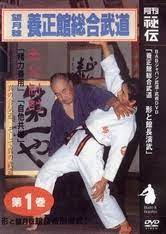
The first time I saw this kata was in a copy of Minoru Mochizuki's book that I obtained from Jan-Erik Karlsson and shared with JDJ (see linked post). The next time was in a two-disk DVD, Yoseikan Sogo Budo by Mochizuki.

I initially found the hyori no kata very interesting, however, I quickly came to the same point of view as JDJ. Why train poor technique? 

Why not train changing techniques, like everyone else does. The rationale, as explained above, is that you initially train poor technique, however, the rationale is also a samurai/warrior approach to combat. Your defensive technique is fully committed, and if that doesn't work, your next defensive technique is fully committed. 100% all the time, every time.

I remember my first introduction to changing techniques and how they were in fashion. It was at a seminar in southern Germany in the late 1980s. I was part of a group of instructors that accompanied JDJ as he was teaching at that seminar. I was ikkyu at that stage. JDJ had not included any changing techniques in his grading system at that stage. Even then I didn't appreciate the methodology. I successfully applied the initial technique to which the other person could not defend against. He said, 'You're not supposed to do that. You're supposed to let me get out of it' (or words to that effect). Yeah, that's not the approach to combat that I had been taught.

And, if asked 'Why is the final sword technique in ken tai ichi no kata that was taught to you, which you graded, and which you now teach, result in a mutual slaying?' my answer would have to be 'It doesn't.' (1. the tenth technique certainly does not result in a mutual slaying. 2. Neither does the fifth technique "as I was taught it." For other readers and for some clarity, I agree with what John has previously said about the fifth technique performed the way he describes it. I did learn the kata, for the first time as a whole set rather than simple sword exercises, from JdJ as he was teaching John and Garth. The 'requirement' to enter directly when performing the fifth technique was not mentioned until several years later.

Don't quite understand what is being said there, however, the fifth sword technique in ken tai ichi no kata as JDJ taught (see above linked post), it was a downwards strike defended with specific instructions. The specific instructions were no evasive body-movement and tori's sword to never be raised higher than uke's neck. This results in a mutual slaying. This should be obvious even without observing the attack and defence.

JDJ was specific in his instructions, and he was right, at least in that regard. It's just that he misremembered the attack. The attack is a straight thrust, as I learned when acquiring the abovementioned Mochizuki videos. 

Watch the abovementioned HDJ yudansha ken tai ichi no kata with the technique in question on slow motion. How does tori avoid being slayed? Through the use of an evasive body-movement. This is how most of the instructors at the Jan de Jong Self Defence School performed the defence, even though JDJ was specific in his instructions - no evasive body-movement. The instructors did not teach the defence as including an evasive body-movement, even though they would employ an evasive body-movement when performing the defence or kata.

All just FWIW.

I am not familiar with this initialism.

Saturday, 25 November 2023

Ken Tai Ichi no Kata Example

Ken tai ichi no kata is a kata included in part four of Jan de Jong’s jujutsu shodan grading. It involves the ‘[d]emonstration of katana techniques and the unarmed application’ (Jan de Jong Self Defence School, 1997, Jan de Jong: the man, his school, and his ju jitsu system, author). The kata is designed to demonstrate the similarities between katana (sword) and unarmed techniques (Why? That is a question that can and should be raised. Some other time perhaps).

The final sword technique in the kata involves both uke and tori assuming aigedan kamae (grading sheet), or gedan-no-kamae (lower-level posture). Kamae refers to combat-engagement posture. Gedan means lower-level, which in this case means that the sword is pointing in the direction of uke but towards the ground. This combat-engagement posture is inviting an attack (a tactical lesson that should be learned from this kata but which is not understood or taught by most).


JDJ instructed that uke attacks with a downward strike while tori does not use an evasive body-movement (referred to as taisabaki) to avoid injurious contact with the body or to reposition themselves to attack, and tori raises their sword no higher than uke’s throat. JDJ was explicit and consistent with those instructions. 

The only problem is, if uke and tori perform the attack and defence as instructed, they both die. It ends in a mutual slaying. What’s going on here? That question is how Klein operationalises his curiosity path to insight that can lead to a new and better understanding (see post #3 in this series).

I raised this question with my instructors, and when I say instructors, I mean all of the main instructors in the JDJSDS as I trained extensively under all of them (see post #3 in this series). I don’t deal well with inconsistencies (inconsistencies are one of the five paths to gaining insight according to Klein (see post #3)). I received no answer to my question from any of the aforementioned instructors.

I raised this issue when training with another of JDJ’s instructors. He defended JDJ’s instructions, adopting the common ‘teach as you are taught without question’ approach (see previous post). Out of frustration, I suggested a physical demonstration.

He attacked. I defended exactly as JDJ instructed. Fortunately, he did not follow through with his attack otherwise I would have been cleaved in half, head to groin. He, on the other hand, was left a little confused when blood started to trickle down his front from the wound he sustained on his neck when he advanced onto the tip of my sword.

When I studied my instructors performing this defence, I found that they performed the defence by doing one of three things: (1) rely on uke not to follow through with their attack (compliant attacker), (2) use an evasive body-movement to avoid injurious contact with their body, and/or (3) raise their sword higher than the throat in order to deflect uke’s blade. But they didn’t explicitly teach either or all of those defensive moves as it would have gone against JDJ’s explicit and consistent instructions.

It is easy to criticise (or so they say), but what did I do in my grading? In all honesty, I cannot remember. I had to have done something because I’m still here. What did I teach? I taught the ‘workarounds’, however, I also shared with my students the problems in the propagated instructions of the defence.

Why didn’t I go to JDJ with my concerns? That is a good question, and one that I am only now asking myself. It was because I was a junior instructor and I had raised the issue with all of my instructors, the senior instructors in the school. I adopted the same attitude as I’ve recently observed in a JDJ ryuha (‘branch of the current’): it’s in the grading so do it as taught, faults and all.

I now have the answer to the problem of this suicidal defence as taught, which has provided insights that led to a new and better understanding.

The Answer: Part 1
We were teaching for Jan-Erik Karlsson (JEK) in Sweden in the mid-90s when we had a day off. JDJ spent the time with JEK, however, I had noticed that JEK had an extensive library which included an extensive collection of martial arts books. I asked JEK if I could spend time perusing his library, to which he generously gave permission.

I came across a lever-arch file with a photocopied book. One of the front pages featured a photo of Minoru Mochizuki. I recognised that photo because the first copy of Fighting Arts International that I purchased had a photo of Mochizuki on the front cover and the featured article was about him. At that time, we knew that JDJ had trained with Mochizuki but that was about all.

Reading the photocopied book, or at least looking at the illustrations given that the book was in Japanese, I ... was ... gobsmacked.

When I shared my ‘gobsmackedness’ with JDJ and JEK, the latter kindly gifted me the photocopied book (Giho Nihonden Jujutsu (Traditional Japanese Jujutsu)).

You cannot understand how world-changing reading this photocopied book was at that time. Remember, this was pre-YouTube. In that book was a lot of what we were teaching. There were the taisabaki and the way we teach them. There were the unbalancing (kuzushi) techniques from hand grips that we teach. Both of these elements form a part of all of the mon grades at the front end of the grading system and are part of the dan grades at the back end. There was happoken no kata from 8th kyu and itsitsu no kata from 2nd kyu. There was also ken tai ichi no kata from shodan.


JDJ, as I came to understand, never revealed the source of his teachings. He did not reveal that he was teaching the taisabaki, kuzushi from hand grips, happoken no kata, itsitsu no kata, ken tai ichi no kata from Mochizuki’s Yoseikan budo. This challenged the notion, which is still strongly held and promoted by most JDJ ryuha, that we were learning/teaching Tsutsumi Hozan Ryu jujutsu.

Many of the illustrations in Mochizuki’s Giho Nihonden Jujutsu were single hand-drawn images (see image above), so I still did not have an answer to my problem. That would come later with the purchase of two Mochizuki DVDs.

The Answer: Part 2
It was after JDJ passed away that I found a website selling martial arts DVDs that offered Mochizuki's Yoseikan Sogo Budo volumes 1 and 2. Upon purchase and viewing those DVDs, I was watching all of the above and more, and here was the answer to my question of more than 20 years.


JDJ had ‘misremembered’ the attack. The attack was a straight thrust with the sword. JDJ’s explicit and consistent instructions were effective against a straight thrust with the sword (and it better matched the unarmed attack). The defence worked and tori did not die. It’s just that JDJ misremembered the attack.

It was that simple, however, why didn’t anyone else raise this inconsistency (see above)? Why wasn’t anyone else curious (another of the five paths to insight that Klein identified; see post #3). Where was their insight and understanding?

This was the beginning of, or part of, my journey of discovery about JDJ’s teachings that has led to a new and better understanding.

Epilogue
After JDJ passed away in 2003, I went on to share my insights and Giho Nihonden Jujutsu with a couple of JDJ’s senior instructors. They had never heard of the book nor understood how much of JDJ’s teachings came from Yoseikan budo.

Among other things, this reinforced the idea that JDJ got his teachings from a variety of sources and that he did not disclose those sources when teaching. It reinforced the idea that JDJ was considered the ‘fount of all knowledge,’ and nobody studied anything outside of his teachings (e.g., see suwari waza no kata in a future post). It also showed that JDJ occasionally ‘got things wrong’ and that a bit of curiosity and scepticism did not go astray.

Monday, 8 August 2011

Jan de Jong Pt 6 - Mochizuki

g
Recall from the last blog that after training with Phillipe Boiron, Jan de Jong developed an ambition to visit Japan to train. In 1969, at the age of 48, he realised that ambition. While in Japan, De Jong was a uchideashi (live-in student) of Minoru Mochizuki. The photograph to the right is of De Jong and Mochizuki during this time.

Minoru Mochizuki

Mochizuki was a remarkable man. He trained under many modern day martial art greats, including Morehi Ueshiba (founder of aikido), Jigaro Kano (founder of judo) and Gichin Funakoshi (founder of Shotokan karate). He was graded 10th dan aikido, 9th dan jujutsu, 9th dan judo, 8th dan iaido, 5th dan kendo, and 5th dan karate, in addition to the various traditional certifications of mastery he received. Mochhizuki was the first to teach aikido outside of Japan when he taught in France in 1951. He developed his own composite martial system named Yoseikan Budo which includes elements of judo, aikido, karate, and kobudo. Even though he is not well known for teaching jujutsu, the only book he ever wrote was entitled Nihonden Jujutsu.

Mochizuki was born in Shizuoka, Japan on 7 April, 1907. He commenced learning judo at the age of five. He explains how he came to learn Gyokushin-ryu jujutsu in Stanley A Pranin's Aikido Masters: Prewar Students of Morihei Ueshiba:
I also practiced an old-style jujutsu art called Gyokushin-ryu jujutsu. This system used a lot of sacrifice techniques and others that were very similar to those of aikido. At that time, the Gyokushin-ryu teacher Sanjuro Oshima lived very near my sister. The teacher was quite saddened to see the classical styles of jujutsu disappearing one by one and was determined to see to it that his own art was preserved - so much so that he requested that I learn it from him. I would go to his house and would be treated to a fine meal. I didn't have to pay any fees to study and they actually gave me dinner. That is how I came to study jujutsu.
Mochizuki explains that Gyokushin is written with characters which mean 'spherical school'. He quotes his former teacher when explaining the significance of the name:
A ball will roll freely. No matter which side it is pushed from it will roll away. Just this sort of spirit is the true spirit that Gyokushin-ryu seeks to instill in its members. If you have done this nothing in this world will upset you.
The Yoseikan dojo was established in Shizuoka in November 1931. Mochizuki had been ill with pleurisy and pulmonary tuberculosis and his brother and some others built the dojo to encourage him to stay in Shizuoka rather than return to Tokyo once he got out of hospital. Yoseikan can be loosely translated as 'the place where the right path is taught' (The Art of Jujutsu: The legacy of Minoru Mochizuki's 'Yoseikan' by Edgar Kruyning).

Mochizuki explains how he discussed his composite approach with Ueshiba (who was less than impressed with his emphasise on combat victory):
I went overseas to spread aikido and had matches with many different people while I was there. From that experience I realised that if was very difficult to win with only the techniques of aikido. In those cases I instinctively switched to jujutsu, judo, or kendo techniques and was able to come out on tope of the situation. No matter how I thought about it I couldn't avoid the conclusion that the techniques of Daito-ryu jujutsu were not enough to decide the issue.

The first copy of the brilliant but now defunct magazine, Fighting Arts International, I purchased had Mochizuki on the front cover. I'd never seen a photograph of him before but I knew instinctively it was him because he was so similar to De Jong in many ways. In the article by Harry Cook, he explains that 'to recieve a black belt from the Yoseikan it is necessary to study at least three of the major arts and have a working knowledge of as may systems as possible.' I've never really understood how that works as there is Yoseikan budo, Yoseikan aikido, and Yoseikan karate being taught around the world. In any event, De Jong said he was awarded shodan in Yoseikan aikido and Shotokan karate and that he also trained various weapon arts including kenjutsu.

After having been training at the Yoseikan for a couple of weeks, De Jong was summoned down from the living quarters upstairs to watch some students do a grading one morning. The student seated next to De Jong nudged him and told him to pay attention as he was next. Remember, in those days they didn't have grading sheets to refer to, it was all rote learning. When it was his turn, De Jong undertook the examination and passed. When he sat down the same gentleman nudged him again and advised him to pay attention to the next grading as well. That day he successfully graded three grades in Yoseikan aikido.

It wasn't all hard work. De Jong explained that his Japanese fellow students would go into town to have dinner and a few drinks. They were impressed with his drinking ability which didn't say a great deal as De Jong suggested they couldn't hold their alcohol. He said he had to support, if not carry, some of his training partners back to the dojo on more than one occasion.

Recall from the war years that De Jong had an aversion to cold weather due to his Hunger Winter experience following WWII. It reared its head in Japan when his fellow uchideashi opened the window at night for some fresh air, which was a little too 'fresh' for De Jong who would close the window.

De Jong explained that the aikido/budo which Mochizuki taught had a lot in common with the jujutsu he had learnt from the Saitos (see previous blogs). He recognised the bodymovements (taisabaki) which Mochizuki taught in an analytical appoach based on Kano's analytical approach. Gerry Carr, in Sport Mechanics for Coaches, provides an analytical approach to teaching and correcting sports skills. Step 4 is to divide the skill into phases. Kano did this with his kuzushi-tsukuri-kake (unbalancing-fitting in-technique execution) phases of judo throwing techniques. De Jong did this after returning from Japan in his taisabaki-kuzushi-waza (bodymovement-unbalancing-technique) approach (more will be explained on this in future blogs). De Jong said that Mochizuki preferred his o irimi senkai (major entering rotation) and changed his to that of De Jong's while De Jong preferred Mochizuki's and changed his to that.

De Jong only trained with Mochizuki for less than six months. However, he would later request an instructor be sent from the Yoseikan to Perth and his jujutsu grading system would be significantly influenced by his Yoseikan experience. These will all be the subject of future blogs.

Mochizuki pasted away on 30 May 2003 age 96. De Jong passed away the same year on the 5th of April age 82. Two giants of the martial arts world, upon whose shoulder's I'm attempting to stand and see further, coincidentally passing away within months of each other.

Nihonden Jujutsu

Recall from above that Nihonden Jujutsu was the only book Mochizuki, the budo/aikido/judo master ever authored. The title is translated as 'Traditional Japanese Jujutsu' and it was published in 1978. I recently saw a copy of this book on ebay with an asking price of US$4,000.

De Jong, Maggie (his daughter), and myself had been teaching for Jan-Erik Karlsson in Lund, Sweden. An annual event, both the European teaching tours and teaching in Lund. We had a rare day without teaching and De Jong, being older and always pushing himself on these tours, was taking the opportunity of relaxing in the sun outside Karlsson's house with its sea views. I on the other hand was taking the opportunity of rummaging through his martial arts library. Lo and behold, I found a photocopy of a book with Mochizuki's photograph on the front which I recognised from the abovementioned magazine article. It was in Japanese, but, I couldn't help but recognise so much of the content with what we'd been taught by De Jong and which made up so much of the grades De Jong had introduced. I felt like Indiana Jones finding the Ark of the Lost Covenant. De Jong's teachings were much sought after around the world and here was a book with some of them in it

Karlsson was most generous in giving the copy of this book to me once I'd gushed over it. When we returned to the land of Oz (Australia), I gave a copy to De Jong. Again, lo and behold, a few years later he began teaching a third dan grading which included 20 sacrifice throws and 20 takedown techniques in the instructor's class held every Friday night. He would give all the attendees a photocopy of the techniques he was going to teach that night, which, I recognised as coming from Nihonden Jujutsu. I never spilled the beans and we would often exchange rye smiles as he introduced these new techniques. The existence of the book was never disclosed to his instructors and, often much to the surprise of the instructors including the senior instructors who had been my instructors, De Jong would often get me to demonstrate the techniques when introducing them to the instructors class for the first time. I would like to think he selected me because my technique and understand was so good, however, I suspect it was because he knew I'd seen the techniques before and had been playing with them over the years

A few years ago I acquired a rare two set DVD produced of Mochizuki's teachings. Again, this is so exciting because it is another reference point for many of the things De Jong taught. You can see similarities and differences, which, as explained in a previous blog, the identification of is the core of all learning.

These DVDs also demonstrates one other thing. The training we received at the Jan de Jong Self Defence School, and the capabilities of some of its students/instructors, was world class. There is a DVD of Greg Palmer's second dan demonstration grading which involved six of his students, all non-black belts, which I would consider at least technically equivalent of the Mochizuki DVD performed by black belts. De Jong was always one for precision. Twitch a foot in a particular technique and you'd fail that technique in a grading.