Showing posts with label Kata. Show all posts

Wednesday, 13 March 2024

The Development of the Jan de Jong Jujutsu Grading System 5.0: Sandan Part 1

The final technical grading in the Jan de Jong (JDJ) jujutsu grading system is sandan.

This fits with the narrative that the final technical grading in the Tsutsumi Hozan Ryu (THR) jujutsu grading system that JDJ was involved in with his original jujutsu instructors, the Saito brothers, was sandan.

There are only five people who have completed the technical grading system of the jujutsu taught by JDJ under JDJ, and which is apparently part of the THR tradition, are Peter Clarke, Robert Hymas, Paul Connolly, Greg Palmer, and myself. Me - their student. The only 'student' to complete the JDJ jujutsu grading system under JDJ.

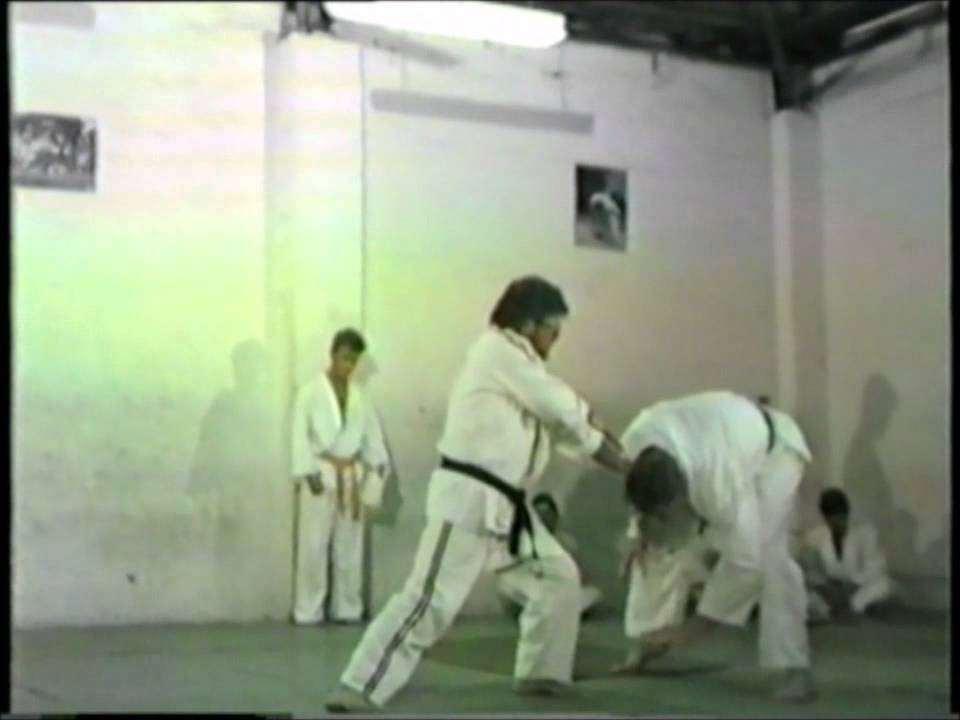
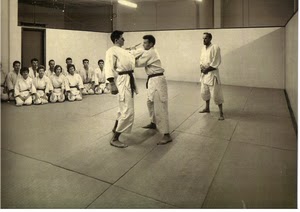
Left to right: Peter Clarke, JDJ, Robert Hymas, and Paul Connolly.

Standing and not standing, Greg Palmer and me respectively.

There are some other 'students' that have been graded sandan, and higher, in the JDJ tradition through a JDJ ryuha, however, that grading system is compromised in relation to JDJ's grading system because the head of that ryuha did not grade above shodan under JDJ. Consequently, their nidan and sandan grades contain less and are different to that taught by JDJ. And even in that ryuha's shodan grading, there are mistakes.

You will recall from previous posts that Clarke, Hymas, and Connelly were the first through the nidan and sandan gradings because they were to be JDJ's legacy. Greg and I came through after the first trio. It is important to remember that fact because, among other things, it gave JDJ a chance to review the nidan and sandan gradings that he had developed and to change (improve) upon them. 

This post will be done in two parts because the sandan grading contains 12 parts, whereas shodan and nidan were long enough with nine parts.

You will recall from previous posts that the structure of the dan grades was set with JDJ's initial grading system, the kyu grades, with ikkyu being the instructor grade. 

Note: There is no shinken shobu no kata part in sandan. This is the only grading in JDJ's grading system that does not contain a reflex/shinken shobu no kata part to the grading.

The grading requirements and description of the different parts are taken from Jan de Jong: the man, his his school and his ju jitsu system (Jan de Jong Self Defence School, 1997 (p.52)).

Part 1 Kime no Kata

'Explain the theory and answer questions on demonstrated defences.'

You will recall from previous posts that kime no kata is generally considered to be a revision grading within the JDJ jujutsu grading system. According to the glossary in the abovementioned book, it means 'form of agreement (attack and defences are agreed upon and so form a demonstration)' (p.58).

This grading consists of 57 attack-defence combinations, none of which have been included in any other grading within the JDJ jujutsu grading system; they are all new attack-defence combinations.

When Greg and I did this grading, JDJ asked no questions. Greg was disappointed because he was prepared and wanted to discuss the theory behind the defences. He asked JDJ why he hadn't asked us any questions. JDJ said that he didn't have to because he knew that we know the theory.

I would have liked to have heard any questions that he asked of Clarke, Hymas, and Connolly, and their answers.

Part 2 Ju Jitsu no Jitsuen

'Arrange a 10 minute demonstration on a topic given by Shihan Jan de Jong using only yudansha. Twenty minutes preparation time will be allowed.'

This part follows on from the ju jitsu no jitsuen part in the nidan grading.

The way JDJ conducted this grading was, during the Friday night instructor's class, he'd simply inform the candidate (Clarke, Hymas, Connolly, Palmer, or myself) that they would be putting on a demonstration using yudansha that were attending the class that night. Literally, only 20 minutes to prepare on a subject of JDJ's choosing with the performers present that night.

It was an interesting grading for me as I was instructing my former instructors what to do. I was assessing their capabilities in terms of what they could perform adequately. That was a challenge in itself.

Part 3 Taisabaki no Kata

'Prepare a kata to show the different variations of the body movements.'

The five body-movements are the five main body-movements (taisabaki) taught by Yoseikan Budo (YB).

I did a bit of 'teach the teacher' in this grading. You will recall from a previous post:

The dodging body-movement was included in this grading due to Greg Palmer's lobbying. I argued that dodging was simply a variation of either flowing or sliding body-movements, which I went on to demonstrate in my taisabaki no kata grading in sandan. It was a 'teach the teacher' moment, however, even though they agreed with me, it is still retained in this grading.

Part 4 Sutemiwaza no Kata and Taoshiwaza no Kata

Sutemiwaza no Kata: 'Demonstration and full explanation of the theory of 20 different sacrifice throws and their variations.'

Taoshiwaza no Kata: 'Demonstration and full explanation of the theory of 20 different takedown techniques and their variation.'

This part of the grading is pure YB. 

You will recall from a previous post that I obtained a copy of Minoro Mochizuki's book, Nihonden Jujutsu, from Jan-Erik Karlsson while assisting JDJ teaching for him in Sweden. I gave a copy of that book to JDJ.

The book has many hand-drawn images of techniques. JDJ photocopied 20 of those techniques for each part of this part of the grading and handed them out in the instructors class on a Friday night. This was this part of the sandan grading - taken straight from Mochizuki's book.

The abovementioned JDJ ryuha does not include the taoshiwaza no kata section in their sandan grading. I would suggest that it is because the principal of that ryuha did not learn or grade this part of the grading. On the other hand, the YB sutemiwaza had been taught and trained ad nauseum within the Jan de Jong Self Defence School (JDJSDS).

A joint element of this grading is the theory behind the techniques. What is the first theory question that should be asked?

Given that the two parts are sacrifice throws and takedown techniques, the first question that should be asked is: what is the difference between a throw and a takedown?

As I discuss in my as yet unpublished book, The Science Behind All Fighting Techniques, there is no definitive distinction between throwing and takedown techniques in the martial arts literature or teachings, except the one that I provide based on biomechanics. Based on that definition and classification, about 25% of the takedown techniques in the takedown techniques section of this part of the grading are in fact throws.

There is one technique in the takedown section of this part of the grading: oshi otoshi. JDJ said that it meant 'aggressive push-down.' Every time JDJ taught it in the instructors class, he taught it differently. I was confused, not the least because none of what JDJ was teaching worked. I asked Clarke and Hymas separately, 'What are we supposed to be doing here?' They both replied that they didn't know.

At that time, the priority for JDJ and Clarke, Hymas, and Connolly was to get through the grading system so that JDJ could promote them with honorary grades. One technique that did not work - what does it matter.

Mea culpa: I too adopted the same approach as Clarke, Hymas, and Connolly, and did something in the grading, not knowing what I was supposed to be doing, knowing that it was one technique, and it would not affect my overall makes in the grading. I, like them, were going to pass this grading with or without this technique.

After JDJ passed away, and when YouTube came online, I finally saw oshi otoshi being performed by a YB school in Belgium. It is an amazing YB technique, and one which nobody in the JDJSDS has ever performed correctly, even though it is in the grading system.

JDJ did not know how to perform oshi otoshi. It looked similar to other techniques, but it wasn't that technique, and in this instance, it did not work. It was ineffective. 

A similar situation can be found in JDJ's shodan shinken shobu no kata grading with te nage. When I was taught this technique, way back when, I said even then that it did not make sense. Unbalance forward and down, and then up and back to the opposite rear corner, and then forward and down again, and then around the corner - there are so many changes in direction that you get dizzy. And why? It's because it looks like hand-set arm breaking, but that is not the takedown technique. 

When I was assisting two prospective yudansha for the abovementioned ryuha to prepare for their shinken shobu no kata grading, I again encountered JDJ's te nage and its teaching by the instructors of the ryuha. And after all these years, I still thought it was ridiculous, but this time, when searching for an answer, there are so many more resources available. JDJ's te nage should be aikido's ikkyo or nikyo. It is a great technique, when performed correctly, and one that I could perform even in my physical condition.

Part 5 Kodachi no Kata

'Demonstration of kodachi (wakizashi) techniques against katana.'

The kata is taken straight from Michael Finn's Kendo-no-Kata (1986). No deviations whatsoever, and the order is the same.


Part 6 Hojo Jutsu

'Demonstrate use of rope to tie up an opponent.'


This was an interesting grading, and an impractical grading. The techniques were taken from various sources and consisted of tying up a person in intricate ways. The impractical aspect was that the grading did not involve restraining uke before the tying up commenced. They just stood there. It was like a demonstration of wrapping a gift.

Next Post

The next post will discuss the final six parts to the sandan grading.


Monday, 11 March 2024

Answers to Questions on Nidan Grading Facebook Sharing Post

The following is a series of questions received on my Facebook post sharing the previous blog post on the nidan grading. I found the questions interesting and insightful, and the answers would be a useful contribution to the discussion concerning the development of the Jan de Jong (JDJ) jujutsu grading system.

I am genuinely curious. Were any jujutsu candidates ever required to open Happoken no kata by, after the rei, shifting into an open stance, as often seen in formal demonstrations of other karate kata?

From Jan de Jong: the man, his school and his ju jitsu system (1997): 'Happoken no Kata (Kate of Eight Fists) ... Open by stepping into  kiba-dachi with the left then right leg then punch both fists down in front stopping at hip level' (p. 53).

The opening to JDJ's 'version' of happoken no kata is not as elaborate as that in Yoseikan, which reflects JDJ's focus on the practical.  

And were any jujutsu candidates required to open and close their demonstrations of Kentai ichi no kata with formal, kneeling rei to pass their grading?

The linked post is to the kata being performed by two of Hans de Jong's (HDJ) yudansha. It shows the formal opening and closing of the kata in seiza.

And, not to be too contrarian, but in the spirit of adding information. I was told by JDJ that he would not teach a particular Yoseikan kata of changing techniques because "it set bad habits:" The kata consists of a lengthy series of "changes" in an unrealistic chain. He said that you might need to adjust your intentions once, but that expecting further chances was unrealistic. (Or, maybe more accurately, that's how I interpreted what he said.)

Not sure how the author of the above comment is being contrarian as their comment is in line with mine in the previous post where I stated that JDJ included a 'changing techniques' section in his nidan grading even though he was opposed to the teaching of changing techniques because it initially trained ineffective technique.

The particular Yoseikan kata to which the author refers is Hyori no Kata (form of front and back). See this link for video of the kata

The first time I saw this kata was in a copy of Minoru Mochizuki's book that I obtained from Jan-Erik Karlsson and shared with JDJ (see linked post). The next time was in a two-disk DVD, Yoseikan Sogo Budo by Mochizuki.

I initially found the hyori no kata very interesting, however, I quickly came to the same point of view as JDJ. Why train poor technique? 

Why not train changing techniques, like everyone else does. The rationale, as explained above, is that you initially train poor technique, however, the rationale is also a samurai/warrior approach to combat. Your defensive technique is fully committed, and if that doesn't work, your next defensive technique is fully committed. 100% all the time, every time.

I remember my first introduction to changing techniques and how they were in fashion. It was at a seminar in southern Germany in the late 1980s. I was part of a group of instructors that accompanied JDJ as he was teaching at that seminar. I was ikkyu at that stage. JDJ had not included any changing techniques in his grading system at that stage. Even then I didn't appreciate the methodology. I successfully applied the initial technique to which the other person could not defend against. He said, 'You're not supposed to do that. You're supposed to let me get out of it' (or words to that effect). Yeah, that's not the approach to combat that I had been taught.

And, if asked 'Why is the final sword technique in ken tai ichi no kata that was taught to you, which you graded, and which you now teach, result in a mutual slaying?' my answer would have to be 'It doesn't.' (1. the tenth technique certainly does not result in a mutual slaying. 2. Neither does the fifth technique "as I was taught it." For other readers and for some clarity, I agree with what John has previously said about the fifth technique performed the way he describes it. I did learn the kata, for the first time as a whole set rather than simple sword exercises, from JdJ as he was teaching John and Garth. The 'requirement' to enter directly when performing the fifth technique was not mentioned until several years later.

Don't quite understand what is being said there, however, the fifth sword technique in ken tai ichi no kata as JDJ taught (see above linked post), it was a downwards strike defended with specific instructions. The specific instructions were no evasive body-movement and tori's sword to never be raised higher than uke's neck. This results in a mutual slaying. This should be obvious even without observing the attack and defence.

JDJ was specific in his instructions, and he was right, at least in that regard. It's just that he misremembered the attack. The attack is a straight thrust, as I learned when acquiring the abovementioned Mochizuki videos. 

Watch the abovementioned HDJ yudansha ken tai ichi no kata with the technique in question on slow motion. How does tori avoid being slayed? Through the use of an evasive body-movement. This is how most of the instructors at the Jan de Jong Self Defence School performed the defence, even though JDJ was specific in his instructions - no evasive body-movement. The instructors did not teach the defence as including an evasive body-movement, even though they would employ an evasive body-movement when performing the defence or kata.

All just FWIW.

I am not familiar with this initialism.

Tuesday, 5 March 2024

The Development of the Jan de Jong Jujutsu Grading System 4.0: Nidan

In a previous post, I explained how the Jan de Jong (JDJ) jujutsu grading system was developed by JDJ to further his needs at the time. 

The kyu system was developed because he needed a grading system to support his new business of teaching jujutsu on a full-time basis that was to become his sole source of income. The shodan gradings were developed to provide him with black belt instructors to further his ambitions of teaching in Europe. The nidan and sandan gradings were developed to provide JDJ with a legacy.

The story goes that the technical gradings in the jujutsu system taught by JDJ's instructors, the Saito brothers, finished at sandan with 'Progression to higher grades [being] based on the yudansha's (black belt holder) contributions to ju jitsu, the ryu (style or system), or the school and at the discretion of Shihan Jan de Jong' (Jan de Jong: the man, his school and his ju jitsu system, Jan de Jong Self Defence School, 1997, p. 11). 

JDJ needed to develop nidan and sandan gradings so that Peter Clarke, Robert Hymas, and Paul Connelly could be graded as such in order for JDJ to be able to award them higher honorary grades. They were to be his legacy

Ironically, when I broached the subject of 'succession planning' with JDJ in the mid-1990s, me being a business/management professional, he did not want to have a bar of it. He literally said that he didn't care what happened after he died because he wouldn't be here. His focus was always on the here and now (possibly the product of his war time experience). That appeared to change when he saw his 'expiration date' approaching, and thus the nidan and sandan gradings were developed and introduced, and the rushing through of Clarke, Hymas, and Connelly to complete those gradings.

You will be familiar with the basic format of the nidan grading because the basic template for the dan grades was set with JDJ's ikkyu in the kyu system. You will recall from the kyu grading post that the kyu system was developed as a one-off, stand-alone grading system with ikkyu being the instructor grading. 

The titles of the below sections are taken from the nidan grading requirements in Jan de Jong: the man, his school and his jujutsu system (Jan de Jong Self Defence School, 1997, p.51).

Part 1: Kime no Kata
'Demonstrate locks and throws from counters to resistance to locks and throws.'

You will recall from the above referenced ikkyu post that kime no kata is broadly taken as being a revision grading within the JDJ jujutsu grading system. The term 'broadly' is appropriate for this grading.

A general description of this part is that it involves 'changing techniques.'

The requirements of this part are five different joint-locks and three different throws to be demonstrated for the nine basic joint-locks which are resisted. Three different throws and five different joint-locks to be demonstrated for five specified throws that are resisted.

The type of resistance became a matter of debate. Greg Palmer and I are the only other two to have completed nidan and sandan under JDJ. We came after the abovementioned trio and so JDJ got to have a 'second look' at the gradings that he'd developed and only seen once before when the abovementioned trio graded. Thus, the format changed, or improvements were made based on the second look.

The same was true of shodan shinken shobu no kata where the first ones to go through (including the abovementioned trio) performed the 140 attack-defence combinations as a demonstration whereas those who came after had to perform under true reflex conditions. In this case, the form of resistance for Greg and myself differed to that used by the abovementioned trio.

JDJ was against changing techniques because he considered it to mean initially training and performing ineffective techniques, so why did he include this grading in nidan? It is probably because everyone else was teaching changing techniques at the time, and JDJ did include elements into his grading system that he was 'not a fan of' simply because others were doing so at the time, e.g., shiai. This an explanation as to why he changed his ideas of the grading the second time round.

Part 2: Ju Jitsu no Jitsuen
'Arrange a demonstration using up to eight lower grades to show some aspect of ju jitsu. Twenty minutes of explanation type demonstration and ten minutes of fast action are required to be shown.'

Greg Palmer's demonstration has been posted on YouTube in three parts.

JDJ often said that Greg's demo was the best ever, in fact, when the video of the first demo did not work out, JDJ got us (I was a member of Greg's demo team) to do it again so that he had a good video of that demonstration. Why was Greg's demo the best? Because he was a teacher and therefore knew how to train us, a la four-time premiership coach, Alistair Clarkson, who was a teacher before becoming head coach for Hawthorn.

The requirement of this grading reflects JDJ's focus on producing instructors in the dan grades. The basic idea behind this grading is that the instructor should be able to explain to others what jujutsu is, not unlike the Ju Jitsu Rekishi parts in the ikkyu and shodan gradings.

It also reflects that putting on demonstrations was a big part of the promotion of the Jan de Jong Self Defence School (JDJSDS) and JDJ at that time. Demonstration stories abound, with the older generation of the JDJSDS.

Part 3: Shinken Shobu no Kata
'Reflex examination.'

52 attack-defence combinations down from 140 in shodan. There is an increased focus on defences against punches (19).


Part 4: Hantachiwaza no Kata and Kentai Ichi no Kata
'Demonstration with uke in seiza and tori standing.'
'Demonstration of katana and the unarmed application.'

The kentai ichi no kata is an extension of the idea of the Yoseikan Budo (YB) kata that JDJ included in shodan, however, the techniques taught within this kata are not from YB.

I'm not sure, nor have I attempted to find out, where the techniques in these two kata have been taken from. This will be a different case with the future sandan grading post.

Part 5: Tanbo Jutsu and Jo Jutsu
'Demonstrate defences with tanbo.'
'Demonstrate defences against jo.'

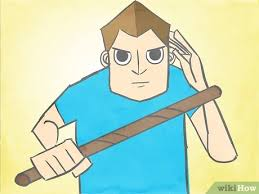
The tanbo (short stick) section includes two sections: one where the tanbo is concealed as in the photograph to the right (although only one tanbo is used), and one where the tanbo is 'open', meaning that it is held at the end but concealed behind tori's leg.

The use of the tanbo concealed is unique to JDJ's teachings. It comes from his pencak silat teachings where the short stick (gada) is used singularly or in a pair as in the photograph to the right, and both defensively and offensively.

The JDJ ryuha that offer courses and suggest that they teach to fight with this weapon are delusional and misleading. This grading only teaches a limited number of joint-locking techniques against punches (see below), some 'tricks.' If one wants to learn how to fight with this weapon, one needs to see Peter Clarke at Southern Cross Bujutsu who is the only person to have been graded 'black' in both JDJ's jujutsu and pencak silat, and who is the only person teaching JDJ's pencak silat. The use of this most versatile of weapons is well worth studying, so see Peter Clarke.

The two sections in the tanbo section include a single joint-locking technique inside and outside, left and right, with a straight arm or retracted. Eight defences in all, covering all possibilities, which is a tactical lesson that could be extended further within the grading system. It was well thought out.

This tactical lesson was also present in the original sixth kyu grading, the first grading in the kyu system (see reference above) which was JDJ's original grading system. There are three defences against morote-kote-dori suihei (two hands grabbing the forearm of uke). When I came to realise that JDJ's grading was disjointed and while the mon system was YB based and featured unbalancing, the kyu was not and did not. I asked JDJ about two of the defences that featured unbalancing because they did not fit this newfound realisation. He explained that before he introduced the mon system, he tried to introduce the YB unbalancing into the kyu system, and that in doing so he had changed two of the three defences against the aforementioned attack. The original defences were disengagements that placed tori to the right, left, or in front but away from uke/the attacker. It was a brilliant tactical lesson, but which has since been lost through the retention of JDJ's changes, which are no longer needed due to the introduction of the mon system. 

The defences against a jo (4'6" staff) include seven techniques from the outside and one from the inside and were probably taken from YB. The techniques involve throws, joint-locks, and takedowns.

Once again, the JDJ ryuha advertising that they teach how to fight with this weapon are delusional and misleading. They are teaching 'tricks' that are included in this and other gradings. They are not teaching how to 'fight' with this weapon because if one were being taught how to 'fight' with this weapon, or the short stick, the first and principal technique that would be taught would be striking techniques. And once again, if one wants to learn how to fight with this weapon, one should go and see the abovementioned Peter Clarke at Southern Cross Bujutsu.

Part 6: Kyushowaza
'Demonstrate various pressure point attacks.'

This grading was included in nidan because in the 1990s, everybody was teaching pressure point techniques. Karate, jujutsu, aikido, wing chun, kung fu, everyone was teaching pressure point techniques. Much like ground techniques are now the flavour of the month due to Brazilian Ju Jitsu and everyone is teaching their ground techniques. I was previously unaware that wing chun and karate taught ground techniques. :/ 


George Dillman was at the forefront of this movement at the time. He couldn't sell karate because everyone taught karate so he 'differentiated his product' (marketing 101) by teaching pressure point techniques along with his karate.

I'm open to new ideas and while I was living in London, I attended a seminar hosted jointly by Wally Jay (Small Circle Theory Jujutsu) and Dillman. Jay taught his jujutsu, which basically involved bending a person's fingers backwards, and Dillman taught his pressure point techniques.

He demonstrated a technique where two hits to two different pressure points on the forearm would cause the person to fall to the ground. The explanation was that somehow the two hits caused something to travel along the nerves that caused the person to fall to the ground. His uke was an American airman who had travelled from his posting in Germany to attend Dillman's seminar. Two hits and American airman uke duly falls to the ground.

We pair up and my partner strikes my forearm twice in the designated areas and turns away, only to turn back to find me still standing. He's confused. He tries again but stays looking at me this time and sees the same result. After a couple of more tries, out of frustration, he calls Dillman over. Dillman does his two hits and turns away to explain that this is how it is done, only to turn back and find that I'm still standing. He then lays into my forearm with some almighty punches. Dillman is a short, stocky karateka and does possess powerful strikes as seen in his breaking demonstrations. His powerful strikes cause me to bend over, but not because of any pressure points but because he'd just punched the 'crap' out of my arm (I ended up with two bruises where he punched me). Dillman then walked away without explanation.

At the end of the seminar, Dillman demonstrated his pressure point knock-out technique. A hit to a pressure-point on the jaw that causes the individual to lose consciousness. He demonstrated this first on a teenage girl who was literally hiding behind a male participant at the seminar. Quick hit to the jaw and she's down. When it came to my turn, he was demonstrating this on all of the participants, lucky us, he gives me a short, sharp punch to the side of my jaw, and while I am dazed, I don't go down. I end up with a horrendous headache but not unconscious. No pressure point, just a good short sharp hit to jaw, while holding the other side of the head so that it cannot move and thus dissipate the force applied, moving the brain inside the skull and possibly causing a mild concussion.

Good times, but back to this grading. The pressure points are applied, not in a fighting context but while JDJ is sitting down. This leads to questions as to its effectiveness in a more fluid environment.

When I did my grading, the pressure points around JDJ's trapezius area were a bit pointless on his bull-like upper body. The only way a pressure point could be used effectively there is with a baseball bat. But on his 'chicken-like' legs, he felt every one, and would 'tap-off' to signify that I had got it right and he felt something. Unfortunately, his 'tap-off' was like a focused hit to the back of my head, and I was at risk of receiving a concussion, so much of that part of the grading was done at arm's length with me cringing so as not to be rendered unconscious from a 'tap-off.' This is a grading that required the wearing of protective equipment, e.g., a helmet. :)

Part 7: Shiai
'Free fight with tanto vs tanto.'

The description and issues associated with this section of the grading are discussed in a previous post.

Part 8: Jutsuri no Kata
'Oral examination conducted with at least two other candidates, discussing the technical aspects on any technique selected by Shihan Jan de Jong.'

The idea behind the grading is laudable, however, the technical knowledge within the JDJSDS and within JDJ was lacking at the time. However, a scene from Under the Tuscan Sun is pertinent here:

Martini: Signora, between Austria and Italy, there is a section of the Alps called the Semmering. It is an impossibly steep, very high part of the mountains. They built a train track over these Alps to connect Vienna and Venice. They built these tracks even before there was a train in existence that could make the trip. They built it because they knew some day, the train would come.

JDJ built the tracks, and my work goes a good way to providing that train (see previous post with this proposition and discussing this issue).

What would be some of my questions to candidates undertaking this grading?:

'Why is the final sword technique in ken tai ichi no kata that was taught to you, which you graded, and which you now teach, result in a mutual slaying?'

'What are the similarities and differences between o soto gari, o soto guruma, and o soto otoshi?' The answer to that question is complicated given that even though o soto otoshi is included in the grading system and that has been taught, graded, and is now being taught by the grading candidates, it was never understood or taught properly by JDJ and therefore by his instructors.

'Why is the te nage in the shodan shinken shobu no kata grading such a ridiculous, over complicated technique that has so many changes in direction that it makes one dizzy?' 

'Why are blocks used in conjunction with evasive body-movements in the grading system?'

'What is the purpose of the futari dori and shiai gradings in the grading system?'

Part 9 Ju Jitsu Rekishi
'Candidates are required to submit an essay with no less than 3000 words on a topic to be approved by Jan de Jong.'

My topic was an international franchise proposal for the JDJSDS. How this came about is discussed in a previous post involving our invitation to Jakarta, Java, Indonesia by a Chinese-Indonesian entrepreneur (CIE) in 1995.

It was a fantastic opportunity. One that the vast majority of start-up franchises never get.

The CIE was prepared to fund it all. A house in the Jakarta CBD to act as dojo and residence for instructors from the JDJSDS. A cook, cleaner, driver, translator, food, and a car. Marketing was taken care of as is explained in the abovementioned post. There were European instructors calling out to be included under the JDJ banner, so a successful establishment in Jakarta, fully funded by the CIE, would have gone a long way to establishing an international franchise of the JDJSDS.

JDJ and the CIE were both dead keen, but they were like two trains on different tracks heading in the same direction, but they would never meet. How do you establish an international franchise of the jujutsu taught by JDJ which takes a minimum of 10 years to be graded shodan without compromising standards? That was the question. I came up with the answer, which was the subject matter of my project that satisfied the requirement of this part of the grading.

JDJ never implemented my proposal, even though he was more focused on his international teaching than his domestic school in those days. Why not? That's a question for another day. :)

The next post will look at the final grading in the JDJ grading system - sandan.


Thursday, 15 February 2024

The Development of the JDJ Jujutsu Grading System 3.8: 7th Kyu

The final grade in the mon system is 7th kyu, red belt. 

The titles of the below sections are taken from the grading sheets in Jan de Jong: the man, his school and his jujutsu system (Jan de Jong Self Defence School, 1997).

Breakfalls (Ukemi)

Bridgefall, and backwards flat, sideways flat, forwards roll, sideways roll separately over an obstacle. 

The bridge fall, aka o mae ukemi, is the same as in the previous grading.

While responding to a comment on my Facebook post sharing the previous blog post, I remembered that I neglected to explain why sideways roll is so uncommon in the martial arts. It's because most ukemi comes from judo and there is no need for a sideways roll from judo techniques.

I was also reminded that there are some (aikido) that teach a backwards roll that starts to resemble a Jan de Jong (JDJ) sideways roll. That is true, but it is more of a backwards roll than a JDJ sideways roll, however, having said that, it is worth noting because a JDJ sideways roll transitions into a backwards roll.

This is one of the aims of these series of posts, if not this entire blog, and that is to encourage those engaged in martial arts to engage in critical thinking, to seek insights that produce a new and better understanding, rather than just teaching and training what is taught.  

For progression, the o mae ukemi could have been performed over an obstacle in this grading. There is a 'trick' to performing o mae ukemi over an obstacle. 

The trick to performing o mae ukemi over an obstacle, I discovered by observing John Poulton  (ikkyu) in the instructors class way back when. John Poulton is front left, beard, in this photo taken from the JDJSDS Yearbook 1986 - Hakusho. He was performing o mae ukemi over obstacles when none of the other instructors pictured could and ever did. It is simply a forwards roll that you don't come out of; a forwards roll terminating in a backwards flat. :)

There is a lot of history in that photograph. Do the current JDJ ryuha know and study that history and share it with their students? Who can name all in the photograph and their legacy? This blog is about preserving and understanding the history of the JDJ tradition.

Wakai no Kata

You will recall from the 'Historic Ikkyu Part 1' post that JDJ developed wakai no kata to replace Yoseikan Budo's (YB) happoken and sanbogeri. He then moved the kata to nikyu and included it in 7th kyu, the last of the mon grades before the kyu system. Happoken taught blocking and striking skills and sanbogeri taught kicking skills. JDJ's wakai no kata is designed to teach blocking, striking, and kicking skills.

The issue of using a block in conjunction with an evasive body-movement (EBM) that was discussed in a previous post is present in this kata.

Last year I saw a JDJ ryuha yudansha demonstrate this kata while teaching it to their students. I would fail that performance if a grading candidate presented it for their 7th kyu grading, let alone a yudansha that has supposedly performed it in two gradings. 

JDJ's wakai no kata includes pencak silat's depok and sempok stances. Same stance but looking forward or backward. It is an extremely versatile stance in terms of an EBM and setting up for strikes, kicks, and unbalancing. 

In the abovementioned performance, the performer did not perform the stances correctly (or simply did not know how to do so), which nullified their tactical effectiveness.

Then of course there was the issue that the kicks were poorly executed, wafting upwards rather than 'shooting' in and out, and the timing of the defensive combinations was all wrong. Basically, it was a blur from start to finish interrupted only by the performer being unbalanced when performing the depok and sempok stances. 

These issues were also common with the performances within the Jan de Jong Self Defence School (JDJSDS), including that of most of the instructors.

The abovementioned JDJ ryuha refers to this stance as a 'cross stance' (kosa dachi). That is a reference to a Japanese karate stance which is 'similar' to the pencak silat depok and sempok except that karate does not realise or understand the potential of this stance.

I attended a seminar co-jointly hosted by Wally Jay and George Dillman while I was living in London. Dillman was on the pressure point bandwagon at that stage, but he also presented his 'study' of karate kata which included a Shotokan kata where this stance is performed. He explained that this stance is entirely useless but that it was a 'secret' of the kata because it was part of a turning move when executing what the JDJ tradition knows as hachi mawashi (hair-chin turning). When Dillman asked what is the point of this stance before his 'explanation', I wanted to put my hand up and say that it was a major feature of a very effective martial art taught to one of the most populous nations on the earth, but I didn't.

Throwing Techniques (Nage Waza)

This is the first time in the mon system that throwing techniques have been introduced. There are four throwing techniques from specified attacks: single lapel grip (low) - hip throw; single lapel grip (high) - shoulder throw; low punch - minor inner reaping; and low punch - minor outer reaping.

Body Movements (Taisabaki)

'Defender's choice of attack, using any block.' 

The issue of 'blocks' and the demonstration of these body-movements as defences has been discussed in previous posts.

All five of YB's basic body-movements are included in this section, along with dodging (kawashi).

The dodging body-movement was included in this grading due to Greg Palmer's lobbying. I argued that dodging was simply a variation of either flowing or sliding body-movements, which I went on to demonstrate in my taisabaki no kata grading in sandan. It was a 'teach the teacher' moment, however, even though they agreed with me, it is still retained in this grading.

To challenge the reader's understanding of this body-movement that they are either training and grading or teaching, is the dodging body-movement as taught a variation of flowing or sliding? Even though JDJ used a dodging body-movement often in his demonstrations, why and how is it different to the one included in this grading? Also, identify the defences in the kyu and dan grades where this dodging body-movement is used in a defence.

Unbalancing (Kuzushi)

Normal single wrist grip - Normal and same side unbalancing

Reverse single wrist grip - Reverse and same side unbalancing

Same side single wrist grip - Normal and same side unbalancing

The unbalancing from single wrist grips is taken straight from YB, however, JDJ is building on YB's teachings. What is JDJ trying to teach/impart with the two forms of unbalancing from the same single wrist grip? Did the instructors (a) understand this lesson, and (b) teach this lesson along with the techniques?

In his later years, JDJ was teaching this lesson and referred to kuzushi and hazushi for the two types of unbalancing. Hazushi means disengagement or release according to the glossary in Jan de Jong: the man, his school and his jujutsu system (Jan de Jong Self Defence School, 1997). 

The basic idea is that with normal and reverse unbalancing, the captured hand is disengaged whereas with same side unbalancing it is not. This then facilitates one of the nine basic joint-locking techniques taught by the JDJ tradition and which is demonstrated in the mon grades. Same side unbalancing does not necessarily disengage the hand grip, turns the elbow up, thus facilitating straight arm lock, side wrist lock, and wrist crust. Normal and reverse unbalancing disengages the hand grip and keeps the elbow down thus facilitating the other six joint-locking techniques. 

This is a valuable and sophisticated lesson in versatile tactics, a unique one developed by JDJ, that is often not understood within the JDJ tradition. This leads to the question, should it be included in the relatively lowly grades of the mon system?

Locking Techniques (Kansetsu Waza)

'Two attackers defender's choice of attack.' 

The issue of the appropriateness of this stress element in these early gradings has been discussed in numerous pervious posts in this series.

The three kansetsu waza in this grading are arm entanglement (ude garami), side wrist lock (yoko tekubi hishigi), and wrist hand throw (tekubi te nage). The latter two are known by different names in aikido. This completes the nine basic kansetsu waza taught within the JDJ tradition.

Basic Blocks and Attacks (Uke and Atemi)

Three punches and one kick - four basic karate-style blocks. 

There is no unbalancing - blocking section as included in 9th kyu

These blocks are often taught in conjunction with an EBM. As has continually been questioned in numerous posts, e.g., The Mon System and Blocking Techniques, what is the purpose of the block when used in conjunction with an EBM. It's not to avoid injurious contact with the body because the EBM takes care of that problem. This is a question that should be asked and answered as it would demonstrate insight and understanding.

The defences in this section include a karate-style block followed by a punch. This should be taught as an alternative to the singular use of EBMs, or just avoiding an attack. It would be a useful tactic to employ in the free fighting gradings of ikkyu and the dan grades.

Reflex (Shinken Shobu no Kata)

Fifteen defences from holding, strangulation, punching, kicking, stick, and knife attacks. There are two 'restraining techniques' included in the 15 defences, which is to say a pre-emptive application of a joint-locking technique.

All of the defences have been demonstrated in this or previous gradings, as they should be.

There is a 'stick-overhead attack.' 

Last year, I observed a number of classes of a JDJ ryuha where this same attack was used in the lessons. It would appear that uke did not know how to hit a person with a stick. If they made contact with tori, it would be with the butt of the stick held in the hand of uke. This obviously affects the distancing of the defence. With a lot of practice, the student would become proficient at defending themselves against an attack that was trying to hit them in the head with the butt of the stick, however, if someone was actually trying to hit them with a stick, they would literally fall short. 

This was also a common fault in the JDJSDS.

The lesson to be learned here is to teach the students how to attack properly first, and then teach the defence.

This was something lacking in the JDJSDS as well.

Friday, 26 January 2024

The Development of the Jan de Jong Jujutsu Grading System Part 1.2: Historic Ikkyu Part 1: Basics and Current Nikyu Part 1: Kime no Kata

This post follows on from the post, Part 1: The Kyu System.

You will recall from that post that the original Jan de Jong (JDJ) grading system consisted of only the kyu grades, which was a one-off grading system when it was developed. Start to finish, nothing else to follow or precede. That is it! Done and dusted (in the voice of Al Pacino in The Heat).

The image to the right is of a historic grading sheet regarding the requirements of the ikkyu grade which the recipient of my gifting of historical records was kind enough to forward to me based on this series of posts.

In the above linked post, I argued that the ikkyu grading was an instructor grading. That argument is supported by the heading to the above historic grading sheet: Ikkyu (Kyoshi) Instructor. 

All those that attained ikkyu are instructors in JDJ's original grading system, and it could/should be argued that they are instructors under the current system which includes the dan grades. It could/should be argued that they should be referred to as sensei rather than sempai as they are now, given that that is how the ikkyu grading was developed.

Part 1: Basics in the above ikkyu grading requirements reflects the Yoseikan Budo (YB) influence introduced into the grading system, therefore, this grading was introduced post 1969 when JDJ trained for a short time at the YB dojo in Japan (also see below). 

At some stage, the ikkyu Part 1: Basics became nikyu Part 1: Kime no Kata. 

Kime no kata is referred to as 'revision' in JDJ's jujutsu grading system. So the ikkyu Part 1: Basics became a revision grading when it was moved to nikyu, but what is it revising? It is revising the YB inspired mon grades with the ikkyu Part 2: Kime no Kata in the above image being a true revision of the kyu grades. That grading requires the grading candidate to select defences from the kyu grades in the nominated sections in that gradings. 

All of the techniques in Part 1: Basics are YB techniques, including Itsutsu no Kata, Happoken, and Sambogeri. When ikkyu Part 1: Basics becomes nikyu Part 1: Kime no Kata, Happoken and Sambogeri were replaced by Wakai no Kata.

Happoken is a YB kata designed to teach striking and blocking skills.


Sambogeri is a YB kata/exercise designed to teach kicking skills (see image right from Mochizuki's book). In future posts, I will be suggesting that Sambogeri and derivations thereof be introduced into the mon grades to improve the kicking skills of JDJ jujutsuka, which are generally substandard unless the student trained in a percussion based martial art.

Wakai no Kata is a kata that JDJ developed to teach striking, blocking, and kicking skills, along with different stances. Wakai no Kata will be the subject of a future post when exploring the mon system. In that post I will explain why it tends to be poorly performed in the JDJ tradition, even by the majority of instructors.

The abovementioned generous provider of the historic grading sheets also commented:

After doing the nikyu revision, Greg Palmer came up to me and said "you have me to thank for that grading". The Boss has tasked him with developing an assessment for those who hadn't done the mons. Further cementing the case for Greg to have been a yondan on completion of sandan.

I argued in the first post of this series that Greg Palmer was the best teacher at the school because he was a trained and qualified teacher, and I don't mean in a martial arts system which is basically amateurish. I was unaware that Greg developed this grading, however, it makes sense because it is a coherent introduction, not revision as suggested above, to the YB system that forms the basis of the mon grades.

With regards to Greg and the awarding of yondan upon completion of the 'technical' grades in the JDJ jujutsu grading system. I would go further than the above commentor and argue that Greg was entitled to be graded rokudan along with the anointed trio

Greg's contribution to the grading system far exceeded that of any of the trio, including introducing JDJ to a mindset of progressive gradings. It is generally acknowledged that his understanding of techniques and how to teach them exceeded that of the trio. He also selflessly taught for JDJ for nearly 40 years with no remuneration, unlike two of the trio. He was also the first and only to have established a branch outside the metropolitan area for JDJ.

You will recall in a previous post that I shared an insight that I had gained through studying the development of the JDJ jujutsu grading system, and that is that the instructors teaching the mon grades may not have actually gone through the mon grades. The above comment would appear to confirm that.

In that case, the nikyu revision, as the above provider described it, was not a revision grading for those that did not go through the mon system. It is an introduction to the mon system. It features the YB division of a defence into phases: taisabaki, kuzushi, waza (body-movement, unbalancing, technique). It features the five basic YB taisabaki, their basic kuzushi from hand grips, and their nine basic kansetsu waza (joint-locking techniques) as waza

Did the instructors who did not go through the mon system understand that these were phases in a defence? Did JDJ? This might explain some/many of the issues that I have and will be raising in connection with the mon grades and the teaching thereof.


Friday, 12 January 2024

The Development of the JDJ Jujutsu Grading System Part 3.4: The Mon System and Blocking Techniques

The previous post referred to the introduction of blocking techniques in the Basic Blocks and Attacks (Uke and Atemi) section of the 2nd mon grading. I overlooked the use of 'blocks' in the 1st mon grading.

You will recall the division of a skill into phases, that is the basis of the mon grades, from Part 3.2 of this series: taisabaki, kuzushi, waza (body-movement, unbalancing, technique). 

The Locking Techniques (Kansetsu Waza) section includes a wrist twist being demonstrated against a top strike and a low punch from two attackers (see Part 3.2 post for a discussion as to the advisability of including this stress element in the 1st mon and the other mon grades). The kuzushi element in these defences is considered to be a block in the JDJ tradition. This block is not demonstrated separately in this grading, and it is not specified in the description of the defence, however, it is used to execute the defence nonetheless. 

In the previous post, I also referred to the conceptualisation of blocking techniques in the JDJ tradition, exemplified in their inclusion in the mon grades, as being a 'dog's breakfast.' This post looks at that dog's breakfast.

Btw, the description of the concept of blocking techniques as being a dog's breakfast is not limited to the JDJ tradition.

Block Definition

What is a block in martial arts? As it turns out, the Wikipedia entry does a pretty good job of answering that question: 'In martial arts, blocking is the act of stopping or deflecting an opponent's attack for the purpose of preventing injurious contact with the body.'
 
The following is a review of blocking techniques in the mon system.

2nd Mon

The Basic Blocks and Attacks (Uke and Atemi) (BB&A) section in the 2nd mon grading include middle inside block and middle outside block. These are basic karate-style blocks and are demonstrated solo.

In the Body Movements (Taisabaki) (BM) section, the instructions are: 'Defender's choice of attack, using pushing, pulling, or grabbing block.' The blocks are being used in conjunction with the specified evasive body-movements (taisabaki) (EBM).

There is another BB&A section in the 2nd mon grading. In this section, the block is demonstrated against an attack: 'Front snap kick - Flowing - brushing block.' Flowing (nagashi) is demonstrated in the BM section of the grading, which does not include brushing block in the blocking technique options (see above).

No blocks are specified in the Locking Techniques (Kansetsu Waza) (LT) section (against two attackers: see previous post), however, a block is used against the low punch attack along with an EBM in order to unbalance the opponent.

First, why are blocks being used in conjunction with an EBM? It's not to avoid injurious contact with the body because the EBM takes care of that problem. Second, what are pushing, pulling, grabbing, and brushing blocks?

3rd Mon

The minimum age requirements for 3rd mon are 12 to 15 years (1st mon is under 12 years) (see Part 3.1).

BB&A section: no blocks.

BM section: instructions refer to using any block in conjunction with the specified EBMs.

LT section: no specified attacks nor blocks, but blocks used in conjunction with EBMs if defender chooses moving attacks.

BB&A section: 'Front roundhouse kick - Double block - punch.' The double block is used in conjunction with an EBM.

Does 'any block' in the BM section include the blocks identified in the previous grading, including the karate-style middle blocks, as well as the newly introduced double block? Can other blocks not demonstrated up to this point in the gradings be used?

4th Mon

BM and LT sections: same as for 3rd mon

BB&A section: includes double block and attacking or brushing blocks being demonstrated against specified attacks, and each involves the concurrent use of an EBM.

So now we have pushing, pulling, grabbing, brushing, and attacking blocks categories to consider.

Reflex (Shinken Shobu no Kata) section: introduced for the first time. Included in the defences is the use of a double block and brushing block used in conjunction with an EBM. There is another defence against a low punch that also involves a block and an EBM with the block not being specified in the description.

5th Mon

BM section: brushing, grabbing, and middle blocks used in conjunction with EBMs. The middle blocks are the karate-style blocks demonstrated in 2nd mon (see above). 

Unbalancing (Kuzushi) - Blocking (Uke) section: new section introduced in this grading. Includes pulling, pushing, grabbing, and brushing blocks used against specified attacks. They are all demonstrated using an EBM.

LT section: same as for 3rd mon.

BB&A section: high and low block used in conjunction with an EBM. The high and low blocks are karate-style blocks.

Reflex section: specified brushing block in one defence with blocks also used in defences against moving attacks, although unspecified, with EBM used in conjunction with the blocks.

9th Kyu

The minimum age requirement for 9th kyu is over 15 years (see Part 3.1). It is the first of the adult gradings.

BB&A section: high, middle outside, middle inside, and low blocks demonstrated solo. These are the karate-style blocks discussed above.


BM section: same as for 3rd mon.

Unbalancing (Kuzushi) - Blocking (Uke) section: 5th mon section repeated.

LT section: same as for 3rd mon.

Reflex section: same as for 5th mon

8th Kyu

BB&A section: no blocks.

Happoken no kata section: You will recall from a previous post that happoken no kata is a Yoseikan Budo (YB) kata. The kata is comprised of four strikes and four blocks.

The YB kata adopts a parallel stance. JDJ modified the kata to adopt a staggered (zenkutsu dachi) stance. In doing so, the first block (middle outside block) is used in conjunction with an EBM. The final block is a punch straight down to the opponent's rising knee-thigh from an attempted knee to the groin.

BM and LT sections: as for 3rd mon

BB&A section: brushing and double blocks against specified attacks used in conjunction with an EBM.

Reflex section: includes 'Block - punch or takedown' against a side drive kick attack. While not specified, the block is a double fist downward block used in conjunction with an EBM. Unspecified blocks used in defences against moving attacks.

There is no Unbalancing (Kuzushi) - Blocking (Uke) section in this grading or the next.

7th Kyu

7th kyu is the end of the 'mon system.'

Wakai no kata ('New kata'; see future post) section: JDJ developed this grading to teach striking, blocking, and kicking skills. The blocks are karate-style blocks and sometimes used in conjunction with an EBM.

Throwing Techniques (Nage Waza) section: no specified blocks but blocks used in conjunction with EBMs against low punch attacks.

BM and LT sections: as for 3rd mon.

BB&A section: high, middle outside, low, and middle inside karate-style blocks against specified attacks and are demonstrated in conjunction with an EBM.

Purpose of Blocks

What is the purpose of blocks in the martial arts. The basic description refers to avoiding injurious contact with the body (see above). 

Masatoshi Nakayama (1966) is the author of the classic Dynamic Karate, a book to be studied and not just read, and studied by martial artists other than karateka. In the chapter devoted to the theory and practice of blocking, Nakayama explains that the defence against an attack in karate is a more complicated process than it appears at first glance. He then lists six possibilities in blocking:

1. Block the opponent's arm or leg with sufficient force to discourage further attack. In a sense, this kind of block can be called an attack.

2. Block the opponent's attack with only enough force to parry or deflect it. This would be termed a light block in #1.

3. Block and attack. Block the opponent's attack and immediately counterattack. It is also possible to block and counterattack at the same instant.

4. Unbalance the opponent with a block.

5. Block the opponent's attack as it is about to begin.

6. Block and then retreat to a safe position until a chance to counter presents itself.

It should be noted that at no time does Nakayama refer to the purpose of blocking as being to prevent injurious contact with the body from an attack.

Karate-Style Blocks and EBMs

The above summary of the use of blocks in the mon system included references to karate-style blocks. Most times they were referenced in connection with their use in conjunction with an EBM. The basic question should always be asked when blocks are used in conjunction with an EBM: what is the purpose of the block? It's not to avoid injurious contact with the body because the EBM takes care of that problem.

Sometimes there are answers to that question (see possibilities in blocking above). Sometimes there are not. Sometimes there are 'shoehorned' answers because what is being taught is what was taught without question.

There is another question when karate-style blocks are used in conjunction with EBMs. Do they even make contact with the attacking limb? All of Nakayama's blocking possibilities are not available if the block does not make contact or only slightly touches the opponent's attacking limb.

For example, happoken no kata (see above). The first attack is a punch from the left-hand side of tori. When adopting the YB parallel stance and no EBM is used, a block is needed in order to avoid injurious contact with the body. Outside middle block is used to accomplish that task.

JDJ modified happoken no kata to make use of a staggered stance (zenkutsu dachi). In the JDJ version, tori steps forward with their right foot and turns to their left facing in uke's direction while executing outside middle block. The block finishes in line with tori's shoulder, which is now on the inside of the line of attack. It can only make contact with uke's attacking arm if a poor outside middle block is executed where the block finishes beyond tori's shoulder. What is the purpose of the outside middle block in this case? It's not to avoid injurious contact with the body because the EBM takes care of that problem. Is it to unbalance uke (Nakayama blocking possibility #4)? It would need to make contact for that to happen, which as previously stated means executing a poor outside middle block.

There is a video on Facebook of a a JDJ ryuha demonstrating this kata in public but using attackers in order to demonstrate the practical application of the techniques taught in the kata. Why didn't they pick up that this block served no purpose? Is it a case of teaching what is taught without question?

How could JDJ make this mistake, for a mistake it is? It was because JDJ employed analytic thinking rather than systems thinking when changing the kata. He only focused on the stance and did not see what the change in stance has on the actual technique.

This problematic approach is also seen in a defence against a knife attack that JDJ changed in the shodan reflex grading. JDJ changed the block, which was an improvement on the original block, but it no longer set tori up for the tai gatame ude kujiki, instead setting up for tekubi hineri but the finishing technique was never changed. Lesson from systems thinking: change one thing in a system, then see how that affects the other elements in the system, or the system may not be able to achieve its objective.

What to do? No matter how one goes about fixing this/these problem/s, the lesson is lost when the solution is implemented and there are no more flaws.

Karate-Style Blocks and No EBMs

An improvement in the tactics taught JDJ would be to include karate-style blocks executed with no EBMs. This means that the karate-style blocks need to either stop or change the direction of the attack.

EBM are generally the rule against moving attacks in the JDJ teachings. A notable exception in the JDJ jujutsu grading system is the defences against tanbo (short stick) in the ikkyu reflex grading where either a stopping block or deflection are used without an EBM.

When I have taught students to use karate-style blocks without EBMs, and given them license to use them and not perform an EBM, the students have excelled in the futrai dori section of the ikkyu practical grading and the shiai grading in shodan (see Post 2.6 for a discussion of these grading elements). They no longer start to bounce around like 'Energizer Bunnies' in anticipation of an attack.

JDJ's Classification of Blocking Techniques 

You will recall from above that reference to pushing, pulling, grabbing, attacking, and brushing blocks were made in various gradings. This refers to JDJ's classification of blocking techniques. The next post will consider JDJ's classification of blocking techniques.