Showing posts with label Peter Clarke. Show all posts

Tuesday, 26 November 2024

Clarifying My Critique of the JDJ Grading System

Introduction

Recently, I published a post critiquing aspects of the jujutsu grading system developed by Jan de Jong (JDJ). This critique has drawn some criticism, with some interpreting it as an attack on JDJ’s legacy or his teachings. However, my intention was never to undermine JDJ or his work but rather to spark a conversation about how his system can be adapted and improved for the benefit of current and future students.

This post clarifies my rationale for the critique, addresses the concerns raised, and elaborates on the importance of critical analysis in martial arts traditions.

Responding to Criticism

The critique in my earlier post focused on the grading system itself, not JDJ’s broader legacy or accomplishments. I acknowledged in that post—and continue to believe—that there is much to admire in JDJ’s achievements. However, I also believe that to honour his principles, we must remain open to rethinking elements of his system when they no longer serve their purpose effectively.

Those who criticised my post may have missed this nuance. Instead, they seemed to conflate a critique of the grading system with a broader rejection of JDJ’s teachings. This reaction reflects a tendency, common in many traditions, to defend what exists rather than question it critically. My aim was to challenge this mindset, not out of disrespect, but out of a desire to see JDJ’s work evolve in ways that benefit students.

Correcting the Record

For many years, I actively supported JDJ’s grading system. In fact, in 1997, I authored Jan de Jong: The Man, His School, and His Ju Jitsu System, which described the grading system as a superior model. I repeated this view in posts on this blog. However, after years of study and reflection, I now see significant issues with the system that I failed to recognise at the time.

My earlier endorsements may have contributed to an uncritical acceptance of the grading system. Given that these endorsements are referenced in promotional materials and discussions about JDJ’s teachings, I feel a responsibility to set the record straight.

The Importance of Critical Analysis

Critical analysis—questioning assumptions and rigorously examining evidence—has been largely absent in discussions about the JDJ grading system. This is understandable to an extent; JDJ’s teachings were extensive, and he maintained secrecy about the origins of his techniques and gradings. However, 21 years after his passing, it is time to ask the hard questions.

Peter Clarke stands out as a rare example of someone who has conducted such an analysis and made meaningful changes to the grading system. This demonstrates that thoughtful critique can lead to positive outcomes.

Reflections on the Grading System

My previous post highlighted some specific shortcomings of the JDJ grading system. While it serves as a valuable repository of techniques, it lacks a clear focus or goal. For example, as Peter Clarke has noted, the system emphasises amassing techniques without sufficient attention to their strategic, real-world application. This creates a 'library' of knowledge that is impressive but not always practical.


Another issue lies in the significant influence of Yoseikan teachings on the grading system. Many instructors outside the Jan de Jong Self Defence School who claim to follow JDJ’s gradings are, often unknowingly, adhering to a Yoseikan-based system that JDJ had incorporated. This raises important questions about the authenticity of what is being preserved under the guise of JDJ’s original approach.

In response, the leader of one JDJ ryuha has attempted to address this issue by removing Yoseikan elements entirely, aiming to 'return' to the original Tsutsumi Hozan ryu jujutsu. While well-intentioned, this approach introduces its own set of challenges and limitations, as it assumes a fixed historical authenticity that may not align with modern needs or the evolution of the system under JDJ. Nor may it actually reflect Tsutsumi Hozan ryu jujutsu teachings.

My Perspective and Limitations

While I have identified issues with JDJ’s grading system and its development, I am not in a position to propose a definitive replacement. I find myself paralysed by the complexity of creating a new system that balances tradition with practicality. However, I hope that my analysis inspires others to take up this challenge.

The grading system’s greatest potential lies in its adaptability. JDJ himself recognised the value of change when he said:

"If the results are better one way than the other, why carry on in a way that gives poorer results?"

This mindset, focused on outcomes rather than dogma, should guide any future revisions.

Opportunities for Growth

Critics of my earlier post might ask: What is the way forward? There are several paths to consider:

  1. Preservation: Maintaining the current system as-is, though this risks stagnation, especially given the small number of practitioners who have completed the full grading system.
  2. Modernisation: Following Peter Clarke’s example by simplifying the system and focusing on real-world applications.
  3. Reconnection with Roots: Revisiting the original Tsutsumi Hozan ryu jujutsu to refine the system’s core principles.
  4. Informed Innovation: Using JDJ’s teachings as a foundation to create a modern framework that better serves today’s students.

Closing Thoughts

My critique of the JDJ grading system was never intended to disparage JDJ’s legacy. Instead, it was a call to action for practitioners to critically evaluate what we teach and how we teach it. By embracing critical analysis and thoughtful innovation, we can honour JDJ’s legacy while ensuring his teachings remain relevant and effective.

I hope this clarification helps to refocus the conversation on what truly matters: the development of a system that serves students to the best of its ability, in the spirit of JDJ’s own commitment to improvement.

Friday, 8 November 2024

Jan de Jong Jujutsu Grading System - A Dog's Breakfast


In reviewing the development of the Jan de Jong (JDJ) jujutsu grading system, my overall conclusion is that it resembles a 'dog’s breakfast'—a messily organised system that lacks cohesion and clear structure. While I have previously praised the merits of JDJ’s system, especially given the resources and goals he had at the time, the system ultimately suffers from a fragmented design.

That said, there is much to admire in JDJ’s achievement. His grading system was uniquely focused on creating instructors as well as practitioners, a rare emphasis that broadened its educational scope. Yet, the haphazard structure within this system opens ample opportunity for improvement. The grading system is like a raw, unformed lump of clay: it holds potential to be shaped into something more coherent and efficient, producing skilled yudansha (black belts) with greater speed and precision. Alternatively, one can preserve JDJ’s original work, but this approach risks stagnation—clinging to legacy as the ship sinks.

Peter Clarke, one of the few awarded rokudan (sixth dan) by JDJ before his passing, offers an insightful critique that highlights this problem. On his website, Clarke explains his departure from traditional jujutsu schools that amass extensive techniques without a corresponding emphasis on the strategic, real-world application of self-defense in modern society. His critique rings true: in the JDJ grading system, a vast collection of techniques is compiled, but this 'library' of knowledge may not translate to effective self-defense for every practitioner.

Clarke is perhaps the only individual to forge something distinct from JDJ’s system, using it as a springboard for his unique insights and principles. His approach is focused and strategic, the mark of a well-planned system rooted in practical, actionable defense rather than a mere collection of techniques. In contrast, I find myself hindered by analysis paralysis, unable to extract a unified structure from the JDJ grading system due to its disjointed mix of original kyu gradings and Yoseikan influences. Clarke’s ability to develop a cohesive new grading system out of JDJ’s work is commendable.

In sum, the JDJ grading system, while valuable as a repository of techniques and concepts, lacks a focused design. Its greatest value may lie in its potential for re-imagination, allowing dedicated practitioners to shape and refine it into a more organised and purposeful framework for modern martial arts training.

In the upcoming posts, we’ll explore some of the key issues within the JDJ jujutsu grading system. By addressing these challenges, I hope to inspire those who are building upon JDJ’s teachings to consider significant adjustments that will refine and improve upon his foundational work. This examination aims to provide both insight and encouragement for licensed practitioners to reshape the grading system into a more cohesive and effective model.

Sunday, 12 May 2024

JDJ Jujutsu Instructors Register

It should be noted that I never set out to create a register of Jan de Jong's (JDJ) jujutsu yudansha, ikkyu holders, and/or instructors. That only came about through a comment received on a previous post asking about a register in relation to a person not affiliated with the Jan de Jong Self Defence School (JDJSDS) claiming that they were awarded yondan by JDJ.

Greg Palmer provided the yudansha register. I developed the ikkyu holder's register because ikkyu was the instructor's grading with JDJ's grading system (kyu system). When JDJ developed that system, there was no thought of a dan grading system (see previous link). The JDJ jujutsu instructors register arose out of the fact that many of JDJ's early instructors were not graded ikkyu, let alone shodan, and they were as good as, if not better than at times, those that followed with higher grades.

Here is something that just occurred to me. I have explained in previous posts that JDJ asked me to take over the Melville branch when I was only orange belt (sankyu (3rd kyu)) and after less than two years training even though there were many shodan, ikkyu, and nikyu students that were available. Through my research, I found that Peter Clarke, one of the three that JDJ promoted to rokudan , was also teaching after two years of training. What grade was Clarke when he was teaching at that time?

The following is the JDJ jujutsu instructors register that has been compiled todate. If you have any other instructors, not assistant instructors, who taught for JDJ at the JDJSDS, please forward their names to me to be included on the register.

1.      Peter Clarke

2.      Robert Hymas

3.      Paul Connolly

4.      Greg Palmer

5.      Ian Lloyd

6.      Robert Kirby

7.      Hans de Jong

8.      Debbie Clarke

9.      John Copley

10.  John Coles

11.  Peter Templeman

12.  Maggie de Jong

13.  Vass D'Esterre

14.  Warwick 'Zak' Jaggard

15.  Heidi Romundt

16.  Darryl Cook

17.  David Green

18.  Joe Fantasia

19.  Manfred ? (instructed Kirby)

20.  Tony Chiffings

21.  Rodney Miller

22.  Steve Moller

23.  Les Periera

24.  Craig Ma’ha

25.  Mike Rendell

26.  Terry Ginnane

27.  Paul Jones

28.  David Green

29.  Rodney Robinson

30.  Alan Robson

31.  Jason Stirbinskis

32.  Cyril Boutsis

33.  Michael Riessen

34.  Simon Blytheway

35.  George Clarke (first full-time instructor other than JDJHakusho 1988-89, JDJSDS, 1)

36.  Dennis Dunn

37.  David Palmer


In the above list: 37 instructors, excluding JDJ, 34 male, 3 female.

I have to mention Robert 'Rob' 'Kirbs' Kirby. His career in the police force deprived us of his continued instruction and he was in the unfortunate era were shodan was only being introduced. He never got to complete the shodan grading but is well worthy of that status and more.


He knew his 'stuff' and his Saturday classes were both enjoyable and challenging. He alone among the instructors knew how to train students and not just teach them. That probably came from his training with the Western Australian Police Force. Most, if not all, of the other instructors had very little training experience outside of the JDJSDS.

Kirby could make the training serious and lighthearted at the same time. His classes included laughter, exertion, and sweat. His class was the only one where I pushed myself so hard that I was at risk of throwing up, but I would have been there for the next class without a second thought.

Given my training regime, I trained extensively under every senior instructor in the JDJSDS during the 1980s, however, upon review of the above list, I did not train much if at all under John Copley. Copley was obviously a good teacher as numerous of his students went on to become instructors, ikkyu, and yudansha.

Copley taught at the Morley branch, which was the only dojo that JDJ bought outright. If only JDJ had bought 996 Hay Street, the hombu. Students today will never know the 'charm' of the 996 Hay Street hombu. To be fair, they will also not know the occ health and saftey threat they exposed to training at the 996 Hay Street hombu. No fire extinguishers in a fire trap (until I lobbied for them). Rain water cascading down over open fuse boxes. Dojos with an undulating surface rather than a smooth surface. ... ah, the good old days. :)


Of course, there was always the brothel across the road in those days, the Scarlet Garter.


Parking was always at a premium for the JDJSDS given that it was located in the CBD, albeit on the outer fringe of the CBD, and I used to park behind this building in the Scarlet Garter's parking. Interesting patronage to say the least. Not a lot of eye contact between parking patrons.

Someone from the Scarlet Gater came into the JDJSDS to ask for protection at one stage. A bouncer or some such. Not sure if anyone took up that offer. 

Anyway, when I compiled these registers, it is always a walk down memory lane. An era that will not be repeated and for which the current JDJ ryuha students are the poorer for.

Sunday, 28 April 2024

JDJ Jujutsu Yudansha Register

You will recall from the previous post that a commentor to that post referred to a register of Jan de Jong (JDJ) senior grades. That inspired me to develop such a register.

My intention is to develop a register of JDJ jujutsu yudansha, ikkyu holders, and instructors. Ultimately, the register will be a permanent feature of this blog located on the right border (if I can remember how to do that again).

Greg Palmer developed a register of JDJ jujutsu yudansha which is presented below with comments:

Shodan

Robert Hymas (1981)

Peter Clarke (1981)

John Copley (1981)

Ian Lloyd

Tony Chiffings

Debbie Clarke

Paul Connolly

Greg Palmer

Hans de Jong

Steve Moller

John Martyr

Jim Downing

Bob Bruscher

John Coles

Darryl Cook

Justin Palandri

Janet Lake

Peter Templeman

Maggie de Jong

Cyril Boutis

Jamie Francis

Only the dates of the first to be awarded shodan have been included in the above list.

If we take as a beginning date when JDJ commenced teaching in Perth, 1952, JDJ awarded 21 shodans in 51 years of teaching before his passing in 2003. The first, 29 years after he started teaching in Perth.

Males: 18; Females: 3.

Nidan

Peter Clarke (1991)

Robert Hymas (1992)

Paul Connolly (1992)

Greg Palmer (1996)

John Coles (1999)

Males: 5; Females: 0.

Time between shodan and nidan: Clarke 10yrs, Hymas 11yrs, Connolly 10yrs, Palmer 12yrs, Coles 7yrs.

This puts the available nidan gradings in the late 1980s.

Given the above, is my 7yrs more indicative of the average time to successfully complete the nidan gradings? The answer to that question is compromised in that I was working full-time as an instructor at the Jan de Jong Self Defence School from 1995 to 2000 inclusive.

Sandan

Peter Clarke (1999)

Robert Hymas (1999)

Paul Connolly (1999)

Greg Palmer (2000)

John Coles (2000)

Males 5; Females 0.

Time between nidan and sandan: Clarke 8yrs, Hymas and Connolly 7yrs, Palmer 4yrs, Coles 1yr.

The timing for the first four may have been impacted in that JDJ was developing the sandan grades, however, my 1yr from nidan to sandan ... 12 parts to the sandan grading as we've seen in previous posts to this blog on the development of the JDJ jujutsu grading system. And Greg and I were not training all that intensively. A couple of nights a week at his home dojo at best. The gradings are not easy (see previous blog posts) and no standards were compromised.

Yondan

Peter Clarke (1999)

Greg Palmer (2002)

Clarke was promoted to yondan immediately upon completion of sandan.

Robert Hymas and Paul Connolly were promoted directly to godan from sandan.

Godan

Peter Clarke (Nov 2002)

Robert Hymas (Nov 2002)

Paul Connolly (Nov 2002)

Time between yondan or sandan as applicable: Clarke 3yrs, Hymas and Connolly 3yrs.

Rokudan

Peter Clarke (Mar 2003)

Robert Hymas (Mar 2003)

Paul Connolly (Mar 2003)

Time between godan and rokudan: five months.

JDJ passed away 5th April 2003.


PS: Why did JDJ stop at rokudan? Why did he rush to rokudan for Clarke, Hymas, and Connolly? Is it because he had learned post the development of his grading system to ikkyu and shodan that many/most other Japanese martial arts grading systems complete their 'technical' grades at rokudan and then honorary grades are only issued after rokudan? This and other related propositions will be explored in future posts.

PPS: Added to the shodan list is Micheal Rendell thanks to a reader. That makes 22 shodans in 51 years, and 19 males, 3 females.

Thursday, 25 April 2024

JDJ Registries: Yudansha, Ikkyu holders, and Instructors

A comment from Anonymous was published on the previous blog post: 'Is there a registry of senior grades awarded by JDJ? There are people around claiming they were awarded 4th dans by him (https://amahof.asn.au/members/2022-inductees/tom-bellamy-2022/).'

That got me thinking.

I have a registry of jujutsu dan grades awarded by Jan de Jong (JDJ) that was prepared by Greg Palmer. I would like to develop a registry of jujutsu ikkyu grades and JDJ jujutsu instructors, two separate registries.


The ikkyu grade registry would include those who were awarded ikkyu by JDJ but did not go on to grade shodan. The instructor registry would be those that instructed for JDJ as instructors and not assistant instructors. I will eventually publish all three registries. I'll start.

Before I start, I have come to realise that I have been remiss in my, what I now realise is an incomplete understanding of the 'JDJ tradition.' I have been focused on the JDJ jujutsu tradition, however, there is also the JDJ aikido tradition and the JDJ pencak silat tradition. They are also relevant and significant, and just as innovative, and just as controversial, as his jujutsu tradition. 

Even though I was graded shodan in aikido by JDJ and assisted him in redeveloping his aikido grading system, and I graded highly in his pencak silat and was included in his pencak silat instructor's class after introducing JDJ to a new 'type' of pencak silat that he then went on to teach and include in his grading system, it is jujutsu where I was most highly graded and experienced. If anyone wants to start off a JDJ aikido or pencak silat tradition series, I'll be more than happy to post it on this blog. In the meantime, JDJ's jujutsu tradition: 

JDJ Ikkyu Holders:

Margaret de Jong

Vass D'Esterre

Robert Kirby

Peter Canavan

Rodney Miller

Dennis Dunn

Warwick 'Zak' Jaggard

John Poulton

David Palmer

David Green

Michael Boland

Heidi Romundt

Steve Moller

David Green

Gerald Woods

Adrienne Barlow

Alan Robson

Ross Allanson


JDJ Jujutsu Instructors

Peter Clarke

Robert Hymas

Paul Connolly

Greg Palmer

Ian Lloyd

Robert Kirby

Hans de Jong

Debbie Clarke

John Copley

John Coles

Peter Templeman

Maggie de Jong

Vass D'Esterre

Warwick 'Zak' Jaggard

Heidi Romundt

Darryl Cook

David Green

Joe Fantasia

Manfred (?)

Tony Chiffings

Rodney Miller


Please, dear readers, contribute to these lists if you can. 

Btw, this gathering of names is an attempt at preserving and strengthening the JDJ culture which will enhance the prospects of that culture and the current JDJ ryuha surviving. This idea of 'JDJ culture' will be the subject of a future blog post.


Monday, 22 April 2024

The Jan de Jong Jujutsu Grading System: How Long to Get a Black Belt, Sensei and Senpai, and Missing Instructors

I share these blog posts on Facebook (FB). Comments are often posted on those FB posts, which is frustrating because those comments are often valuable contributions to the body of knowledge and understanding about Jan de Jong (JDJ) and his tradition that is being developed and shared in this blog. 

In posting comments on FB, the questions and insights that arise from those comments are often lost to posterity, consequently, the lessons that come from the 'rise and fall' of the JDJ tradition are lost to posterity. 

Please, dear readers, post comments on this blog so that they may be preserved for posterity and initiate further discussion, not just about the JDJ tradition itself, but also about other martial arts, self defence, and close combat systems.

There were two main themes in the comments received (primarily on FB) in response to the previous blog post: (1) how long it takes to grade shodan, and (2) that I'd missed some names of JDJ's instructors. These issues will be explored below.

How long to grade shodan?

In the previous post, I wrote: 'A relatively common question that is asked is: how long does it take to get a black belt in JDJ's grading system? The commonly conceived wisdom is 10 years. Where did that number come from?'

Working on this post, the above comment has to be qualified. It is about how long does it take the average student doing the average amount of training to get a black belt in JDJ's jujutsu grading system.

There are three people who were awarded shodan by JDJ within the abovementioned 10-year timeframe: Robert Hymas, Peter Clarke, and myself. 

Hymas was not an average student doing the average amount of training because he worked fulltime at the Jan de Jong Self Defence School (JDJSDS) during that period. 

I was not an average student doing the average amount of training because I commenced training by attending two lessons a day, six days a week, and engaging in a lot of extra training (see post). Some might suggest that I was single minded, however, that is not true because I also completed higher academic and professional qualifications during that period while I was working in professional environments. 

That leaves Peter Clarke. Is he the only average student doing the average amount of training that was awarded shodan within 10 years? Did he engage in the average amount of training? He definitely did not engage in the same amount of training that I did, however, he was also not single minded as he rose to become the managing partner of a leading law firm in Perth. Did his success come from him being an above-average student?

Writing the above paragraph, I realised that Peter Clarke's history has flown under the radar. His achievements are noted, but his training history is not known. When rereading his bio on the Southern Cross Bujutsu webpage (see previous link), I realised that he too, like myself, started teaching for JDJ within two years of commencing training (see below). 

The following are some of the FB comments in relation to the original time-frame issue: 

If the 25 grades to Shodan in the JdJ era are to be completed in that 10 years, that's a grading every 4 months. Attending 2 classes a week would equate to 40 hours preparation and assumes you do nothing else but grading material every class, which as we know is not going to happen. I'm guessing that 10 years actually requires just as much "extra" work to stop it blowing out to 25.

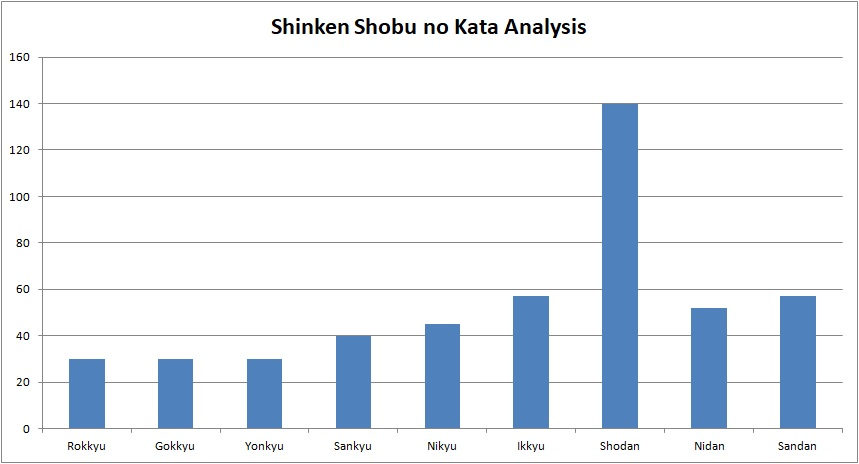
I respect that commentor and their reasoning behind their comment, and they are not wrong with regards to the numbers, but what also has to be remembered is that those numbers are averages. Four months for rokkyu (6th kyu) with 30 attack-defence combinations in the reflex grading and four months for shodan (1st dan) with 140 attack-defence combinations in the original shodan grading, and now four months for part one and then part two with approximately 70 attack-defence combinations in each part.


In order to achieve the 10-year timeframe for shodan, one would have to be successfully completing the earlier, less arduous gradings at a faster rate than one every four (actually 4.8) months so that there would be more time to complete the more arduous gradings in ikkyu and shodan.

Debbie Clarke: 'I certainly never mentioned 10 years as a time frame even for Shodan. More likely 15- 20 years!!'

I mention Debbie by name because she is a very important person in the JDJ tradition. One who I respect highly and who is worthy of that respect. If she speaks, we should listen.

A short biography of Deb's can be viewed on this page on the Southern Cross Bujutsu website; the school that she founded when JDJ was still alive and with his blessing. As impressive as that biography is, it still does not do her justice.

When initially drafting this post, I started to elaborate on Deb's bio with an emphasis on her time with JDJ, however, it soon became an essay in itself because she achieved so much and was responsible for so much. She was a trailblazer in many respects. I will only elaborate on the shodan issue in this post.

Deb commenced training in 1966. She failed a kyu grade but came back to become the first female to be awarded shodan in 1982 by JDJ. She is the only person to undertake and successfully complete the shodan 140 attack-defence combination shinken shobu no kata reflex. She was one of the first shodans that JDJ graded and more than held her own with the male recipients. 

Deb is not naturally talented, as she would readily admit, but she is a study in resilience and hard work. There is far more than the above in Deb's life, and it is all a study in resilience and mental strength.

She once told me a story about how she, as a young nurse, was attacked from behind in a parkland and all she thought was that her defence was taking longer than she thought it would. And remember, she wasn't a black belt then ... and young (to paraphrase the book and movie title, We Were Soldiers ... and Young.' 

For Deb, shodan within the JDJ jujutsu grading system is more like '15-20 years!!' rather than the suggested 10 years. As I said above, if she speaks, we should listen, however, that timeframe is also a guesstimate, which the abovementioned calculations suggest.

Sensei
The following is part of a private message received in relation to my abovementioned FB post and as such I will not disclose the message sender's name, instead referring to them as X.

X: BTW, I was am (sic) instructor with jdj for more than 15yrs. I think your blog should explain the significance of black and white grading which jdj himself referred to me as X Sensei. 10 years grading shodan is the exception not the reality.

There are a number of issues that X raises in their message.

First, given that JDJ passed away on 5th April, 2003, 21 years ago (I cannot believe that it has been that long ago), X could not technically have been an instructor with JDJ. Being an instructor with a JDJ ryuha is not the same as being an instructor with JDJ in many respects, not the least of which is that one does not get the benefits of JDJ's instruction and culture as an instructor. The culture in all of the JDJ ryuha is very different to that in the original JDJ ryu.

Second, X suggested that my blog should explain the significance of black and white grading in the JDJ jujutsu grading system. 

Previous posts in this series of posts regarding the development of the JDJ jujutsu grading system has repeatedly explained that ikkyu, black and white belt, was the original instructor's grading. Ikkyu formed the basis for all of the dan (black belt) grades that were developed after it. It has also been noted that prior to the first dan grades being awarded in 1981, all of the instructors at the JDJSDS were ikkyu holders, with the exception of JDJ, and there were very impressive instructors among that cohort.

By the by, I believe that JDJ ikkyu holders are deserving of at least a shodan (a black belt) given a comparative analysis with other martial arts and their grading systems, which is wholly supported by this study of the development of the JDJ jujutsu grading system.  

The role of the ikkyu gradings needs to be reassessed given the development of the dan grades independent from the kyu grades and without a systems thinking approach being adopted.

Third, X suggests that JDJ referred to him as X sensei. This led me to consider the meaning of sensei and its relationship with senpai:

In Japanese martial arts, as well as in broader Japanese culture, the term "senpai" (先輩) refers to someone who is a senior or elder in a specific context, typically indicating someone who has more experience or has been in a particular group, school, or organization longer than the speaker or the person referred to as "kohai" (後輩), who would be the junior or younger member. The senpai-kohai relationship is deeply rooted in Japanese social and educational systems, emphasizing respect, hierarchy, and mentorship.

In the context of martial arts, a senpai is not just a senior student in terms of time spent in the dojo (training hall) but also someone who has attained a higher level of skill, understanding, and perhaps rank. Senpai are expected to lead by example, offer guidance, and help kohai learn the discipline, techniques, and etiquette of the martial art being practiced. This role is pivotal in maintaining the traditional values of respect, discipline, and the master-apprentice relationship in the dojo.

The term "sensei" (先生), on the other hand, refers to a teacher or master and is a title of great respect. In martial arts, a sensei is someone who has mastered the art to a significant degree and is responsible for teaching and guiding all students in the dojo. The sensei imparts not just techniques but also the philosophy, ethics, and deeper understanding of the martial art.

The relationship between senpai, kohai, and sensei is hierarchical but also deeply interpersonal and rooted in mutual respect and the pursuit of knowledge and skill. Senpai serves as an intermediary between the kohai and the sensei, embodying the teachings and philosophy of the sensei while also being more accessible to the kohai for guidance and support. This structure ensures that knowledge and traditions are passed down effectively and that the culture of the dojo is preserved and respected.

Thus, in Japanese martial arts, the concepts of senpai and sensei are integral to the learning environment, ensuring that teachings are transmitted with respect for tradition and with care for personal growth and community cohesion.

As far as I am aware, and I could be wrong, X was awarded ikkyu under JDJ but only assisted other instructors/sensei and was never responsible for their own class(es) in the JDJSDS while JDJ was alive. Even though ikkyu was the original instructor's grading and is designed to produce instructors as well as practitioners, does assisting a sensei entitle the ikkyu holder to be referred to as sensei? Or would it be more appropriate to refer to them as senpai?

In a previous post, I explain how JDJ asked me to take over the Melville branch from Paul Connolly after 1.5 years training and while only sankyu (3rd kyu; orange belt). Thus, after 1.5 years training and only sankyu, I was a sensei, without having undergone the ikkyu instructor's grade nor having assisted any sensei of any description in the JDJSDS. However, when I came to be an assistant to JDJ in his senior class at the JDJSDS, even when I was shodannidan, and eventually sandan, is it appropriate to refer to me in that capacity as senpai?

And lastly, X's '10 years grading shodan is the exception not the reality.' The three 'exceptions' are Robert Hymas, Peter Clarke, and myself, as discussed above.

The Issue with the Timing of Shodan
What is the issue with the timing to be awarded shodan in the JDJ jujutsu grading system? As it turns out, there are many issues.

If it takes 15-25 years for the average student who trains the average amount of time to be awarded shodan, is that reasonable? How long does it take to achieve a black belt in jujutsu/Japanese martial arts/martial arts in general? This is what my newfound authority (ChatGPT) has to say on the subject:

The time it takes to achieve a black belt in Japanese martial arts varies widely depending on several factors including the specific martial art, the dojo, the frequency of training, the curriculum, and the individual's dedication and ability. However, here are some general timelines for a few popular Japanese martial arts:

Karate: Typically, it takes about 4 to 6 years to reach black belt level. This timeframe can be shorter or longer based on the factors mentioned above. Some styles may require consistent training multiple times per week.

Judo: Generally, it takes around 3 to 6 years to earn a black belt in Judo. Again, this depends on the frequency and intensity of practice, as well as the dojo's specific requirements.

Aikido: Aikido often takes a bit longer, with many students taking anywhere from 4 to 7 years to reach a black belt. Aikido emphasizes continuous improvement and mastery of techniques, which can extend the time required.

Kendo: For Kendo, the path to black belt usually takes about 3 to 5 years. Progression in Kendo is also highly dependent on regular practice and competition performance.

Iaido: Similar to Kendo, achieving a black belt in Iaido generally takes about 3 to 5 years of dedicated practice.

It's important to note that in many Japanese martial arts, receiving a black belt does not signify mastery but rather a deep understanding of the basics and the beginning of a deeper study into the art. Also, different schools and organizations might have varying standards and requirements, so it's a good idea to check with the specific dojo or martial arts organization for their particular timelines and expectations.

A Google search will support ChatGPT's information. What this shows is that JDJ's 10 years, let alone 15-25 years is way beyond the norm.

This raises the question; does the length of time that it takes to gain a black belt in the JDJ jujutsu grading system reflect the quality of the award, or does it reflect the haphazard nature of the development of the JDJ jujutsu grading system? Can we produce the same quality, or even better quality, yudansha in far less time by understanding the development of the JDJ jujutsu grading system and reshaping said system? I am, of course, arguing in the affirmative.

In this way, JDJ laid the groundwork; it is up to those who follow in his footsteps to improve on JDJ's work. Are any of those teaching in JDJ ryuha living up to that potential?

Names Missing off the Instructors' List
In the previous post, I shared a question that arose out of my exploration of the development of the JDJ jujutsu grading system:

This exploration also makes me think: is shodan reflective of the 'level' of the likes of John Copley, Ian Lloyd, Tony Chiffings, Debbie Clarke, Hans de Jong, Darryl Cook, Justin Palandri, Steve Moller? Is ikkyu reflective of the 'level' of the likes of Robert Kirby, Vass D'Esterre (deceased), Peter Canavan, Warwick 'Zak' Jaggard, John Polton, Emma Glasson (nee Wouts), Gerald Wouts, Keith 'Keef' Hickey, Dave Palmer, Rodney Miller? All were instructors for JDJ at one time or another. Technically, under the JDJ grading system, yes, but is that an accurate reflection of their abilities, knowledge, and understanding, in particular when you consider what the nidan and sandan grades contribute to the yudansha's abilities, knowledge, understanding, and teaching abilities, and of course when the JDJ grading system is compared to that of many/most other martial arts grading systems.

After the above analysis, I have to amend the above comment. Not all who were listed were 'instructors' per se. Some assisted instructors, some did not assist nor instruct at all.

The point I was trying to make was, are the shodan and ikkyu levels reflective of the 'levels' of the mentioned JDJ jujutsuka? Would the shodan's be higher graded in all other jujutsu grading systems, and should those who hold ikkyu grades in the JDJSDS be more highly graded in the JDJ tradition?

X (see above) contacted me to include himself among the above, however, as I stated above, while they may have been awarded ikkyu and assisted instructors under JDJ, I'm not sure that they actually taught their own classes under JDJ.

A comment received and published on the previous post: 'A few names missing off that instructor list. Janet, Peter T, Heidi, Jamie F and think there were a couple of others whose names escape me.'

Janet Lake was awarded shodan under JDJ but I'm not sure if she ever taught under JDJ. She did go on to establish her own school (JDJ ryuha).

Peter Templeman also was awarded shodan under JDJ and did teach under JDJ. He had his own branch and was very popular with his students. He took a great interest in his students and was very invested in their grading performances, in a good way. He was very supportive of them, and they did him and his teaching proud at the gradings.

Heidi Romundt was awarded ikkyu under JDJ and did teach her own class. She was teaching at Hillary's at the same time as Hans de Jong and myself. 

Jamie Francis was the last person to be awarded shodan under JDJ. I do not believe that he taught for JDJ but he may have assisted other instructors at the JDJSDS. He later went on to establish his own school (JDJ ryuha) in the Margaret River region before relocating overseas.

I have a list of JDJ yudansha, courtesy of Greg Palmer, however, I do not have a list of holders of ikkyu that JDJ awarded. If readers would send in names and hopefully dates, I could compile a list of JDJ ikkyu holders. 

I do know of an earlier list of ikkyu who were JDJ instructors in 1974 before the shodan grading was developed and introduced: Warwick 'Zak' Jaggard, Rod Miller (later shodan), Alan Robson, Adrienne Barlow, and Ross Allanson. Adrienne would appear to be the first female ikkyu.


I believe that the female disembarking the moving Vespar scooter driven by Margaret de Jong along with JDJ is Adrienne when demonstrating ukemi waza at the Royal Show way back when.

Other ikkyu that I am aware of are Margaret de Jong (JDJ's wife), Vass D'Esterre, John Poulton, Paul Seaman, David Palmer, Peter Hegarty, Peter Canavan, Robert Kirby, David Green, Michael Boland (?), Dennis Dunn, ... Emma Wouts (nee Glasson), Gerald Wouts, Keith Hickey, although I'd need confirmation because I wasn't at the JDJSDS then.