Showing posts with label Saitos. Show all posts

Saturday, 3 May 2025

From Feudal Japan to Modern Australia: The Legacy of Jan de Jong Jujutsu


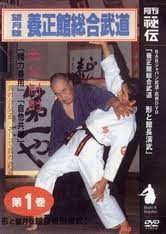
From Feudal Japan to Modern Australia: The Legacy of Jan de Jong Jujutsu (Daniel Newcombe 2025) unveils the untold story of a martial arts lineage that bridges centuries and continents. For the first time, Western audiences are introduced to the rich history connecting Jan de Jong's renowned jujutsu system to its roots in Tsutsumi Hōzan-ryū, one of Japan's oldest and most secretive samurai traditions.

Through the translation of the meticulously researched work by Sakae Morita, 堤寶山流秘書 (The Confidential Records of the Tsutsumi Hōzan-ryū), combined with the Authors 40 years and 3 family generations of experience with the de Jong jujutsu system in Australia , this detailed study delves into the lives of key historical figures who shaped the system, offering a detailed and fascinating exploration of their techniques, philosophies, and enduring contributions. From the samurai era of feudal Japan to the thriving martial arts communities of modern Australia, this book illuminates the journey of a profound legacy.

Perfect for martial artists, historians, and enthusiasts, this book provides a rare glimpse into the cultural and historical evolution of a jujutsu tradition that continues to inspire practitioners worldwide.


I worked with Daniel on this book and so I know the impressive efforts that went into researching and writing it.

I have been asked to provide a review of the finished product, which I am currently working on.

This work features the work on this blog telling the Jan de Jong story as well as that in my Jan de Jong: the man, his school and his jiu jitsu system (1997).

This book should be of interest to the many thousands who have been taught and are being taught within the Jan de Jong tradition dating back to the 1950s.

Sunday, 5 May 2024

JDJ Jujutsu Ikkyu Holders Register

It should be noted that I never set out to create a register of Jan de Jong's (JDJ) jujutsu yudansha, ikkyu holders, and/or instructors. That only came about through a comment received on a previous post asking about a register in relation to a person not affiliated with the Jan de Jong Self Defence School (JDJSDS) claiming that they were awarded yondan by JDJ.

I had a register of yudansha that was created by Greg Palmer. I didn't have a register of ikkyu holders, however, I thought it was important as ikkyu was the instructor's grade in JDJ's original grading system, the kyu system

As the above kyu system link showed, JDJ developed the kyu system with no thought of any extension; no thought of a dan system. That grading was designed as a one-off grading system with instructors being graded ikkyu. I would put some of the ikkyu holders who were instructors up against any of subsequent dan graded instructors and would say they either matched or surpassed them in all respects.

Of course, the obvious question is, why didn't JDJ consider dan grades when he developed his original grading system? 

Was it because there was no mention of black belts in Tsutsumi Masao and Higashi Katsukuma's Die Selbstverteidigung (Jiu-Jitsu): nebst einem Anhange über Kuatsu (Wissenschaft der Wiederbelebung Verunglückter): mit 72 Abbildungen nach dem Leben (Self-defense (Jiu-Jitsu): along with an appendix on Kuatsu (science of resuscitation of casualties): with 72 illustrations based on life) published in Germany in 1906. All of the belts in JDJ's kyu system are included in Tsutsumi and Higashi's list, but there is no mention of black belts by Tsutsumi and Higashi as there is no mention of black belts in JDJ's original list of gradings.

When shodan, and then nidan and sandan were subsequently developed, ikkyu came to be thought of as an 'assistant instructor's' grading. That belittles the previous ikkyu holders who were the instructors of the school. They deserve more respect from the post-1980s generations than to be considered 'assistant instructors.' That is why I have developed a JDJ ikkyu holder register.

Based on my analysis of the development of the JDJ jujutsu grading system that has been explored in these posts, an interesting proposition has been put forward by a reader who was a former instructor who was graded ikkyu. One that is well worth considering. Does JDJ ikkyu = Saito sandan?

DOES JDJ IKKYU = SAITO SANDAN?

Are the JDJ ikkyu holders the equivalent of JDJ's original instructors, the Saitos, sandan? Are they the equivalent of JDJ at sandan under the Saitos?

The idea behind this is that when JDJ developed his kyu system which was designed as a standalone one-off grading system, that was all he knew from the Saitos. That was his sandan, plus whatever else he picked up in his limited training in Europe during WWII. That is not an unreasonable assumption.

The following are the JDJ ikkyu holders whose names I have been able to ascertain todate. Thank you to the readers who have contributed to the compilation of this list.

The names are presented in no particular order. Those included in this register of JDJ ikkyu holders did not go on to grade shodan. Those that did are shown separately in the JDJ yudansha register. There are 34 in all, with 30 males and 4 females.

The first to be awarded ikkyu were Alan Robson and Rodney Miller according to the JDJSDS Hakusho (1986, 20).

JDJ Ikkyu Holders

1. Margaret de Jong (front right of JDJ)

2. Vass D'Esterre (back second left)

3. Robert Kirby

4. Peter Canavan

5. Rodney Miller

6. Dennis Dunn

7. Warwick 'Zak' Jaggard

8. John Poulton (front left)

9. David Palmer

10. David Green

11. Michael Boland

12. Heidi Romundt

13. Steve Moller

14. Gerald Woods

15. Adrienne Barlow

16. Alan Robson

17. Ross Allanson

18. Paul Lang (?)

19. Michael Simpson

20. Glenny Savy

21. Ian Thomason

22. Paul Amyes

23. Marcus Seabrook

24. David Skender

25. Peter Hegarty

26. Mick Rendall

27. Don Berryman

28. Jean Roebuck

29. Dean Cahill

30. Warren Holdway

31. Harry ? (trained with Rendall and Cahill)

32. Craig Ma’ha

33. Jason Stirbinskis

34. Dale Elsdon


A number of the above went on to become yudansha under Hans de Jong in his Hans de Jong Self Defence School ryuha following JDJ's death in April, 2003.

If you know of anyone missing from the above list, please forward their name to me for inclusion.


Monday, 25 March 2024

How Long Does It Take to Complete the Jan de Jong Jujutsu Grading System to Sandan?

The recent series of posts have explored the development of the Jan de Jong (JDJ) jujutsu grading system.

JDJ had three grading systems at his school, the Jan de Jong Self Defence School (JDJSDS): jujutsu, aikido, and pencak silat. For the sake of not repeating for the sake of technical specificity, the following will refer to JDJ's jujutsu grading system as JDJ's grading system.

Within those posts, we saw that the technical grades within the JDJ grading system finish at sandan (3rd dan). All higher grades are honorary. 

The idea that the technical grades in JDJ's grading system finish at sandan is based on JDJ's reported experience with his original instructors, the Saito brothers. The narrative is that the technical grades finish at sandan in the Tsutsumi Hozan Ryu grading system that the Saito brothers taught, and that JDJ completed them and was awarded sandan by the Saito brothers in 1939 (Jan de Jong: the man, his school and his ju jitsu system, Jan de Jong Self Defence School, 1997 (JDJ book)).

The adult technical grades in JDJ's final grading system commence with 9th kyu (of the mon system) and finish with sandan. From nikyu (2nd kyu) to sandan, there are multiple parts to the gradings, as the recent series of posts explain and explore.

The total number of gradings and their individual parts from 9th kyu to sandan is 46. Forty-six gradings for an adult to complete the technical grades in JDJ's grading system. 

JDJ recognised that his grading system was far more extensive and comprehensive than any other going around and wanted to acknowledge the efforts of his successful students by including a list of the parts of the gradings on their certificates. I pointed out that the list would only be included on the back of the certificate, which nobody would see, and that in and out of the martial arts, a black belt is perceived as being a black belt no matter the grading system from which it came from. 

A relatively common question that is asked is: how long does it take to get a black belt in JDJ's grading system? The commonly conceived wisdom is 10 years. Where did that number come from?

This post explores the question of, how long does it take to complete the technical grades in JDJ's grading system and to subsequently be awarded sandan?

There are five people who have completed the technical grades in JDJ's grading system and been awarded sandan by JDJ (and those five are also the only ones to have completed nidan (2nd dan) under JDJ): Peter Clarke, Robert Hymas, Paul Connolly, Greg Palmer, and myself, however, there is also JDJ under the Saito brothers.

According to the JDJ book, JDJ commenced training in 1928 and was awarded sandan in 1939 = 12 years. He started training at the age of seven, which makes him 18-19 when he was awarded sandan under the Saito brothers. That timeline raises many questions, which thankfully are beyond the scope of this post.

The following training commencement dates are taken from the JDJ book. The date of the awarding of sandan is taken from Greg Palmer's records:


What can be made of those numbers?

You will recall from a previous post that the original JDJ grading system was the kyu system. The shodan grading was developed so that JDJ could have some black belt instructors accompany him to Europe to advance his European teaching ambitions. I don't know the date of the introduction of the shodan grading(s), but it has to have been in the very late 70s.

Clarke and Hymas were awarded shodan in 1981, Connolly in 1982, and Palmer in 1984. The latter two's numbers are distorted because there was no shodan to grade during their earlier years. Hymas' numbers are distorted because he was working full-time as an instructor at the JDJSDS at that time.

Clarke's numbers would probably be the most representative of the first four given that he commenced training not long before the shodan gradings were introduced and he didn't work full-time at the JDJSDS. What makes his achievement even more remarkable is the fact that he was a partner in a leading law firm in the city at the time, and as such was time poor, however, he and Hymas (and possibly Connolly) did the shodan shinken shobu no kata as a demonstration whereas all those that followed had to perform it in true reflex fashion (see this post regarding this issue).

In addition, none of the first four had to go through the mon grades as those grades were introduced when they were instructors (who then went on to teach the mon grades that they had not undertaken). 

So, I might be the most indicative of the five sandans that were graded under JDJ given that I went through the mon system and shodan shinken no kata reflex style, and the nidan and sandan gradings were developed before I was a qualifying candidate. 

My Shodan

I commenced training on the third Wednesday in April 1983 in Ian Lloyd's class and was awarded shodan in February 1993 - a little shy of 10 years. That would appear to support the commonly conceived wisdom of a minimum of 10 years to be awarded shodan. Or does it?

When I commenced training, I started off by attending two lessons a day, six days a week, and engaging in a lot of extra training (see this post). That is 12+ hours a week, 48+ hours a month, and based on a 45-week year, 540+ hours a year. Most people start off, and often continue with, one or two lessons a week and maybe a little extra training. That is 1-2+ hours a week, 4-8+ hours a month, and based on a 45-week year, 45-90+ hours a year. 

A ludicrous calculation based on the above, but if we say that it takes 540 hours training a year to be awarded shodan in 10 years, then the average person training 90 hours a year can expect to be awarded shodan in 60 years. :)

There were other factors in my 10-year shodan qualification. 

During that time, I engaged in what was then an Australian rite of passage in backpacking in Europe for a year. I also completed the Chartered Accountants 'professional year,' which was actually 18 months, where candidates do not see the light of day for that period of time, and completed the Securities Institute of Australia graduate diploma in which I was awarded State Dux, which was another 18-month commitment. That had to have slowed down my progress to shodan.

What is obvious is that I, along with the other four sandans, am not an indicative example of the time it takes to be awarded shodan in the JDJ jujutsu grading system.

My Nidan
I was awarded nidan in December 1998, five years after I was awarded shodan. I had to reflect on those years as training and undergoing the nidan grades does not stand out in my memory. As it turns out, I was a little busy at the time.

Did I train for nidan for those five years with the same intensity as described above?  No, however, I was working full-time as an instructor at the JDJSDS from mid-90s to 2000. 

To counter that, I also engaged in the UWA (University of Western Australia) Master of Business Administration (MBA), an elite, time-intensive, business course, in the mid-90s. I worked full-time while studying the MBA full-time (nobody does that), and at that time it was an 18-month course rather than the 12-month course as most MBAs are these days. And now that I remember it, I also lived and worked in London for between nine months and a year shortly after grading shodan.

Completing the nine parts of the nidan grading would probably have taken me more like two years or more likely less. 

I had to go back over the nidan gradings to remember them as I said above, they do not stand out in my memory. In doing so, I remember that I did those grades with Greg Palmer. 

Greg had a long-held ambition/dream to complete JDJ's grading system. He initially started training with Clarke, Hymas, and Connolly, however, they quickly left him behind because they were in a race to the finish line. Greg approached me to help him realise his ambition/dream. I had no ambition to be awarded shodan, let alone nidan and sandan, but Greg being Greg would not allow me to help him in realising his ambition/dream unless I graded too. 

Looking back on the records, Greg had already graded nidan by the time we started working on my nidan. I had to be graded nidan before Greg would consider training for sandan, in Greg's eyes. In all honesty, I was happy to remain shodan but would still train with Greg for him to realise his ambition/dream, and I said/argued as much. Nonetheless, Greg taught me what needed to be taught to be awarded nidan before we started preparing for sandan.

The nidan grading and its component parts are discussed in this linked post. The following are comments on some of those parts.

Part 2 Ju Jitsu no Jitsuen: 'Arrange a demonstration using up to eight lower grades to show some aspect of jujutsu. Twenty minutes of explanation type demonstration and ten minutes of fast action are required to be shown.' Given that this grading is intended to examine a candidate's knowledge and ability to arrange a demonstration that informs the public what jujutsu is and in particular what Jan de Jong jujutsu is, I convinced JDJ to judge me on a 'real' demonstration that I had arranged for an open day at Wesley College.

How long did it take to prepare? Not long. If you know your stuff, know your students, and choose skilled and trained students, it doesn't require much training at all. By that stage, I had been part of and organised more demonstrations locally, nationally, and internationally than I can remember.

Part 3 Shinken Shobu no Kata: 'Reflex grading.' You will recall from the above 'nine parts' link that the number of attack-defence combination in nidan was reduced from 140 in shodan to 52 in nidan. Given that I was highly trained and highly proficient, and the attack-defence combinations are all just variations on a theme from previous gradings, not a lot of training was required to master the attack-defence combinations in this grading. 

Part 7 Shiai: 'Free fight with tanto vs tanto.' A group of us attempted this grading together. If I recall, the group included myself, Debbie Clarke, Ian Lloyd, and Hans de Jong. Maybe John Martyr.

How long does it take to train this grading? Given that knife fighting was not taught at the JDJSDS and given that no instructions were provided as to what is sought and graded in this grading, as long or as short as the candidate wants. My training consisted of a little training with the fellow candidates in order to determine their abilities and tactics, and then to devise tactics to defeat them. I didn't train those tactics, however, I successfully employed them.

Part 8 Jutsuri no Kata: 'Oral examination conducted with at least two other candidates, discussing the technical aspects on any technique selected by Shihan Jan de Jong.' No 'training' necessary in order to attempt this grading. No 'training' necessary in my case given that my mentor was Greg Palmer, who JDJ acknowledged as having the best technical knowledge of the techniques and tactics taught at the JDJSDS, and because of my natural and learned analytical nature and capabilities.

Part 9 Ju Jitsu Rekishi: 'Candidates are required to submit an essay with no less than 3000 words on a topic to be approved by Shihan Jan de Jong.' JDJ credited me with this part of the grading based on the international franchise proposal that I had prepared for him after accompanying him to Jakarta, Indonesia to meet with a Chinese-Indonesian entrepreneur who was prepared to fully fund the start-up. A lost opportunity if ever there was one.

I imagine that JDJ would have likewise credited Clarke with this part of the grading given his many contributions to JDJ's efforts over the years, including developing the AJJA dan grading system and their competition format, and providing a comprehensive explanation of both for AJJA consumption. Greg could have been credited with this part of the grading for his development ken no michi grading that was introduced by JDJ into his ikkyu grading. It would be interesting to know what Hymas and Connolly did to satisfy the requirements of this part of the nidan grading.

My Sandan
I completed nidan in December 1998 and sandan in May 2000, approximately 16 months to successfully complete 12 gradings - the fastest ever (Clarke 8yrs, Hymas and Connolly 7yrs, Palmer 4yrs).

The above linked '12 gradings' post explores and discusses the parts that make up the sandan grading. The following are some comments on some of those parts.

Part 1 Kime no Kata: 'Explain the theory and answer questions on demonstrated techniques.' The demonstrated techniques are simply variations on a theme, so no real training is required, and if anyone is going to successfully answer theory questions raised on those techniques, it was Greg and myself. In fact, I explained in the sandan post that Greg was disappointed when JDJ didn't ask us any questions and confronted him about it. JDJ said he knew that we knew the theory about the techniques.

Part 2 Ju Jitsu no Jitsuen: 'Arrange a ten-minute demonstration on a topic given by Shihan Jan de Jong using only yudansha. Twenty minutes preparation time will be allowed.' No training possible for this grading.

I cannot remember what my topic was, however, I do remember that JDJ and some others being kind enough to suggest that my demonstration was the best presented out of all five sandans. If memory serves, Connolly's subject was 'ground techniques.' I would suggest that JDJ was taking the opportunity to explore 'ground techniques' at the time as this was about the time of the emergence of so-called Brazilian jiu-jitsu and their emphasis on 'ground techniques.' We have techniques to defend while on the ground, however, it cannot be said that we teach 'ground techniques' as it came to be understood.

Even though I had the likes of Clarke, Hymas, and Greg included in my demonstration, Connolly was not included, the difficult part was in catering for their limitations as they were not the most athletic of jujutsuka.

Part 3 Taisabaki no Kata: 'Prepare a kata to show the different variations of the body movements.' In reality, no training is required. It should be expected at this level that the required kata could be developed on the spot let alone using a similar/the same format as the previous grading.

Part 4 Sutemi no Kata and Taoshiwaza no Kata: demonstrate 20 sacrifice throws and 20 takedown techniques and answer theory questions thereon. The training for the sacrifice throws only needed to be brushed up because they had been taught and trained throughout the grading/training experience, beginning with tomoe nage in 6th kyu, yellow belt.

There were new takedown techniques included in the grading, although technically 25 percent are throws based on my biomechanical distinction between throws and takedowns in my as yet unpublished The Science Behind All Fighting Techniques, but again, most are simply variations on a theme. It is interesting that a JDJ ryuha has omitted this part of this part of this part of their syllabus, probably because the head of that ryuha did not grade beyond shodan and was unfamiliar with the techniques and their variations.

Part 5 Kodachi no Kata: 'Demonstration of kodachi (wakizashi) techniques against katana.' The techniques are relatively simple so not a lot of training is required to be grading-ready.

Part 6 Hojo Jutsu: 'Demonstrate use of rope to tie up an opponent.' As explained in a previous post, the demonstration is not from an attack but simply tying up (gift wrapping) a compliant uke. Greg had studied and taught these techniques to Clarke, Hymas, and Connolly before they graded this part of the sandan grading without him, however, I too was a beneficiary of Greg's knowledge and expertise in this regard. Much to Greg's and my surprise, I quickly mastered the techniques. I'm not the most 'handy' of people.

Part 7 Taiho Jutsu: 'Demonstrate various arresting techniques from standing and sitting positions.' The techniques are variations on a theme and there are only six of them. Enough said.

Part 8 Toshu Kakuto Jutsu: 'Demonstrate searching and hand cuffing techniques.' As explained in the previous post on the nidan grading, these techniques are taken straight from Col. Rex Applegate's Kill or Get Killed, and they are not complicated.

Part 11 Shiai: 'Free fight with tanbo vs tanto.' As with all the shiai gradings in the JDJ jujutsu grading system, there is no training of fighting with the weapons used, very little training re tactics, and no information provided as to what is being graded. Consequently, no real training is required to successfully complete this part of the grading. 

Part 12 Ju Jitsu Keikaku: 'Candidates are assigned a project by Shihan Jan de Jong which will be of benefit for the students of the dojo, ryu or ju jitsu.' JDJ credited me with this part with the writing of the JDJ book. There are numerous contributions that Clarke and Palmer could be credited with to satisfy the requirements of this part of the grading (see above), and again, it would be interesting to know what Hymas and Connolly did to satisfy the requirements of this part of the grading.

Historical Records
With regards to the comments for nidan part 9 and sandan part 12, all of the essays and projects required in the dan grades (including shodan) would have been included in JDJ's records. Those records were inherited by Margaret de Jong (JDJ's wife), Maggie de Jong (JDJ's daughter), and presumably Paul Connolly (Maggie's eventual husband). It would appear that no use has been made of those records to date, not publicly at least. Have those efforts and records been consigned to oblivion? If so, that would be a shame.

Comments
How long does it take to complete the technical grades of the Jan de Jong grading system? I have been asked that question and this post explored the issue in order to provide an answer. 

It would be interesting to ask the same question of the other three living graduates who graded sandan under JDJ and who now are responsible for technical aspect of separate JDJ ryuha (in two out of the three cases, not necessarily being the principal of the school). What would their answer be? What is their answer in their modified/changed grading systems of their JDJ ryuha?

The above exploration suggests that it is difficult, if not impossible, to provide an authoritative answer to the question as to how long it takes to get sandan in the JDJ grading system. What I can say, based on the above exploration, and a great deal of resultant reflection, is that most of the work to undertake nidan and sandan is done in grading shodan in the JDJ jujutsu grading system. The work to complete shodan commences in ikkyu, which is the original instructor's grading.


The above graph has been used in a number of previous posts. It shows the number of attack-defence combinations in the shinken shobu no kata gradings from rokkyu to sandan. It could also be representative of the degree of difficulty for each grading level, which is reflected in the amount of time required to successfully complete those grades. In such a case, the ikkyu level would rise significantly as it was the original instructor's grade. What this illustrates is that ikkyu and shodan are the top of the mountain in JDJ's grading system, and it's all downhill after that. This then begs the question: why were there not more nidans and sandans in JDJ's school?

There is another aspect of the above exploration with regards to what is required to grade sandan, if not ikkyu and  shodan itself, in the JDJ grading system, and that is intelligence. Proficiency alone is not enough.

This exploration also makes me think: is shodan reflective of the 'level' of the likes of John Copley, Ian Lloyd, Tony Chiffings, Debbie Clarke, Hans de Jong, Darryl Cook, Justin Palandri, Steve Moller? Is ikkyu reflective of the 'level' of the likes of Robert Kirby, Vass D'Esterre (deceased), Peter Canavan, Warwick 'Zak' Jaggard, John Polton, Emma Glasson (nee Wouts), Gerald Wouts, Keith 'Keef' Hickey, Dave Palmer, Rodney Miller? All were instructors for JDJ at one time or another. Technically, under the JDJ grading system, yes, but is that an accurate reflection of their abilities, knowledge, and understanding, in particular when you consider what the nidan and sandan grades contribute to the yudansha's abilities, knowledge, understanding, and teaching abilities, and of course when the JDJ grading system is compared to that of many/most other martial arts grading systems.

This series continues with either an exploration of how to improve JDJ's grading system, which would involve significantly reducing the time to grade dan grades and become instructors without sacrificing standards, in fact, while increasing standards, or, comparing historic grading sheets that have come into my possessionto the final grading sheets within the JDJ grading system. 



Thursday, 21 December 2023

The Development of the JDJ Jujutsu Grading System Part 2.3: Shodan (Part 4.1: Ken Tai Ichi no Kata)

The previous post looked at Part 4 of the Jan de Jong (JDJ) jujutsu shodan grading. That part includes suwari waza no kata and ken tai ichi no kata. The previous post looked at suwari waza no kata (which is part of Kodokan Judo’s kime no kata). This post looks at ken tai ichi no kata.

The name ken tai ichi no kata has been translated as, ‘form of sword and body as one.’

The description of this kata in Jan de Jong: The man, his school, and his ju jitsu system is: ‘Demonstration of katana and the unarmed applications’ (Jan de Jong Self Defence School, 1997, p. 50). 

This kata as taught within the JDJ jujutsu shodan grading consists of five sword v. sword and five unarmed v. unarmed attack-defence sequences.                                                                  

The grading sheet reads:

1. Yoko Tekubi Hishigi: Tori – Seigan Kamae, Uke – Seigan Kamae

2. Ude Kujiki: Tori – Seigan Kamae, Uke – Gedan Kamae

3. Tekubi Te Nage: Tori – Seigan Kamae – Gedan Kamae, Uke – Jodan Kamae

4. Ude Hiji Nage: Tori – Hasso Kamae, Uke – Hasso Kamae

5. Ura Tai Otoshi: Tori – Gedan Kamae, Uke – Gedan Kamae

The first phrase represents the unarmed technique that is being demonstrated. The tori and uke kamae description refer to the ‘combat engagement posture’ (see Donn Dreager) for the sword attack-defence sequence.


Video Examples

An example of the JDJ kata was posted on YouTube by the Hans de Jong Self Defence School, a JDJ ryuha.

We saw in the post titled ‘Ken Tai Ichi no Kata Example’ that ken tai ichi no kata is a Yoseikan Budo (YB) kata. An example of the YB kata was posted on YouTube as part of a larger video taken from the Yoseikan Sogo Budo DVD set by Minoru Mochizuki, the founder of YB. 

The acquisition of these two DVDs by myself was the second step in my developing an understanding of just how much of JDJ’s jujutsu and aikido teachings were taken from YB. 

The ken tai ichi no kata is located at the 22:40 mark in the abovementioned YouTube video. 

The YB kata consists of five sword v. sword, five unarmed v. sword, and five unarmed v. unarmed attack-defence sequences. 

JDJ did not include the unarmed v. sword attack-defence sequence in his ken tai ichi no kata (see above). Interestingly, when looking for video examples to assist the readers of this post, I came across a YouTube video of Mochizuki demonstrating this kata in which he does not include the unarmed v. sword attack-defence sequence. 'What's going on here?'

Attack-Defence Order

JDJ had a different attack-defence order to that of the kata demonstrated in the YB videos:

JDJ's #1 = YB's #2

JDJ's #2 = YB's #1

JDJ's #3 = YB's #5

JDJ's #4 = YB's #4

JDJ's #5 = YB's #3

This ordering is provided for those that want to visually compare like-with-like as I discuss the kata in JDJ's system and that of YB.

Purpose

What is the purpose of this kata? What are the lessons to be learned from this kata? What benefits are the students supposed to derive from learning this kata, other than progression in the grading system?

I suggested in a previous post, based on what my instructors told me, that it was to demonstrate the similarities between sword and unarmed techniques. Why? What is the point?

A comment that I received to a post on Facebook that provided a link to my latest blog posts suggested that the three different parts of the YB kata represent kenjutsu, jujutsu, aikido: kenjutsu – sword v. sword, jujutsu – unarmed v. sword, and aikido – unarmed v. unarmed. Now that is a very interesting proposition, and one that I had never heard before.

The commentary on the above linked YB ken tai ichi no kata video explains that: 

The founder of Aikido Ueshiba, used to tell his followers that the principles of Aiki-jutsu came from those of Kenjutsu. But how the techniques were modified from Ken (saber) to Tai (empty hand) is not known precisely. ... Mochizuki acquired Kendo and Koryu-kenpo before learning Aiki-jutsu therefore he could figure out the technical relations between Kenjutsu and Taijutsu (Jujutsu). These kata represent his completed work out of many years of training and simple techniques that define the transition process from Ken to Tai. 

Ken tai ichi no kata in this instance would appear to suggest that Mochizuki is attempting to demonstrate the evolution from ken-ken to tai-tai, kenjutsu to aikido, and that he found the missing link: tai-ken, jujutsu.

Why would JDJ not include the 'missing link', jujutsu, in his ken tai ichi no kata in his jujutsu shodan grading?

Then, of course, the abovementioned premise has to be questioned. Did the principles of aiki-jutsu come from those of kenjutsu, or is it some attempt to link the tai with the samurai ken for some sense of superiority and credibility? And what does that have to do with JDJ's jujutsu?

Even if it is meaningless, the argument might be made that the kata is included in YB due to tradition because Mochizuki developed and taught the kata, however, can the same argument be made for the jujutsu taught by JDJ?

Eliminating Tai v. Ken

There are some possible reasons that might explain why JDJ eliminated the tai v. ken element of this kata

JDJ was above all else, for the most part*, a practical man. He was all about practical, effective techniques, for the most part*. When you see the tai v. ken element demonstrated in the above YB video, the kamae (tenchi no kamae (Guard of Heaven and Earth)) assumed by tori is, well, to be diplomatic, it does not look good. It doesn't look good and is clearly impractical in defending against an opponent armed with a sword. To the best of my knowledge, this kamae is only assumed in this kata in YB teachings and is not assumed anywhere else, even against other weapons. Would any instructor in the JDJ or YB tradition teach a practitioner to assume that kamae against an opponent armed with a sword or any other weapon, or even unarmed? If not, what is the point in teaching it?

Another Facebook comment suggested that the tai v. ken element was included in the kata in the JDJ aikido grading system. If so, why would he not include it in the kata in his jujutsu shodan grading? Was it because he was looking to make his aikido look more Yoseikan? Was it because he was just trying to populate his shodan grading given that the ikkyu grading was designed as a one-off, ultimate, instructor's grading?

A Facebook comment that was received, but which unfortunately I cannot locate, was that JDJ explained to a highly ranked aikidoka in his school that the original YB kata which included the three phases took two hours to perform. JDJ was more action oriented (not very patient) and may not have included the tai v. ken attack-defence sequence in order to reduce the time spent performing, and grading, the entire YB kata.

*The 'for the most part' will be discussed when the te nage (hand throw)/robuse (rowing throw) defence from ryo te dori (two hand grab) is discussed in a future post. 

Kata

In line with the above action orientation of JDJ comment; a senior JDJ jujutsu instructor suggested that JDJ was not a fan of kata full stop. Why not? It was suggested that it was because kata was a major form of training under his original instructors, the Saito brothers, and he was 'sick of it.'  If that is true, it raises a raft of questions (besides the question as to whether this is an example of 'shoehorning'). Why are there no Tsutsumi Hozan Ryu kata in his grading system? Why did JDJ have to go looking to other Japanese martial art traditions in order to find kata to include in his grading system? Why did he include kata in his grading system at all?

There is happoken no kata in 8th kyu (part of the mon system; see future post). Happoken no kata is another YB kata which JDJ included in his grading system to teach and train striking and blocking techniques - a practical training purpose. 

JDJ developed wakai no kata which he included in 7th kyu (part of the mon system: see future post) for the same practical purpose (also see 2nd kyu). 

The newly added revision grading in 2nd kyu included itsitsu no kata, another YB kata. It is a YB kata teaching the five basic taisabaki (evasive body-movements) of YB. This kata supported the taisabaki taught within the newly introduced mon system, which is largely based on YB teachings, as we will see in a future post.

What is the purpose of ken tai ichi no kata, and suwari waza no kata in the JDJ jujutsu grading system? Were they included in shodan simply to 'pad out' the grading given that ikkyu was designed to be a one-off instructor grading, as speculated upon in the previous post? Was it to introduce some 'traditional' teachings into his practically oriented system that was his kyu system?

Kata - Rokkyu to Sankyu

Speaking of the introduction of kata into the JDJ grading system, at the end of the 6th-3rd kyu gradings, there is a kata section: 'Examined on technical analysis and kata presentation. Refer to page 55' (Jan de Jong: the man, his school and his ju jitsu system, 1997).

Page 55: Kata - Rokkyu to Sankyu

'[JDJ] supported the AJJA by introducing the competition kata (refer page 18) into his grading system.'


Page 18: Australian Ju Jitsu Association

The Australian Ju Jitsu Association (AJJA) was founded in Brisbane in 1985 with the aim of:

... providing activity for the affiliated state ju jitsu associations on both an instructional and competitive basis;

organising and participating in both national and international seminars and competitions ...

[JDJ] and his instructors have made significant contributions to the AJJA. In 1987 [JDJ] was invited to fill the positions of President and National Coach which he accepted and held unopposed ever since.

In an effort to achieve the aims of the organisation the AJJA executive approached [JDJ] for his advice concerning the development of some form of competition. He advised that a kata competition rather than any form of free fighting would be the preferred option as it encourages good technique whilst introducing the desired competitive element. The kata competition he subsequently developed was adopted by the AJJA and has been used as the national competition ever since.

Page 55 continued:

The techniques are quite advanced and after several years use, he concluded that they imposed an additional hurdle for his students who are already engaged in a very challenging grading system. However, he had observed the students were receiving benefits from training kata. The solution he devised was to keep the kata format in the gradings but allow the students to choose the techniques.

Students are required to demonstrate five techniques in Rokkyu and Gokyu and ten techniques in Yonkyu and Sankyu. The aim of these kata is to gain the benefits of the disciplines of kata training, and to gain experience in demonstrating ju jitsu techniques.

Students select the techniques themselves from any previous grade, including their current grade. No atemi techniques are to be selected and locking to finish is required. Atemi to finish can be used once in the first two grades and twice in the next two grades but only when a lock is not appropriate.

Now that was a stroll down memory lane :).

I was the sole author of the book which was fact-checked ad nauseam by JDJ at my instance because it was representing/promoting him and his school both internally and externally.


Page 2: Acknowledgements

This book has been researched, written and edited by John Coles B.Comm., ACA, MBA, one of [JDJ's] senior instructors, to whom thanks are due for the considerable time and effort he has spent in fact-finding and writing this eagerly awaited book.

The contributions of Robert Hymas, Maggie de Jong, Greg Palmer, Paul Connelly, Peter Clarke, Debbie Clarke and Hans de Jong, all of whom are also instructors of [JDJSDS], are acknowledged and appreciated.

The other instructors' contributions primarily consisted of 'signing-off' on the content, however, Peter Clarke did provide some background on the contributions to the AJJA as he was responsible for those contributions on behalf of JDJ.

The Jan de Jong: the man, his school and his ju jitsu system book was written primarily to promote JDJ and his teachings, thus, certain license was taken with the content. For instance, the reference to JDJ concluding that the kata imposed an additional hurdle for his students who are already engaged in a very challenging grading system - that was 100% me, and the reference to the 'challenging' grading system is reference to an over cumbersome and over burdensome grading system as I have described the JDJ jujutsu grading system in a previous post

JDJ included the kata in his grading system for one reason, and one reason only - to support the AJJA kata competition that Peter Clarke had developed on his behalf (see above), even though no JDJ students participated in the competition, there was no competition in the JDJSDS, the AJJA quickly abandoned the concept, and JDJ resigned and removed his school from the AJJA, yet JDJ retained the gradings. Why? 

JDJ is a 'set and forget' sort of fellow, not prone to reflection, as I explained in a previous post. I lobbied for the removal of these kata gradings from the grading system altogether for the reasons explained above. I lobbied for a number of years for the benefit of the students. A concession was that as described above, however, the reasoning was a concession on my behalf. JDJ did not see any benefits in kata training but was reluctant to change what had been introduced in the past because he was a set-and-forget sort of person. 

Why didn't the other instructors lobby likewise for the benefit of the students? Was it a matter of teaching what is taught without question? 

My lobbying was successful, although in all honesty I did not remember that the compromise was included in the grading system. And I don't remember if I was eventually 100% successful and the entire idea was given the kibosh. I don't know if the kata gradings are included in the JDJ ryuha grading systems in whatever form.

'Those that cannot learn from history are doomed to repeat it.' 

I do know of one JDJ ryuha that has reinstated the original AJJA competition kata within their kyu grading system as per JDJ's original introduction. While it has been introduced with the intent of introducing kata training in the grading system given their association with karate, I'm hoping that an understanding of the development and change of this aspect of JDJ's grading system might make them rethink the re-introduction of an element in the grading system that simply increases the burden on the student which far outweighs any benefits that they may receive.

Next Post

These posts are lengthy, and apparently these days, reading anything beyond a few sentences is not popular (modern attention span of a brick). I was going to include a review of the attack-defence sequences in this post, however, it quickly turned out that a general discussion of the kata and kata in general in the JDJ grading system was already producing a lengthy post. The next post will consider the attack-defence sequences in detail and the lessons that can be learned from such an analysis.   


Sunday, 26 November 2023

The Development of the JDJ Jujutsu Grading System Part 1: The Kyu System

The following is a comment to my first post referred to in the third post of this series:

I appreciated the input of all the teachers at JdJ they each had a different perspective/approach. Where I think problems lie is the assumption that every student wants to become an instructor and so have a perfect understanding of the theory and practice. To my mind this has meant that the grading system has become very unwieldy and overly long.

That commentor makes a good point, however, their comment focuses on the backend of the Jan de Jong (JDJ) jujutsu grading system; there are also issues with the rest of the grading system which contributes to the entire grading system being 'very unwieldly and overly long.'

The way I describe it is that the grading system is disjointed, overly cumbersome, and overly burdensome, but I do agree with the above commentor that the focus on producing instructors at the backend of the grading system has contributed significantly to those problems. All of these issues and more can be understood with an understanding of the development of the grading system.

The way I see it is that the JDJ jujutsu grading system is version 1.0. A 2.0 version is needed: '2.0, adjective, used postpositively to describe a new and improved version or example of something or someone.'

Why is a 2.0 version needed? Because without it, the JDJ tradition will die. The knowledge and understanding within the grading system that JDJ developed/accumulated over his lifetime will be lost. JDJ's life’s work will be lost. The grading system contains 'faults' (for want of a better word), however, within those faults lies the opportunity for insights that can lead to a new and better understanding that extends far beyond the JDJ grading system, and those insights too will be lost.

In order understand technically why a version 2.0 is needed, and in order to develop a version 2.0, one needs to understand how version 1.0 was developed. Knowing how version 1.0 was developed provides insights that help to understand what needs to be improved and why.

Don't get me wrong, JDJ did an amazing job with 1.0, particularly given what he had to work with at the time (see below). There are unique innovations within his grading system that would benefit many other martial arts grading systems (and the Australian Army as Major Greg Mawkes MBE (retired) explains below). There are also 'faults.'

I have said to others that the grading system was a 'first attempt' (1.0) in need of study and modification. To the best of my knowledge, I am the only person to have performed an indepth study of the JDJ jujutsu grading system, the results of which are being shared in this and future posts.

Looking back at past posts in this blog, I can see that they were explorations building up to this comprehensive view (see my learning process in the fourth post of this series).

A summary of the development process of the grading system is that it was developed by JDJ who had relatively little, if any, experience with grading systems, and it was developed piecemeal to meet JDJ's personal needs at the time.

There are four distinct stages in the development of the JDJ jujutsu grading system: the kyu system, shodan, the mon system, and nidan and sandan. This post will look at the kyu system. The other stages will be looked at in the following posts.

THE KYU SYSTEM
JDJ emigrated to Perth, Western Australia in 1952, and the way he described it was that he initially worked as a labourer before starting to teach some of his work colleagues at lunch or after work when they found out that he knew some martial arts. His teaching proved popular and he saw a business opportunity that could become his sole source of income, but first he needed a grading system. That is how the kyu system came to be.

The current kyu system consists of six grades: rokkyu (6th kyu, yellow), gokyu (5th kyu, blue), yonkyu (4th kyu, green), sankyu (3rd kyu, orange), nikyu (2nd kyu, purple), ikkyu (1st kyu, black & white), but it wasn't always like that.

History
JDJ's original kyu system (mid-1950s) consisted of seven grades. It reflected the 'ranking system' included in Tsutsumi Masao and Higashi Katsukuma's Die Selbstverteidigung (Jiu-Jitsu): nebst einem Anhange über Kuatsu (Wissenschaft der Wiederbelebung Verunglückter): mit 72 Abbildungen nach dem Leben (Self-defense (Jiu-Jitsu): along with an appendix on Kuatsu (science of resuscitation of casualties): with 72 illustrations based on life) published in Germany in 1906:

Ranking of student
The performance of the students is divided into seven gradations, which I make recognizable by the different colors of their belts.

Red is the color for the beginners.
Yellow for the students of the sixth rank
White for the students of the fifth rank
Green for the students of the fourth rank
Orange for the students of the third rank
Crimson for the students of the second rank
Black and white for the students of the first rank

(Translation by Google)

JDJ owned a copy of Tsutsumi and Higashi's book, which he prized and kept separately in a display cabinet in his study.

JDJ told of how he was considered by the Netherlands-Dutch to be 'affected' by the sun, having been brought up in Indonesia, when he would first collect his suitcase of martial arts books before heading to a bomb shelter during WWII air raids. JDJ said that he acquired Tsutsumi and Higashi's book while living in Holland during that time. Books were to become a big part of JDJ's professional development.

Even though one of the authors of the abovementioned book is credited as being Tsutsumi, and recognition is provided in the book of training under a master of Tsutsumi, there is no explicit claim that the book is about Tsutsumi Hozan Ryu jujutsu (THR). And there are no details of the content of the ranks in Tsutsumi and Higashi's book.

A difference between the Tsutsumi and Higashi's ranking system and JDJ's original kyu grading system is that red belt was not a 'beginners' grade in the latter. It was an actual grading that required successful completion before being awarded a red belt.

Warwick 'Zak' Jaggard commenced training with JDJ in 1963 and was graded ikkyu in 1974 before teaching full-time for JDJ in 1975. I had the good fortune of living with Zak and his family in the early 90s when I was living and working in London. Zak confirmed that the grading system he engaged in consisted of six grades, with red belt not being included. Thus, between the mid-1950s and 1963, JDJ appears to have excised the red belt grading from his grading system.

White belt was the third rank in the Tsutsumi and Higashi ranking system and in JDJ's original kyu grading system, and was retained as the second grade in JDJ's modified kyu grading system. In the current grading system, it is now blue belt, which is a change since Zak engaged in the grading system.

White belt is universally recognised as a beginner's rank and comes from Kodokan Judo. Jigoro Kano, founder of Kodokan Judo, introduced the kyu-dan system with white and black belts being used respectively to distinguish between the two.

There has been speculation as to where the coloured belts for the kyu grades came from, which I discuss in the above linked post: 'This is an important issue as the conceived wisdom is that the coloured belt kyu grading system (in judo) did not originate until the 1930s, albeit in the UK and/or France.' Remember, the Tsutsumi and Higashi ranking system was included in a book published in 1906.

Did JDJ change the belt from white to blue and reserve the white belt for beginners when he received more exposure to kyu coloured belt systems, in particular the Kodokan Judo system? It has to be remembered that he was located in the most isolated capital in the world and martial arts, even by his own admission, was not a big thing in Australia then, let alone in Perth: ‘Looking back at my own early years in Australia (1952-1963), self defence was considered a rather peculiar and odd thing to do’ (JDJ: Jan de Jong Self Defence School, 1997, Jan de Jong: the man, his school, and his ju jitsu system, p. 3). There was no internet, no videos or DVDs; there were only books, and JDJ was an avid collector of martial arts books.

It should also be noted that in the Kodokan Judo grading system, black & white belt was reserved for female dan grades and is not included in any other grading system to the best of my knowledge. Before my first trip accompanying JDJ to Europe, Peter Clarke (see below) warned me that I would be questioned about my black & white belt. Sure enough, before I left the change room for the first time, I was asked what grade my black & white belt represented.

In all of the 'studies' that have attempted to establish the origins of the kyu coloured belt system, not one has referred to Tsutsumi and Higashi's ranking system, the first mentioned kyu coloured belt system (see above). The one where white belt is not for beginners and black & white belt is for males, and possibly females. 'What's going on here?', which is how Klein operationalises the curiosity path to insight (see third post).

The question is, are JDJ's kyu grades those of Tsutsumi and Higashi which may or may not be THR grades, or did JDJ simply appropriate the ranking structure from the Tsutsumi and Higashi book to develop a grading system? If so, what did he populate those grades with? Was it the teachings of his original instructors, the Saito brothers, or not? If not, where did they come from.

Shinken Shobu no Kata
The kyu gradings in JDJ's grading system are referred to, for the most part (see nikyu and ikkyu below), as shinken shobu no kata (kata of real fighting) or 'reflex grades.'

Shinken shobu no kata is the name of a kata in Kodokan Judo that was renamed kime no kata. JDJ gradings are not Kodokan Judo's shinken shobu no kata/kime no kata.

A kata consists of prescribed defences against prescribed attacks performed in a strict order. Is JDJ's shinken shobu no kata a kata?

JDJ's shinken shobu no kata consists of prescribed defences against prescribed attacks, however, they are performed randomly at the instruction of the examiner without the grading candidate seeing the instruction. This is the 'reflex' element in the grading because the grading candidate does not know what attack is coming and must act reflexively, which is the purpose of this training method.

Major Greg Mawkes MBE (retired) had this to say about the reflex method of training when writing about his involvement with JDJ in updating the Army's capability for unarmed combat training: 'The reflex method of training and testing is particularly appropriate to the instinctive reactions that must be developed in unarmed combat exponents' (Jan de Jong Self Defence School, 1997, Jan de Jong: The man, his school, and his ju jitsu system, p. 23).

The question was raised above: is JDJ's shinken shobu no kata a kata? The vast majority of those familiar with JDJ's shinken shobu no kata would say no, however, it's not as simple as that.

I used the kata training method to prepare students for JDJ's shinken shobu no kata gradings to great effect. This training method produced superior results in my student's grading performances, which was acknowledged by JDJ, the performances not the training method given that he was unaware of it.

JDJ's use of the shinken shobu no kata/reflex method for gradings has to be commended. It is UNIQUE to the JDJ tradition and should be promoted as such. I have found only one other method that even closely resembles it, and that is 'one-step sparring' in one of Mas Oyama's books on Kyokushin karate.

In marketing terms, being unique is a 'point of differentiation' with all other 'products' (marketing 101 - differentiate the product), however, if one is to promote the shinken shobu no kata as being a unique point of differentiation, one must understand that it is unique and why it is a superior training method. To date, with the sole exception of myself, that has not been the case in the JDJ tradition.

For those that will 'turn their noses up' at the reference to 'marketing,' the same differentiate-the-product concept applies in relation to fighting methods. Points of differentiation determines what is considered to be superior fighting methods.

Btw, the shinken shobu no kata method described above is for use in gradings, however, it is also a very versatile training tool as well. For instance, the instructor can limit the defence to one technique with different attacks signalled by the instructor, and one attack but different defences. Another innovation that is included in JDJ's teachings.

There is of course the question - where did JDJ get this unique form of training and grading from? That is a question that remains unanswered, however, in asking that question it provides insights that can lead to a new and better understanding (see third post). 

One of those insights is that JDJ did not reveal the sources of his teachings (see previous post). Understanding the sources of JDJ’s teachings can lead to new insights that can lead to a new and better understanding, as you will see, and which will help in pursuit of grading system 2.0, if in fact one wants to see further by 'standing on the shoulders of giants' (see previous post).

Classification
JDJ is also to be commended on classifying the defences in his shinken shobu no kata grades by the type of attack. Most other grading systems that I have seen simply include a list of techniques to be demonstrated.

You will recall from the third post that the 'core of all learning' is the identification of similarities and differences. One of the proven highly effective ways of identifying similarities and differences is classification. Classification is often thought of as an administrative exercise and treated with disdain within the martial arts community. Lakoff (1) warns against such a dismissive attitude. He suggests that there is nothing more basic to our thought, perception, action, and speech than classification and that without the ability to classify we could not function at all, either in the physical world or in our social and intellectual lives.

(1) G. Lakoff, 1987, Women, fire, and dangerous things: What categories reveal about the mind, Chicago, University of Chicago Press.

The above is taken from a chapter in my book that is tentatively titled, The Science Behind All Fighting Techniques.

Tricks and Progression
In the Complete Kano Jiu-Jitsu, Hancock and Higashi (1905) label all of the techniques included in that book as 'tricks.' This is what many jujutsu, and even many martial arts, systems are based on - a series of 'tricks.' The 'tricks' are taught separately and independently with no connection between them being recognised/understood (connection being one of the paths to insight that Klein identified (see third post)).

JDJ has been described as a 'collector of techniques.' That is fair enough, but there is more to it than that.

While JDJ did not include an analytical element to his teachings at this stage, to which he admits when discussing the introduction of the mon system in a later interview (see future post on the mon system), there was some progression in his kyu grades. This progression is seen in that each grading increasing the number of attack-defence combinations in each of the kyu grades, as has been illustrated in a series of posts.

Another, and more important example of progression contained in the kyu grades is the tomoe nage (stomach throw) defence from kubi-tsukami shime (neck seizing strangulation attack). In the first grading, uke is 'thrown away,' when performing the defence. That never happens again even though the same defence from the same attack is included in a number of other gradings.

In 4th kyu, the same attack-defence combination but this time tori rolls up and applies ashi-gatame ude-kujuki (leg-set arm-breaking; it should have been described as hiza-gatame ude-kujuki (knee-set arm-breaking to be consistent now that I am studying it). In 2nd kyu, there are four defences when uke resists the hiza-gatame ude-kujuki.

Teach a basic technique, then teach a more 'controlling' technique, and then teach 'what if" = progression. This can be seen in a number of attack-defence combination in the kyu grades. A really well thought out progression in the grading system by JDJ, but one that is not recognised or appreciated due to the attitude of teaching and doing without question (see fourth post). Teaching and learning tricks.

Nikyu (2nd kyu) Purple Belt
The current nikyu consists of two gradings: revision (kime no kata) and practical (shinken shobu no kata). Yeah, I know, I see the issue with the two Japanese names as well (see above), moving on. Zak (see above) confirmed that there was only the practical grading in his time, which means the revision grading had to have been introduced post-1974.

Here is where a timeline helps:

1969. JDJ travelled to Japan to train under Minoru Mochizuki, founder of Yoseikan budo, for a brief period.

1974. JDJ asked Mochizuki to send an instructor to Perth, which he did in the person of Yoshiaki Unno. Hans de Jong explains in an interview for Blitz magazine that he and his father trained with Unno for two hours, six days a week, for two years. After that, Unno left to establish his own school.

1978. The mon grades were introduced into JDJ's jujutsu grading system. Those gradings are primarily based on Yoseikan teachings, as will be explained in a future post.

The revision grading in nikyu is comprised of ukemi, kuzushi, kansetsu-waza, itsitsu no kata, and wakai no kata sections. The first three elements are based on the mon grades which are primarily based on Yoseikan teachings. Itsitsu no kata is a Yoseikan kata. It is designed to teach the five basic taisabaki ((evasive) body-movements) taught by Yoseikan. JDJ never shared the source of this kata (see previous post). Wakai no kata is a kata that JDJ developed to improve his student's punching and kicking skills, possibly after Unno found them wanting. It is included in the now red belt which is part of the mon system even though it is referred to as 7th kyu (see future post regarding the mon system).

The question is, is this revision grading revising the kyu grades? This leads to another question, what do the kyu grades have in common with the mon grades, if anything?

Ikkyu (1st kyu) Black & White Belt
The original ikkyu grading, according to Zak (see above), was comprised of reflex, teaching, theory, terminology, philosophy, and history gradings. This is pre-1974.

The current ikkyu grading includes the above gradings, although the philosophy section is subsumed into the history section, and three more gradings: ken no michi (sword basics), kime no kata (revision), and first aid.

The ken no michi grading was developed by Greg Palmer to teach the basics of sword work before attempting the sword gradings in the dan grades. As I explained in the first and third posts of this series, Greg was a professional teacher and he understood teaching principles, including progression. It makes sense to teach and examine the basics before teaching and examining the basics in action. Greg successfully lobbied for it to be included in the grading system so as to prepare the students for the sword gradings in the dan grades. It was a rare instance where someone other than JDJ contributed to JDJ's grading system.  

The ikkyu kime no kata does revise the kyu grades, unlike the nikyu revision grading (see above). The grading requires the grading candidate to demonstrate techniques from rokkyu to nikyu (see above) in a kata format.

Why the two types of revision gradings? Why did JDJ decide to include a revision grading in these two gradings post-1974? When did JDJ introduce the revision gradings into these two gradings? Is the answer to those questions got to do with ikkyu being principally an instructor grading and the timing of the introduction of the mon system which is based on Yoseikan teachings? Did JDJ come to consider nikyu as an assistant instructor (sempai) grading of sorts? When JDJ developed and introduced the shodan grading (see next post), ikkyu came to seen as producing sempai and therefore the ikkyu gradings sempai gradings.

The first aid element involves obtaining a first aid certificate from an accredited organisation such as St John Ambulance Association. This is an extremely responsible requirement for instructors that JDJ introduced post-1974.

Ikkyu is an Instructor Grading
One of JDJ's senior instructors used to say that ikkyu was a 'fighter's grading' whereas shodan was an instructors grading. That instructor (a) had a focus on 'warrior' culture, and (b) could not have been more wrong. Any reading of the ikkyu syllabus would see that it is primarily designed to produce instructors. It has to be remembered that at this time there were no dan grades and no dan grading system, and all of the instructors were graded ikkyu.

The inclusion of the instructor elements in the grading is yet another innovation of JDJ. It is a very rare attribute in a martial arts grading system, however, what needs to be understood is that this kyu grading system that JDJ developed was designed to be a one-off grading system. A complete system. It was not part of a greater system. There were no plans for a dan grading system at that time. There was no looking ahead.

Robert Hymas, Peter Clarke, and John Copley were the first to be graded shodan by JDJ (1981. source: Greg Palmer). Why didn't JDJ grade anyone shodan before that? That is a question that was sometimes asked by senior members and instructors of the Jan de Jong Self Defence School (JDJSDS). A common answer to that question was because JDJ did not want instructors to be going out teaching on their own in competition with him. I never subscribed to that view, even way back when. I said that that view was overly cynical and gave JDJ too much credit in terms of business strategy.

The point is, JDJ didn't need yudansha (black belt holders). This was in the halcyon days of the JDJSDS when people were lined up down the street to enrol in the school, and where there were 800-1000 students, all with ikkyu instructors. He didn't need shodans, he didn't have a shodan grading, and there was no reason to develop one.

Next
In the next post, the shodan grading will be explored as the second part of the development of the JDJ grading system story.