Showing posts with label ken tai ichi no kata. Show all posts

Monday, 11 March 2024

Answers to Questions on Nidan Grading Facebook Sharing Post

The following is a series of questions received on my Facebook post sharing the previous blog post on the nidan grading. I found the questions interesting and insightful, and the answers would be a useful contribution to the discussion concerning the development of the Jan de Jong (JDJ) jujutsu grading system.

I am genuinely curious. Were any jujutsu candidates ever required to open Happoken no kata by, after the rei, shifting into an open stance, as often seen in formal demonstrations of other karate kata?

From Jan de Jong: the man, his school and his ju jitsu system (1997): 'Happoken no Kata (Kate of Eight Fists) ... Open by stepping into  kiba-dachi with the left then right leg then punch both fists down in front stopping at hip level' (p. 53).

The opening to JDJ's 'version' of happoken no kata is not as elaborate as that in Yoseikan, which reflects JDJ's focus on the practical.  

And were any jujutsu candidates required to open and close their demonstrations of Kentai ichi no kata with formal, kneeling rei to pass their grading?

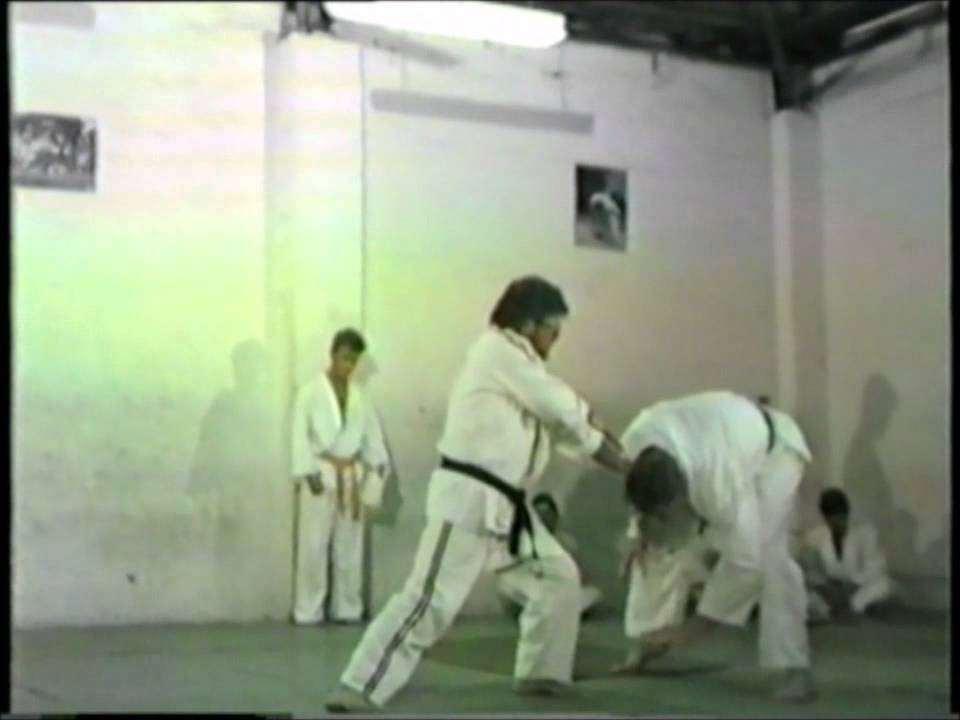
The linked post is to the kata being performed by two of Hans de Jong's (HDJ) yudansha. It shows the formal opening and closing of the kata in seiza.

And, not to be too contrarian, but in the spirit of adding information. I was told by JDJ that he would not teach a particular Yoseikan kata of changing techniques because "it set bad habits:" The kata consists of a lengthy series of "changes" in an unrealistic chain. He said that you might need to adjust your intentions once, but that expecting further chances was unrealistic. (Or, maybe more accurately, that's how I interpreted what he said.)

Not sure how the author of the above comment is being contrarian as their comment is in line with mine in the previous post where I stated that JDJ included a 'changing techniques' section in his nidan grading even though he was opposed to the teaching of changing techniques because it initially trained ineffective technique.

The particular Yoseikan kata to which the author refers is Hyori no Kata (form of front and back). See this link for video of the kata

The first time I saw this kata was in a copy of Minoru Mochizuki's book that I obtained from Jan-Erik Karlsson and shared with JDJ (see linked post). The next time was in a two-disk DVD, Yoseikan Sogo Budo by Mochizuki.

I initially found the hyori no kata very interesting, however, I quickly came to the same point of view as JDJ. Why train poor technique? 

Why not train changing techniques, like everyone else does. The rationale, as explained above, is that you initially train poor technique, however, the rationale is also a samurai/warrior approach to combat. Your defensive technique is fully committed, and if that doesn't work, your next defensive technique is fully committed. 100% all the time, every time.

I remember my first introduction to changing techniques and how they were in fashion. It was at a seminar in southern Germany in the late 1980s. I was part of a group of instructors that accompanied JDJ as he was teaching at that seminar. I was ikkyu at that stage. JDJ had not included any changing techniques in his grading system at that stage. Even then I didn't appreciate the methodology. I successfully applied the initial technique to which the other person could not defend against. He said, 'You're not supposed to do that. You're supposed to let me get out of it' (or words to that effect). Yeah, that's not the approach to combat that I had been taught.

And, if asked 'Why is the final sword technique in ken tai ichi no kata that was taught to you, which you graded, and which you now teach, result in a mutual slaying?' my answer would have to be 'It doesn't.' (1. the tenth technique certainly does not result in a mutual slaying. 2. Neither does the fifth technique "as I was taught it." For other readers and for some clarity, I agree with what John has previously said about the fifth technique performed the way he describes it. I did learn the kata, for the first time as a whole set rather than simple sword exercises, from JdJ as he was teaching John and Garth. The 'requirement' to enter directly when performing the fifth technique was not mentioned until several years later.

Don't quite understand what is being said there, however, the fifth sword technique in ken tai ichi no kata as JDJ taught (see above linked post), it was a downwards strike defended with specific instructions. The specific instructions were no evasive body-movement and tori's sword to never be raised higher than uke's neck. This results in a mutual slaying. This should be obvious even without observing the attack and defence.

JDJ was specific in his instructions, and he was right, at least in that regard. It's just that he misremembered the attack. The attack is a straight thrust, as I learned when acquiring the abovementioned Mochizuki videos. 

Watch the abovementioned HDJ yudansha ken tai ichi no kata with the technique in question on slow motion. How does tori avoid being slayed? Through the use of an evasive body-movement. This is how most of the instructors at the Jan de Jong Self Defence School performed the defence, even though JDJ was specific in his instructions - no evasive body-movement. The instructors did not teach the defence as including an evasive body-movement, even though they would employ an evasive body-movement when performing the defence or kata.

All just FWIW.

I am not familiar with this initialism.

Tuesday, 5 March 2024

The Development of the Jan de Jong Jujutsu Grading System 4.0: Nidan

In a previous post, I explained how the Jan de Jong (JDJ) jujutsu grading system was developed by JDJ to further his needs at the time. 

The kyu system was developed because he needed a grading system to support his new business of teaching jujutsu on a full-time basis that was to become his sole source of income. The shodan gradings were developed to provide him with black belt instructors to further his ambitions of teaching in Europe. The nidan and sandan gradings were developed to provide JDJ with a legacy.

The story goes that the technical gradings in the jujutsu system taught by JDJ's instructors, the Saito brothers, finished at sandan with 'Progression to higher grades [being] based on the yudansha's (black belt holder) contributions to ju jitsu, the ryu (style or system), or the school and at the discretion of Shihan Jan de Jong' (Jan de Jong: the man, his school and his ju jitsu system, Jan de Jong Self Defence School, 1997, p. 11). 

JDJ needed to develop nidan and sandan gradings so that Peter Clarke, Robert Hymas, and Paul Connelly could be graded as such in order for JDJ to be able to award them higher honorary grades. They were to be his legacy

Ironically, when I broached the subject of 'succession planning' with JDJ in the mid-1990s, me being a business/management professional, he did not want to have a bar of it. He literally said that he didn't care what happened after he died because he wouldn't be here. His focus was always on the here and now (possibly the product of his war time experience). That appeared to change when he saw his 'expiration date' approaching, and thus the nidan and sandan gradings were developed and introduced, and the rushing through of Clarke, Hymas, and Connelly to complete those gradings.

You will be familiar with the basic format of the nidan grading because the basic template for the dan grades was set with JDJ's ikkyu in the kyu system. You will recall from the kyu grading post that the kyu system was developed as a one-off, stand-alone grading system with ikkyu being the instructor grading. 

The titles of the below sections are taken from the nidan grading requirements in Jan de Jong: the man, his school and his jujutsu system (Jan de Jong Self Defence School, 1997, p.51).

Part 1: Kime no Kata
'Demonstrate locks and throws from counters to resistance to locks and throws.'

You will recall from the above referenced ikkyu post that kime no kata is broadly taken as being a revision grading within the JDJ jujutsu grading system. The term 'broadly' is appropriate for this grading.

A general description of this part is that it involves 'changing techniques.'

The requirements of this part are five different joint-locks and three different throws to be demonstrated for the nine basic joint-locks which are resisted. Three different throws and five different joint-locks to be demonstrated for five specified throws that are resisted.

The type of resistance became a matter of debate. Greg Palmer and I are the only other two to have completed nidan and sandan under JDJ. We came after the abovementioned trio and so JDJ got to have a 'second look' at the gradings that he'd developed and only seen once before when the abovementioned trio graded. Thus, the format changed, or improvements were made based on the second look.

The same was true of shodan shinken shobu no kata where the first ones to go through (including the abovementioned trio) performed the 140 attack-defence combinations as a demonstration whereas those who came after had to perform under true reflex conditions. In this case, the form of resistance for Greg and myself differed to that used by the abovementioned trio.

JDJ was against changing techniques because he considered it to mean initially training and performing ineffective techniques, so why did he include this grading in nidan? It is probably because everyone else was teaching changing techniques at the time, and JDJ did include elements into his grading system that he was 'not a fan of' simply because others were doing so at the time, e.g., shiai. This an explanation as to why he changed his ideas of the grading the second time round.

Part 2: Ju Jitsu no Jitsuen
'Arrange a demonstration using up to eight lower grades to show some aspect of ju jitsu. Twenty minutes of explanation type demonstration and ten minutes of fast action are required to be shown.'

Greg Palmer's demonstration has been posted on YouTube in three parts.

JDJ often said that Greg's demo was the best ever, in fact, when the video of the first demo did not work out, JDJ got us (I was a member of Greg's demo team) to do it again so that he had a good video of that demonstration. Why was Greg's demo the best? Because he was a teacher and therefore knew how to train us, a la four-time premiership coach, Alistair Clarkson, who was a teacher before becoming head coach for Hawthorn.

The requirement of this grading reflects JDJ's focus on producing instructors in the dan grades. The basic idea behind this grading is that the instructor should be able to explain to others what jujutsu is, not unlike the Ju Jitsu Rekishi parts in the ikkyu and shodan gradings.

It also reflects that putting on demonstrations was a big part of the promotion of the Jan de Jong Self Defence School (JDJSDS) and JDJ at that time. Demonstration stories abound, with the older generation of the JDJSDS.

Part 3: Shinken Shobu no Kata
'Reflex examination.'

52 attack-defence combinations down from 140 in shodan. There is an increased focus on defences against punches (19).


Part 4: Hantachiwaza no Kata and Kentai Ichi no Kata
'Demonstration with uke in seiza and tori standing.'
'Demonstration of katana and the unarmed application.'

The kentai ichi no kata is an extension of the idea of the Yoseikan Budo (YB) kata that JDJ included in shodan, however, the techniques taught within this kata are not from YB.

I'm not sure, nor have I attempted to find out, where the techniques in these two kata have been taken from. This will be a different case with the future sandan grading post.

Part 5: Tanbo Jutsu and Jo Jutsu
'Demonstrate defences with tanbo.'
'Demonstrate defences against jo.'

The tanbo (short stick) section includes two sections: one where the tanbo is concealed as in the photograph to the right (although only one tanbo is used), and one where the tanbo is 'open', meaning that it is held at the end but concealed behind tori's leg.

The use of the tanbo concealed is unique to JDJ's teachings. It comes from his pencak silat teachings where the short stick (gada) is used singularly or in a pair as in the photograph to the right, and both defensively and offensively.

The JDJ ryuha that offer courses and suggest that they teach to fight with this weapon are delusional and misleading. This grading only teaches a limited number of joint-locking techniques against punches (see below), some 'tricks.' If one wants to learn how to fight with this weapon, one needs to see Peter Clarke at Southern Cross Bujutsu who is the only person to have been graded 'black' in both JDJ's jujutsu and pencak silat, and who is the only person teaching JDJ's pencak silat. The use of this most versatile of weapons is well worth studying, so see Peter Clarke.

The two sections in the tanbo section include a single joint-locking technique inside and outside, left and right, with a straight arm or retracted. Eight defences in all, covering all possibilities, which is a tactical lesson that could be extended further within the grading system. It was well thought out.

This tactical lesson was also present in the original sixth kyu grading, the first grading in the kyu system (see reference above) which was JDJ's original grading system. There are three defences against morote-kote-dori suihei (two hands grabbing the forearm of uke). When I came to realise that JDJ's grading was disjointed and while the mon system was YB based and featured unbalancing, the kyu was not and did not. I asked JDJ about two of the defences that featured unbalancing because they did not fit this newfound realisation. He explained that before he introduced the mon system, he tried to introduce the YB unbalancing into the kyu system, and that in doing so he had changed two of the three defences against the aforementioned attack. The original defences were disengagements that placed tori to the right, left, or in front but away from uke/the attacker. It was a brilliant tactical lesson, but which has since been lost through the retention of JDJ's changes, which are no longer needed due to the introduction of the mon system. 

The defences against a jo (4'6" staff) include seven techniques from the outside and one from the inside and were probably taken from YB. The techniques involve throws, joint-locks, and takedowns.

Once again, the JDJ ryuha advertising that they teach how to fight with this weapon are delusional and misleading. They are teaching 'tricks' that are included in this and other gradings. They are not teaching how to 'fight' with this weapon because if one were being taught how to 'fight' with this weapon, or the short stick, the first and principal technique that would be taught would be striking techniques. And once again, if one wants to learn how to fight with this weapon, one should go and see the abovementioned Peter Clarke at Southern Cross Bujutsu.

Part 6: Kyushowaza
'Demonstrate various pressure point attacks.'

This grading was included in nidan because in the 1990s, everybody was teaching pressure point techniques. Karate, jujutsu, aikido, wing chun, kung fu, everyone was teaching pressure point techniques. Much like ground techniques are now the flavour of the month due to Brazilian Ju Jitsu and everyone is teaching their ground techniques. I was previously unaware that wing chun and karate taught ground techniques. :/ 


George Dillman was at the forefront of this movement at the time. He couldn't sell karate because everyone taught karate so he 'differentiated his product' (marketing 101) by teaching pressure point techniques along with his karate.

I'm open to new ideas and while I was living in London, I attended a seminar hosted jointly by Wally Jay (Small Circle Theory Jujutsu) and Dillman. Jay taught his jujutsu, which basically involved bending a person's fingers backwards, and Dillman taught his pressure point techniques.

He demonstrated a technique where two hits to two different pressure points on the forearm would cause the person to fall to the ground. The explanation was that somehow the two hits caused something to travel along the nerves that caused the person to fall to the ground. His uke was an American airman who had travelled from his posting in Germany to attend Dillman's seminar. Two hits and American airman uke duly falls to the ground.

We pair up and my partner strikes my forearm twice in the designated areas and turns away, only to turn back to find me still standing. He's confused. He tries again but stays looking at me this time and sees the same result. After a couple of more tries, out of frustration, he calls Dillman over. Dillman does his two hits and turns away to explain that this is how it is done, only to turn back and find that I'm still standing. He then lays into my forearm with some almighty punches. Dillman is a short, stocky karateka and does possess powerful strikes as seen in his breaking demonstrations. His powerful strikes cause me to bend over, but not because of any pressure points but because he'd just punched the 'crap' out of my arm (I ended up with two bruises where he punched me). Dillman then walked away without explanation.

At the end of the seminar, Dillman demonstrated his pressure point knock-out technique. A hit to a pressure-point on the jaw that causes the individual to lose consciousness. He demonstrated this first on a teenage girl who was literally hiding behind a male participant at the seminar. Quick hit to the jaw and she's down. When it came to my turn, he was demonstrating this on all of the participants, lucky us, he gives me a short, sharp punch to the side of my jaw, and while I am dazed, I don't go down. I end up with a horrendous headache but not unconscious. No pressure point, just a good short sharp hit to jaw, while holding the other side of the head so that it cannot move and thus dissipate the force applied, moving the brain inside the skull and possibly causing a mild concussion.

Good times, but back to this grading. The pressure points are applied, not in a fighting context but while JDJ is sitting down. This leads to questions as to its effectiveness in a more fluid environment.

When I did my grading, the pressure points around JDJ's trapezius area were a bit pointless on his bull-like upper body. The only way a pressure point could be used effectively there is with a baseball bat. But on his 'chicken-like' legs, he felt every one, and would 'tap-off' to signify that I had got it right and he felt something. Unfortunately, his 'tap-off' was like a focused hit to the back of my head, and I was at risk of receiving a concussion, so much of that part of the grading was done at arm's length with me cringing so as not to be rendered unconscious from a 'tap-off.' This is a grading that required the wearing of protective equipment, e.g., a helmet. :)

Part 7: Shiai
'Free fight with tanto vs tanto.'

The description and issues associated with this section of the grading are discussed in a previous post.

Part 8: Jutsuri no Kata
'Oral examination conducted with at least two other candidates, discussing the technical aspects on any technique selected by Shihan Jan de Jong.'

The idea behind the grading is laudable, however, the technical knowledge within the JDJSDS and within JDJ was lacking at the time. However, a scene from Under the Tuscan Sun is pertinent here:

Martini: Signora, between Austria and Italy, there is a section of the Alps called the Semmering. It is an impossibly steep, very high part of the mountains. They built a train track over these Alps to connect Vienna and Venice. They built these tracks even before there was a train in existence that could make the trip. They built it because they knew some day, the train would come.

JDJ built the tracks, and my work goes a good way to providing that train (see previous post with this proposition and discussing this issue).

What would be some of my questions to candidates undertaking this grading?:

'Why is the final sword technique in ken tai ichi no kata that was taught to you, which you graded, and which you now teach, result in a mutual slaying?'

'What are the similarities and differences between o soto gari, o soto guruma, and o soto otoshi?' The answer to that question is complicated given that even though o soto otoshi is included in the grading system and that has been taught, graded, and is now being taught by the grading candidates, it was never understood or taught properly by JDJ and therefore by his instructors.

'Why is the te nage in the shodan shinken shobu no kata grading such a ridiculous, over complicated technique that has so many changes in direction that it makes one dizzy?' 

'Why are blocks used in conjunction with evasive body-movements in the grading system?'

'What is the purpose of the futari dori and shiai gradings in the grading system?'

Part 9 Ju Jitsu Rekishi
'Candidates are required to submit an essay with no less than 3000 words on a topic to be approved by Jan de Jong.'

My topic was an international franchise proposal for the JDJSDS. How this came about is discussed in a previous post involving our invitation to Jakarta, Java, Indonesia by a Chinese-Indonesian entrepreneur (CIE) in 1995.

It was a fantastic opportunity. One that the vast majority of start-up franchises never get.

The CIE was prepared to fund it all. A house in the Jakarta CBD to act as dojo and residence for instructors from the JDJSDS. A cook, cleaner, driver, translator, food, and a car. Marketing was taken care of as is explained in the abovementioned post. There were European instructors calling out to be included under the JDJ banner, so a successful establishment in Jakarta, fully funded by the CIE, would have gone a long way to establishing an international franchise of the JDJSDS.

JDJ and the CIE were both dead keen, but they were like two trains on different tracks heading in the same direction, but they would never meet. How do you establish an international franchise of the jujutsu taught by JDJ which takes a minimum of 10 years to be graded shodan without compromising standards? That was the question. I came up with the answer, which was the subject matter of my project that satisfied the requirement of this part of the grading.

JDJ never implemented my proposal, even though he was more focused on his international teaching than his domestic school in those days. Why not? That's a question for another day. :)

The next post will look at the final grading in the JDJ grading system - sandan.


Tuesday, 2 January 2024

The Development of the JDJ Jujutsu Grading System Part 2.6: Shodan (Part 5: Shiai)

SHODAN PART 5: SHIAI

Part 5 of Jan de Jong's (JDJ) jujutsu shodan grading is shiai

The translation of shiai in Jan de Jong: The man, his school and his ju jitsu system (Jan de Jong Self Defence School, 1995) is 'a game, match, or contest.' 

There are a number of shiai gradings in the higher grades (ikkyu to sandan inclusive). Insights, or greater insights, (see Klein) may be gained that lead to a new and better understanding by studying these shiai gradings together rather than separately.

Why Shiai Gradings?

The first question that has to be asked is, why did JDJ include shiai gradings in his jujutsu grading system? That question needs to be asked in the context of the fact that JDJ did not see much of value in shiai as a training method. 

I know this for a fact because he specifically told me so and discouraged the practice when I was 'sparring' with a training partner when orange or purple belt. It was reinforced by Robert Hymas, a senior jujutsu instructor at the Jan de Jong Self Defence School (JDJSDS) and who was one of the three that JDJ ultimately awarded Rokudan, when he reiterated JDJ's views from the JDJ perspective.

So why did JDJ introduce shiai gradings into his jujutsu grading system? 

One explanation is that he was unfamiliar with grading systems, as has previously been mentioned, and he saw others were including shiai-type gradings into their grading systems. Kodokan Judo for instance. Then there was Tomiki Aikido/Shodokan Aikido and their competition aikido. Karate. Kyokushin karate and their x-man kumite. All of those forms of training were to be found in books, which as previously stated, were a great source of JDJ's 'continuous professional development.' And, of course, the Australian Ju Jitsu Association were lobbying for him to develop a competition format for the organisation given his role as President and National Coach of the organisation.

Given all of that, the second question is, did JDJ know what he was trying to teach or assess in the shiai gradings? What was the purpose of those gradings, other than including them because others were and, of course, to populate the higher grades given his one-off development of the kyu grades as his grading system?

I suggest that JDJ did not know what he was trying to teach or assess in these types of gradings. Sacrilege, I know, however, as will be seen below, that view is supported by the fact that there was virtually no instruction provided by JDJ nor his senior instructors as to what to do in these gradings; what they are trying to teach the student; what is being assessed. This is also supported by the fact that JDJ saw very little of value in this type of training. In this, I agree, which will also be seen below.

But, as always, there is a lot to learn by studying JDJ's shiai-type grades and their introduction, even if they serve no useful purpose ... other than to provide those lessons (see conclusion below).

Ikkyu: Futari Dori

At the end of the ikkyu shinken shobu no kata grading (practical grading) there is a section titled Futari Dori (attacks featuring two opponents). The description of the grading refers to two attackers, five attacks in total, and unarmed vs unarmed.

When looking for an image for this section (see left), it appears that futari dori is very much an aikido term and an aikido form of training, albeit very different to JDJ's grading referred to by the same name.

First question: did the senior instructors of the Jan de Jong Self Defence School (JDJSDS), those that graded shodan before I did, grade this section of the grading? Was it part of the original ikkyu grading? Or was it introduced when Jan de Jong (JDJ) introduced the shodan grading which led to additional gradings being added to the nikyu and ikkyu gradings? I might have been able to tell you, however, I no longer have access to the old grading sheets that I was gifted and which I regifted for the noblest of reasons. It appears that no good deed does go unpunished.

I recently saw a video posted on Facebook by a JDJ ryuha showing a nikkyu training/demonstration of this grading. (a) It was a mess, and (b) I would fail the candidate based on that performance, today.

The candidate in question should not be disheartened by those comments. Their performance was reflective of all who preceded them in this section of the grading. It was reflective of their instructor's performance in their grading, and reflective of their instructor's instructor's performance in their grading. In this case, the fault most definitely lays with the instructor, as it did in the JDJSDS.

Why is the performance in this grading always a mess. It is because the grading candidates abandon all of their training when engaged in this section of the grading. They start moving around all over the place, crouched in anticipation of an attack, and they are more inclined to move backward rather than forward in response to an attack. Was this their actions in any of the many shinken shobu no kata (practical) gradings that came before, and even the shinken shobu no kata grading that this section is a part of? The answer is a resounding, No!

George S. Patton: 'You fight like you train.' That would not appear to be the case within the JDJ tradition when the shiai-type grades are attempted. This raises a question as to the practicality of the shinken shobu no kata method of training. 


When I teach or discuss this grading, I suggest the person think Cpt Algren in The Last Samurai when he is confronted by three assailants armed with swords while he is unarmed. He stands his ground and waits for the attackers to attack, to come to him, and then he responds. The application of the 'mind of no mind' lesson in a life-and-death situation. This is representative of the shinken shobu no kata training.

The above is what should be being looked for in this grading, however, that is what is not being demonstrated in this grading. Why not? Because the instructors do not teach tactics for this grading, other than to place one opponent in front of the other. The same instruction given to 1st mon candidates, aged five or six, in the two-attacker section of their grading. This is an issue that will be taken up when the mon grades are considered.

I was going to share my experience in successfully completing this grading as there is a great deal to learn through the analysis of that experience, however, I'm trying to limit the length of these posts, unsuccessfully so as it appears.

How did I go in this grading? I passed. That is about all I can say about my performance. I, like the abovementioned JDJ ryuha demonstrator, moved 'all over the shop.' My two attackers chased me all over the dojo, and it was a large dojo. Did I execute any successful defensive techniques? A block or two, maybe. No locks, no throws, no takedowns. I didn't land any percussion techniques of my own, but then neither did my attackers. Is a pass in this grading not being hit? Is that what this grading is supposed to teach and assess? Is it simply a game of 'stay away'? I don't know, because my instructors would not appear to have known given their instruction and feedback. 

Shodan Shiai

'Free fight unarmed vs tanto, unarmed vs tanbo, then uke and tori swap roles.'

Tanto refers to a knife; tanbo a short stick.

First, it was a very different time. Occupational health and safety (OHS) did not exist, at least not in these gradings. No safety precautions were taken, other than mats. No restrictions on attacks with weapons. Head, eyes, groin where all acceptable targets for both armed and unarmed participants. No restrictions on techniques. No instructions whatsoever (for the most part).

The tanbo and tanto were usually rolled up newspaper which were then taped. Those makeshift training weapons did inflict a fair 'sting' when hit or stabbed with them, and were capable of causing injury, which they did on occasion.  

Second, this could be seen to be a relatively fair grading in that the attackers were not trained in fighting/attacking with a tanto or tanbo whereas the defender was trained in defending against tanto and tanbo attacks, to some degree.

It could be seen to be a relatively fair grading ... in theory. In practice, the armed attacker annihilates the unarmed defender. When the two candidates swap roles, the same result occurs. In order to pass the grading, the difference between the two scores has to be within a certain range otherwise both fail.

When I asked a senior instructor what the purpose of this grading was, he replied that it was to show that even with training that a person would be annihilated by an armed, relatively untrained in fighting with that weapon, attacker. And that is what the grading does show, time and time again. Good lesson. Good to know. Thanks. Cheers. 

It was a good thing that I did not take that lesson on board when I was confronted by a knife-wielding assailant on two separate occasions (the starting point of my book on a new and better understanding of our natural and learned responses to a threat).

Third, why free fighting unarmed against a knife and unarmed against a short stick? In fact, why one unarmed against two unarmed in the previous grading? Shouldn't the progression be one unarmed against one unarmed, then one against two, and then one unarmed against one armed, and then both armed with the same weapon, etc.? Where is the one unarmed against one unarmed?  

An answer to these questions might be found in Tomiki's explanation of his introduction of shiai (randori) into his aikido.

Tomiki was a student of Jigoro Kano, founder of Kodokan Judo, and was eventually graded 8th dan by the Kodokan. He became fascinated by Morihei Ueshiba’s aikido and became one his early students. In his ‘On Jujutsu and its Modernisation’, Tomiki argues for two forms of randori training:


When we analyse the essence of attacks, they fall into two general categories:
1. An opponent, from close in, tries to topple (taosu) or restrain (osaeru) you.
2. An opponent, from a distance, tries to strike, lunge at, or kick you, or with a weapon tries to cut or stab you.
...
The system of randori practice that Master Kano formulated is for the situations described in point 1 above; it is the category of nage-waza, where from close in you apply a waza at the collar and sleeve of a Japanese style judo jacket. A system of randori practice where you would avoid your opponent's attack from a distance (as in point 2 above) and then apply a technique would utilize the atemi-waza and kansetsu-waza. Against this latter attack, the attack from a distance, there is a need to establish such system of randori training.


Randori practiced in aikido usually involves two or more opponents. It is not 'free fighting' per se but simply a 'free flowing' attack and defence with no continued fighting. JDJ had relatively little experience with randori training.

Tomiki's shiai (randori) involved an attacker armed with a knife. Did JDJ adopt Tomiki's shiai to continue that the shiai form of grading included in his one-off instructor grading, ikkyu? Did he include these types of gradings in terms of introducing a randori type in ikkyu and a Tomiki type in shodan? Did he include a short stick element because of its use in his pencak silat? ... Why aren't the attackers trained in the use of the weapons in attack mode?

Lastly, my grading, or I should say, our grading. Dave Palmer and my grading, it was something that had not been seen before or since. It was a literal blood bath. Maggie de Jong had to scrub the walls and mop the mats after the grading to remove the blood that had been spilled during the grading. There was a lot of blood.

This has to be expected when you get two real fighters, not just mere martial artists, together and there are no rules, no protective equipment, and when weapons are involved, and told to 'free fight.'

Again, a great deal can be learned from an analysis of my/our grading, however, post length considerations prohibit the sharing of my/our experience and its analysis.

How did Dave and I do in our grading? We passed ... even though the grading ended with Dave being taken to emergency after I punched him in the forehead with a standing fist punch and blood cascaded down his face and the front of his gi. He was attempting to retrieve a weapon that I had knocked out of his hand, and I instinctively punched him when he advanced to do so. He was knocked back the length of a tatami and as he attempted to advance, I instinctively punched him.

We passed even though I was rendered unconscious during the grading when I landed on my head/neck from a sacrifice throw by Dave (btw, great execution of the technique, dangerous, but great nonetheless).

In terms of OHS, our weapons were not taped rolled up newspaper. The knife was a wooden training knife and the tanbo was a piece of PVS piping wrapped in cloth and then taped. When you got hit with those 'training' weapons, you got hit, and the risk of injury increased exponentially. But we wanted to test ourselves, and of course there was no guidance or supervision provided by the senior instructors.

OHS-wise, nobody from the instructors table came to see how I was when I landed on my head/neck from Dave's sacrifice throw, and when a crack from my neck was heard 'like a "roo shooter's" shot' across the dojo, and as I laid on the ground unconscious for a bit. They simply waited for me to rise and continue the grading, which I did, albeit initially by backing off as the fight had become unfair with now two armed Daves advancing on me.

There was no feedback provided at the end of the grading, however, Hymas did approach me (us?) later and said that JDJ was not happy with the grading. JDJ never expressed that sentiment to us. Even then, I thought, 'How can any of the examiners be unhappy with the grading given the complete lack of direction provided by the instructors as to the conduct and purpose of the grading. Given the complete lack of indication as to what is supposedly being assessed.'

Nidan Shiai

'Free fight with tanto vs tanto'

This is the only shiai-type grading where there is an equal footing (see above re the absence of one unarmed v one unarmed). It is an equal footing because the two participants are armed with the same weapon. It is also an equal footing because the two participants have not been trained in the use of the knife and knife fighting. 'What is going on here?'

This is indicative of an issue within the JDJ tradition that I will address in a post associated with the mon grades, and that is that the attackers in the JDJ tradition are not taught how to attack properly. This has implications for the training of defensive tactics. 

I prepared for this grading. I learned from the previous shiai-type gradings that I'd undertaken.

The two attackers in my futari dori grading in ikkyu were Hymas and Dave Palmer. I asked Hymas to be one of my attackers because I wanted to test myself against the best. My strategy was to stay away from Hymas and to focus on responding to Dave's attacks or to attack Dave when Hymas attacked me. On the face of it, it was a sound strategy, however, as it turns out, it was a floored strategy. Dave was by far the more dangerous opponent.

Dave committed to his attacks. Hymas knew everything that I knew and knew the defences that I might employ against his attack, so he provided uncommitted attacks with a focus on countering my defence. This is a problem in this type of grading. I know everything you know, and you know everything that I know, and that knowledge impacts on tactics and strategies employed in the grading. It also leads to questions regarding the practicalities of the tactics and strategies thus learned in terms of 'real world' application.

I used this insight in my grading. I would faint an attack and observe the response. I'd faint it again and observe the response. If it was the same response, I'd attack with the anticipation of the response and adjust my attack accordingly. This became a strategy that I shared when engaged in my Master of Business Administration (MBA) degree. If I can discern your strategy, I can develop ways to defeat you.

I hadn't trained the futari dori grading with Hymas and Dave prior to the grading. If I had, I might have discerned Hymas' approach to his attacking role and developed a different strategy going into the grading, e.g., stay away from Dave and focus on Hymas.

In the shodan shiai grading, Dave and I did train the grading together prior to engaging in the grading. I learned that Dave tended to not acknowledge a strike and would walk through it to attack me.

Confidence isn't necessarily everything, but it is a big thing. On a rare occasion that we 'trained' this grading in the instructors class, I was paired with Darryl Cook. Cook is a very good practitioner. He is a contemporary of mine. He is aggressive and he is taller than me, bigger than me, and stronger than me. He was armed with the knife and I was unarmed, but I was 'all over him.' He had no answers. I actually felt physically taller and bigger than him. It was as though I was looking down on him from a height. Hymas took Cook aside to give him some advice since he observed that I was 'kicking his butt,' as the Americans would say. Cook returned and raised his knife to my face. Order was restored in the universe, my perception of my size returned to reality, and there was no more butt kicking.

I knew that Dave gained confidence when he walked through my attacks and 'kicked my butt.' The strategy going into the grading was to not allow that to happen; not to allow him to gain confidence by walking through my attacks and kicking my butt. The first time he tried it, I was ready. I put him on his 'arse', held him by the throat on the ground with my fist raised ready to 'ground and pound.' He covered up and raised both feet-legs ready to kick me. 

'Matte, matte, matte', JDJ shouted as he pounded the grading table. Hymas jumped up from the grading table and pulled me back ... and all the while, Dave and I were smiling at each other. We knew what this was all about. It was setting the 'rules' for this grading. Nobody had lost control, in fact, far from it, unbeknown to JDJ, Hymas, and whoever else was sitting on the grading table.

My nidan grading involved a number of candidates, all of whom had been my instructors. I trained a little with all of them, only to see how they fought. And then I studied knife fighting, given that there was zero instruction in knife fighting provided within the JDJSDS. Then I developed strategies to defeat my opponents, my instructors.

Memorably, when paired up with Debbie Clarke, a great practitioner and a real fighter, there was a standoff, so I provided an opening by lifting my hands. You will recall this strategy when ken tai ichi no kata was discussed in a previous post. It was a genuine opening and if she was good enough, she could 'kill' me. No takers. I raised my hands a little higher to entice her into attacking. No takers. A little higher, she attacked, I 'died.' Fair enough.

You will recall from a previous post that many, and most definitely the senior instructors, did not look outside of JDJ's teachings. In preparation for this grading, I looked outside of JDJ's teachings given that there were no specific teachings regarding knife fighting within JDJ's teachings. I also thought that this might give me a competitive advantage.

Part of my study re knife fighting was reading Col. Rex Applegate's Kill or Get Killed. The description accompanying the image to the right is:

Attack With Knife From Crouch

Beware of the man who holds his knife this way and who attacks from a crouch, with the blade held close to his body and with his free arm out in front to parry or to help create an opening for a slash or thrust.

Beware me. The following was included in the text:

The trained man will use this knife, in the attack, from a crouch, with the left hand forward and the knife held ... close to the body. The outstretched left hand will act as a guard, a foil or a parry, and will help to create the opening for a slash or thrust. The left hand also may be used to distract the adversary's attention - by waving it in his face, by throwing something, or by making sudden darting motions toward him. ...

Beware me and I was a trained man. I was trained in knife fighting by Applegate and not my instructors at the JDJSDS, even though there was a knife fighting grading in the curriculum which the senior instructors (Hymas, Peter Clarke, and Paul Connolly) had successfully completed. 

I adopted Applegate's approach, at times, with one important addition. When a thrusting attack was launched, I would move from the left foot forward staggered stance (han zenkutsu dachi) to a cross-stance. Or more accurately, sempok from pencak silat (see image below).


I was well versed in this stance having trained pencak silat for quite some time. Most importantly, the training was with Richard de Bordes school in London rather that at the JDJSDS as JDJ had, as he said, Westernised his pencak silat so that it would be acceptable for a Western audience. He had in fact Japanised it so that it resembled karate to a fair degree.    

Moving into this stance from a traditional staggered stance is effectively an evasive body-movement, similar to nagashi (flowing) in JDJ and Yoseikan Budo practice. Interestingly, the image accompanying the Tomiki aikido discussion above shows both aikidoka ostensibly assuming the same stance. The same stance is seen in some karate styles, and it is seen in JDJ jujutsu teachings, however, I would argue that there is less understanding of the use and the structure of this stance in all those arenas than in pencak silat.

Another part of the transition into this stance is that it moves the back hand to the front through the turn of the shoulders. This is also used to great effect in pencak silat. 

Part of my strategy was to employ this tactic, moving from a staggered stance into sempok/cross-stance thereby executing an evasive body-movement and moving my rear knife-wielding hand to my front hand and a trusting attack. It was part of my strategy because the other candidates, my instructors, had not seen it before. 

Memorably, this tactic was employed against the abovementioned Debbie Clarke.

Debbie lunged forward and I executed the move. She was going to barrel into the now thrusting knife, which was a molded metal knife, and she was in danger of being 'impaled' on impact. I relaxed my grip and as impact occurred, the knife slide through my hand and fell to the floor. It was beautiful, it was perfect ... and it was missed by JDJ. A clean 'kill', and it was not recorded. 

JDJ took me aside after the grading and told me that I was the best in the grading. But all that meant was that I knew 'how to play the game' better than my instructors. I learned how to knife fight to some degree whereas they did not due to lack of instruction. I learned a fantastic move and had a greater appreciation for the use of sempok as a fighting tactic. But is that what this grading is designed to impart to students?

Before we leave this section, I was present when two JDJ yudansha engaged in this grading. One has since gone on to be awarded Rokudan by a JDJ ryuha principal. The other had his own ryuha and was a 'fighter.' They 'fenced' with the knives, like one would when fencing. Tapping against each other's knives as fencers tap against each other's swords. I was astounded. Why would anyone consider this approach, particularly given that they were supposedly highly experienced and graded martial artists? But here's the thing, how can you fail them, even though the performance was ludicrous, given that no training nor instruction is given in knife fighting even though this is a knife fighting grading in the grading system. 

Sandan Shiai

'Free fight with tanbo vs tanto.'

What is not included in the description of this grading is that the roles are swapped, as in the shodan shiai grading. And as in the shodan shiai grading, the person with the tanbo annihilates the person with the tanto. And as in the nidan shiai grading, the candidates are not trained in the use of fighting with either weapon.

What is the point, other than including shiai-type gradings into the dan grading system and populating the dan grading system given the relatively comprehensive ikkyu grading?

Conclusion

Unlike my instructors, I can teach students how to go about these gradings, but still, what is the point? I can, and have done, train them to defeat the students of other instructors, hands down, but what is the point? 

These gradings in the JDJ grading system are seriously floored, but here's the thing. If they are removed or 'fixed', the lessons learned through the above analysis are lost. The insights that can be gained are lost. The new and better understanding that can be derived from those insights are lost. It is a quandry, conundrum, and other such words to describe this situation.

What would you do?

Saturday, 30 December 2023

The Development of the JDJ Jujutsu Grading System Part 2.5: Shodan (Part 4.3: Ken Tai Ichi no Kata)

This post looks at the individual attack-defence sequences in ken tai ichi no kata taught by Jan de Jong (JDJ).

From the post 'Part 2.3: Shodan 4.1 Ken Tai Ichi no Kata': 

The JDJ jujutsu grading sheet reads:

1. Yoko Tekubi Hishigi: Tori – Seigan Kamae, Uke – Seigan Kamae
2. Ude Kujiki: Tori – Seigan Kamae, Uke – Gedan Kamae
3. Tekubi Te Nage: Tori – Seigan Kamae – Gedan Kamae, Uke – Jodan Kamae
4. Ude Hiji Nage: Tori – Hasso Kamae, Uke – Hasso Kamae
5. Ura Tai Otoshi: Tori – Gedan Kamae, Uke – Gedan Kamae

The first phrase represents the unarmed technique that is being demonstrated. The tori and uke kamae description refer to the ‘combat engagement posture’ (see Donn Dreager) for the sword attack-defence sequence.


An example of the JDJ kata was posted on YouTube by the Hans de Jong Self Defence School (HDJSDS), a JDJ ryuha.

We saw in the post titled ‘Ken Tai Ichi no Kata Example’ that ken tai ichi no kata is a Yoseikan Budo (YB) kata. An example of the YB kata was posted on YouTube as part of a larger video taken from the Yoseikan Sogo Budo DVD set by Minoru Mochizuki, the founder of YB. The ken tai ichi no kata is located at the 22:40 mark in the aforementioned YouTube video. 

The order between the JDJ and YB kata is different as reconciled in this post.

The YB kata consists of five sword v. sword, five unarmed v. sword, and five unarmed v. unarmed attack-defence sequences. The subtitles on that video refer to these sequences as ken (sword) and tai (unarmed), thus: ken-ken, tai-ken, and tai-tai. Those are the terms that will be used in this post.

JDJ did not include the tai-ken sequence in his ken tai ichi no kata. The reasoning behind that omission was explored in this post.

The following commentary will be initially based on the HDJSDS Jan de Jong Self Defence School (JDJSDS) representative video (see above). 

The core of all learning - the identification of similarities and differences - will be used in order to provide insights that can lead to a new and better understanding through asking, 'What's going on here?' (see Klein).

Nomenclature
The first thing to note is that JDJ sometimes uses a different nomenclature than that commonly used in the Japanese martial arts. For instance, most use kote to refer to wrist whereas JDJ uses tekubi. JDJ's tekubi te nage (wrist hand throw) is more commonly known as shiho nage (four corner throw) in aikido. What's going on here? Exploring why JDJ uses different nomenclature is another anomaly and a potential rabbit hole that I am going to avoid at this time.

1. Yoko Tekubi Hishigi (Side Wrist Crush): Tori – Seigan Kamae, Uke – Seigan Kamae
Tori
assumes seigan kamae, which a previous post explained is a totally defensive posture. This means that uke has to either move tori's sword off-line in order to attack down the line or to move off the line to attack in order to attack. In this case, uke moves tori's sword off the line in order to attack down the line. This is a tactical lesson that if generally not shared/taught. Why not?

This kata is generally learned and taught solely as a requirement of the shodan grading. It is not used as a teaching-learning tool for broader insights and understanding. Nobody studies this kata (other than me) other than in relation to satisfying a performance requirement in the shodan grading. It will be seen through the following analysis that a great deal can be learned from the study of this kata, which includes the flaws in the kata.


Tai-tai
- the technique is called kote kudaki (wrist crush) in the YB video. The attack is a wrist grab which is then countered, recountered, and countered again. Back, forward, back, forward ... JDJ's yoko tekubi hishigi (side wrist lock) is applied more directly without the toing and froing. Was this a deliberate change by JDJ to make the tai-tai technique more efficient and effective/practical?

The JDJ technique involves an initial unbalancing (kuzushi) move; one that is actually taught in YB. Giving tori the benefit of the doubt in the HDJSDS video in terms of unbalancing uke before applying the technique, the unbalancing is different to the ken-ken technique. With the ken-ken technique, there is a deflection of the sword, however, with the tai-tai technique, there is a physical unbalancing of uke which is unavailable in ken-ken. Rather than attempting to demonstrate the similarities between sword and unarmed techniques, would a more complete understanding of tactics and techniques be provided by identifying the similarities and differences between sword and unarmed techniques? 

2. Ude Kujiki (Arm Crush/Breaking): Tori – Seigan Kamae, Uke – Gedan Kamae
The HDJSDS video reflects the tori ken kamae as described above, which is as per the grading sheet, however, we saw in a previous post that (a) the grading sheet was not complete, and (b) uke would not advance on a ken seigan kamae without deflecting the sword first. At the very least, the instructor and the candidates should have said, 'That can't be right,' which is Klein's operationalisation of the contradiction path to gaining insight. The candidates might justify their performance in terms of doing what they've been taught, even if they question such teachings, however, that does not excuse the instructor's lack of understanding. This situation was also present in the JDJSDS at times, e.g., the JDJ misremembering the attack in the final ken-ken sequence discussed in a previous post dedicated to that issue.

The ken defence involves an evasive body-movement (EBM) and a 'brushing block' in the JDJ and YB demonstrations. What is the purpose of the brushing block? It's not to avoid injurious contact with the body because the EBM takes care of that problem. Why not just use an EBM and a strike? This is an issue that appears time and time again, in JDJ techniques and that of other jujutsu schools and martial arts. Sometimes there are answers, sometimes there are reasons, but more often than not there is shoehorning.

This issue will be explored more thoroughly, including the concept of 'blocks', in a future post when discussing the mon system.

A final comment. Tori finishes the defensive performance with a dramatic flourish of the sword. JDJ would, quite rightly, not approve. Tori is training to miss the target. With enough training, they will become expert at ... missing the target. This is an issue that is reflected in weapon attacks within the JDJSDS and the JDJ ryuha. A poor weapon attack affects the distancing and thus the student is training poor distancing that will negatively affect the effectiveness of the defence against a real attack.

Think of the sword training scenes in The Last Samurai were Ujio and Cpt Algren finish with their bokkens placed on each other's necks when they draw in their contest.

3. Tekubi Te Nage: Tori – Seigan Kamae – Gedan Kamae, Uke – Jodan Kamae
JDJ's tekubi te nage is aikido's shiho nage

In the YB ken-ken and tai-tai sequences, tori move to the inside of uke. In the HDJSDS/JDJSDS tai-tai sequence, tori move to the inside of uke but in the ken-ken sequence they move to the outside of uke. 'What's going on here?'

The YB sequences demonstrate the similarities between the armed and unarmed techniques by moving the same way. What is the JDJ sequence demonstrating?

Did JDJ deliberately change the ken-ken sequence? If so, why? Maybe it was a tactical decision. Maybe he considered tori moving to the inside and turning their back on uke was not tactically the best move and thus changed to moving on the outside instead. But doesn't that negate the similarities demonstration purpose of the kata?

Is there a need to change the ken-ken sequence back to the original? Or should we, instead of focusing on similarities, also be considering differences. Differences between ken and tai techniques. Differences between JDJ and YB techniques. Not just identifying the differences but exploring possible explanations for those differences. Exploring answers to the 'What's going on here?' question that may give rise to insights that provide a new and better understanding.

Btw, I identified this difference when I was being taught the kata for my grading and raised the issue with my instructors, the senior instructors in the JDJSDS. I received no answers, and so I did what I was taught for the sole purpose of passing the grading.

The same issue regarding the dramatic flourish with the sword when finishing the technique in the HDJSDS video is present in this demonstration. It's training to miss the target.

Finish Here
I'll finish here as to complete a full analysis would entail an even lengthier post where a lot of the same ideas emerge. Many of the same issues arise in the analysis of the remaining two sequences. 

For instance, in the final sequence, there was an error in the teaching of the ken-ken sequence that was discussed in this post. There is also a difference in the tai-tai sequence between (a) the HDJSDS/JDJSDS and YB tai-tai technique, and (b) the ken-ken and tai-tai techniques in the JDJ demonstration.

The effectiveness of the YB tai-tai technique is questionable. The technique should probably cause uke's back to arch 'limbo' style as tori's hand is driven down and behind tori thus lifting uke's head with the crook of their elbow. JDJ would have no 'truck' with that technique. 

For JDJ, there was only one way to perform mukae daoshi (known in aikido as irimi nage), and that was for tori to project their hand-arm upward, never downward. What this means is that JDJ's mukae daoshi relies 100% on the momentum of uke, which is facilitated by tori's unbalancing technique. The unbalancing is around the corner in the tai-tai case for this technique but is not required in the ken-ken case. 

Through the above analysis, the reader should now be able analyse the kata using the identification of similarities and differences as the base of that analysis. They should also be encouraged to question teachings when 'What's going on here?' or 'That can't be right' reactions are experienced, if they are experienced that is. The reader should now be aware of the tendencies to shoehorn answers when possessing no insights and real understanding of their own. 

What to Do?
What should be done? Should the JDJ kata be changed to reflect the original YB kata? Should the errors in the JDJ and YB kata be corrected? Should the kata be eliminated from the grading system as it seems to serve no useful function*? After all, JDJ's grading system is overly burdensome and overly cumbersome as has previously been explained. Would the student be better or worse off if the kata was not included in the grading system?

Here's the thing though. If the errors are eliminated; if the differences are eliminated; then so is the opportunity of gaining insights and a new and better understanding. There are numerous lessons that a study of the JDJ kata can teach, but the most important lessons are in the apparent faults and flaws, the differences. Those differences include those between different interpretations, different martial arts of the same genre, and different martial arts.
_______________________________________

*In a previous post, I speculated over the purpose of JDJ's inclusion of this kata in his shodan grading. One of the reasons may have been/probably was to be able to demonstrate some weapon techniques when teaching in Europe. You will recall that the sole purpose for developing the shodan grading was so that JDJ could have black belt instructors accompany him on his teaching tours in Europe.

JDJ shared with me that there were no, or very little, weapon techniques being taught in jujutsu in Europe before he began teaching in Europe. After that, there started to appear more and more weapon techniques being taught, particularly in World Ju Jitsu Federation affiliated schools as it was those schools that he primarily taught for.

Marketing 101 - differentiate the product. Everyone taught a hip throw, but nobody taught sword techniques. Jujutsu is supposed to be the product of the samurai, whose primary weapon was the sword. The link to the past, the link to the warrior tradition were sword techniques. And there was the supposed lesson of demonstrating the similarities between sword and unarmed techniques in these warrior arts, suggesting a deriving origin of the unarmed techniques. As a marketing tool, it was genius as the target audience had not been exposed to YB. 
    

Friday, 22 December 2023

The Development of the JDJ Jujutsu Grading System Part 2.4: Shodan (Part 4.2: Ken Tai Ichi no Kata)

The post before last looked at Part 4 of the Jan de Jong (JDJ) jujutsu shodan grading. That Part includes suwari waza no kata and ken tai ichi no kata. The aforementioned post looked at suwari waza no kata (which is part of Kodokan Judo’s kime no kata). The previous post began looking at ken tai ichi no kata. That post focused on the purpose of the kata and kata in general in JDJ’s jujutsu grading system. This post begins to look at the specific attack-defence sequences in the kata and the lessons that can be learned from their study.

Background
‘Previously’ ...

The name ken tai ichi no kata has been translated as, ‘form of sword and body as one.’

The description of this kata in Jan de Jong: The man, his school, and his ju jitsu system is: ‘Demonstration of katana and the unarmed applications’ (Jan de Jong Self Defence School, 1997, p. 50).

The kata as taught within the JDJ jujutsu shodan grading consists of five sword v. sword and five unarmed v. unarmed attack-defence sequences.

The grading sheet reads:

1. Yoko Tekubi Hishigi: Tori – Seigan Kamae, Uke – Seigan Kamae
2. Ude Kujiki: Tori – Seigan Kamae, Uke – Gedan Kamae
3. Tekubi Te Nage: Tori – Seigan Kamae – Gedan Kamae, Uke – Jodan Kamae
4. Ude Hiji Nage: Tori – Hasso Kamae, Uke – Hasso Kamae
5. Ura Tai Otoshi: Tori – Gedan Kamae, Uke – Gedan Kamae

The first phrase represents the unarmed technique that is being demonstrated. The tori and uke kamae description refer to the ‘combat engagement posture’ (see Donn Dreager) for the sword attack-defence sequence.


An example of the JDJ kata was posted on YouTube by the Hans de Jong Self Defence School (HDJSDS), a JDJ ryuha.

We saw in the post titled ‘Ken Tai Ichi no Kata Example’ that ken tai ichi no kata is a Yoseikan Budo (YB) kata. An example of the YB kata was posted on YouTube as part of a larger video taken from the Yoseikan Sogo Budo DVD set by Minoru Mochizuki, the founder of YB. The ken tai ichi no kata is located at the 22:40 mark in the aforementioned YouTube video.

The YB kata consists of five sword v. sword, five unarmed v. sword, and five unarmed v. unarmed attack-defence sequences. The subtitles on that video refer to these sequences as ken (sword) and tai (unarmed), thus: ken-ken, tai-ken, and tai-tai. Those are the terms that will be used in this post.

JDJ did not include the tai-ken sequence in his ken tai ichi no kata (see above). Interestingly, when looking for video examples to assist the readers of this post, I came across a YouTube video of Mochizuki demonstrating this kata in which he also does not include the tai-ken sequence. 'What's going on here?'

‘What’s going on here?’ is how cognitive psychologist Gary Klein operationalises the curiosity path to gaining insight that can lead to a new and better understanding. It is a new understanding because it did not exist before, and it is a better understanding because it is more accurate, more comprehensive, and more useful than the one that existed before.

The ‘What’s going on here?’ reaction does not contain the insight, but it can start the person on the road to gaining the insight if they go looking for an answer to their question. This can never happen if teachings are never questioned.

JDJ had a different attack-defence order to that of the kata demonstrated in the YB videos:

JDJ's #1 = YB's #2
JDJ's #2 = YB's #1
JDJ's #3 = YB's #5
JDJ's #4 = YB's #4
JDJ's #5 = YB's #3

This ordering is provided for those that want to visually compare like-with-like as I discuss the kata in JDJ's system and that of YB.

Core of All Learning
In Classroom Instruction That Works: Research Based Strategies for Increasing Student Achievement, Marzano, Pickering, and Pollock (2001) explain that the ‘core of all learning’ is the identification of similarities and differences. They go on to explain that the four proven highly effective ways of identifying similarities and differences are classification, comparison, creating metaphors, and creating analogies. I devote a chapter in my book on the science behind all fighting techniques to this subject providing examples within the martial arts of the use of these ways of identifying similarities and differences to teach techniques.

Identifying similarities and differences provides the opportunity for gaining insights that can lead to a new and better understanding (see above). It behoves all teachers and learners to understand and apply this concept. Teachers will be better teachers and learners will be better learners, in addition, learners will not be as reliant on their teachers being good teachers.

The core of all learning – the identification of similarities and differences – will be used here when studying the ken tai ichi no kata attack-defence sequences and which can provide insights that lead to a new and better understanding not only of the kata itself but of principles in general.

Comparing Tori Kamae
‘What is the difference between the kamae of tori in the first ken-ken defence and that of the other four?’ That is a question that I posed/pose to those learning this kata.

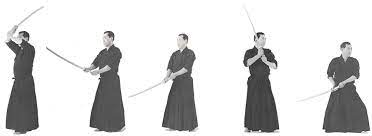
Answer: the tori kamae in the first ken-ken defence is seigan no kamae (see image below) which is totally defensive. The tip of the blade is pointed at uke’s throat or eyes and if uke attacks straight down the line they will be impaled on tori’s sword if tori does not move.


In the other four kamae of tori, they are not seigan no kamae and invite an attack. It is a genuine invitation as tori is providing a genuine opening, however, they are also setting up with an attacking kamae of their own. If uke is good enough, their attack may prove successful as the opening is a genuine opening.

This comparison (identification of similarities and differences) provides a strategic lesson which is not forthcoming for those that simply train what they are taught without question in order to pass a grading. Ditto for those that teach what they are taught without question because it is part of the curriculum. No, or very little, insight is achieved in those circumstances.

Tori Kamae #2
Another path to insight is contradictions. Klein explains that, ‘Contradictions are different from curiosity insights. Curiosities make us wonder what’s going on, whereas contradictions make us doubt— "That can’t be right."' (2013, p.61).

When researching this post and attending to the detail, I noticed that the JDJ grading sheet for the ken tai ichi no kata grading included seigan no kamae for both #1 and #2 ken-ken sequences. ‘That can’t be right.’ It isn’t.

I studied the Jan de Jong Self Defence School (JDJSDS) representative HDJSDS video (see above) and found that tori in that video did in fact assume seigan no kamae and uke attacked down the line thus risking being impaled on tori’s sword if tori did not execute a block/deflection or an evasive body-movement (see future post about the 'dog's breakfast' that is the blocking sections in the mon gradings). ‘That can’t be right.’ It isn’t.

I studied the YB video and found that tori assumed seigan no kamae before lowering to gedan no kamae to invite at overhead attack. That is how it was taught in the JDJSDS, although that is not how it is described on the grading sheet.

While misremembering an attack can be forgiven (also see JDJ misremembering the attack for the final ken-ken sequence). While not providing an accurate description on the grading sheet can be forgiven. While being misled by an incomplete instruction on the grading sheet can be forgiven. What cannot be forgiven is the teaching and/or performing techniques, defence and/or attack, that are clearly flawed. It shows an astonishing lack of understanding ... or indifference.

Insight Applied
The insight gained from the above analysis applies to the te nage defence from ryo te dori in the shinken shobu no kata grading in shodan (JDJ misinterpreted/did not understand the aikido/YB technique). It applies to the irimi uke, te gatame ude kujuki defence from jodan tsuki in the 5th kyu grading (see previous). It applies to the oshi otoshi technique in the taoshi waza no kata grading in sandan (JDJ did not understand the YB technique taken from a single hand-drawn image from Mochizuki's book; see future post re sandan grading). It applies to the belt drop, back fist defence from rear body-hold over elbows in the HDJSDS shinken shobu no kata grading in their shodan (misremembered the attack taught in the JDJ grading).    

Next Post
These posts are long; longer than intended. I will be trying to break them up into more 'bitesize' portions. The next post(s) will commence analysing each of the individual attack-defence and which will include a comparison with those taught by YB from whence they were appropriated.

PS: It would appear that this is part of my JDJ martial arts legacy. I doubt that I'll ever teach again, so, I am sharing some of my unique insights and understanding through these posts.