Showing posts sorted by relevance for query timing. Sort by date Show all posts

Monday, 29 January 2024

The Development of the JDJ Jujutsu Grading System Part 3.7: 8th Kyu

Okay, back on track.

The previous post (before the last post) looked at the first grading in the mon system for adults - 9th kyu. This post looks at the second grading in that system - 8th kyu, red and white belt.

Btw, if you're looking for quality belts and gi for your students at reasonable prices, see Ray Hana's Martial Arts Superstore.

Breakfalls (Ukemi)

Forwards roll, backwards roll, sideways roll, bridgefall, backwards roll over an obstacle, forwards roll over an obstacle, backwards flat over an obstacle, and sideways flat over an obstacle.

The new introduction is bridgefall, also referred to by Jan de Jong (JDJ) as o mae ukemi (major front breakfall). This technique was the subject of a 2010 post in which a video of the technique is posted.

Just as with sideways roll, this technique would appear to be relatively unique to JDJ's teachings, following a Google search and personal experience. 

In a 2010 post, I tell of an experience while teaching with JDJ in Sweden. JDJ demonstrated a 'hip turn' technique which I 'broke my fall' with o mae ukemi. During the break (no pun intended), I was approached by the seminar organiser, an instructor of a jujutsu school, and asked to teach him, not the hip-turn technique but the o mae ukemi to land safely from the execution of the technique. He had never heard of it or seen it before.

A point of differentiation that might be emphasised in the teachings of the jujutsu taught by JDJ, if it is understood by those teaching the jujutsu taught by JDJ.

The introduction of an obstacle for some of the breakfalls demonstrated in the previous grading is an increase in degree of difficulty over the previous grading.

Basic Blocks and Attacks (Uke and Atemi)

Front roundhouse kick, back side drive kick, and front side drive kick. Solo demonstrations. No blocks are included in this section.

A useful inclusion/replacement in this section could be Yoseikan Budo's (YB) sambo geri or yonbo (?) geri. These are exercise or kata that are used to teach three and four kicks respectively. I have found it a very useful exercise to teach, particularly in that it necessitates lifting the knee to stay balanced. Kicking skills are not great in most of those who trained exclusively within the JDJ jujutsu tradition. These kicking skills could be enhanced, based on experience, by training to lift the knee when initiating a kick, which the correct teaching of this kata teaches.

Last year I was assisting ikkyu graded jujutsuka in the JDJ tradition and introduced sambo geri to them. They could not perform the kata/kicks. This is representative of the kicking skills in the JDJ jujutsu, and aikido, tradition. Train your kicks people, and you might have to look outside your school to learn and train how to kick, as I did.

You will recall from the previous post, sambo geri was included in the ikkyu 'Basics' grading which then became the nikyu kime no kata/revision grading. Sambo geri was replaced by JDJ's wakai no kata which is included in the next grading, 7th kyu (part of the mon system), red belt.

Happoken no Kata

As has been stated before in numerous posts, this is a straight-up YB kata. JDJ changed the stances used in the kata which led to questions about the first block. Why is the middle block used when the taisbaki, evasive body-movement, has taken care of the injurious contact with body problem (see post 3.4)?

Last year, I saw a JDJ ryuha yudansha teaching this kata. They clearly had no understanding of the kata. The kata has four different strikes and four different blocks. The aforementioned yudansha was using basically the same striking technique for three of the four strikes.

Said yudansha also had no concept of the timing of the kata. It should be, 1,2 stop. 1,2 stop. 1,2,3,4 stop. Not 1,2,3,4,5,6,7,8 stop. This was a common problem with the kata and kambangan (pencak silat kata) in JDJ's school. It was a race from the beginning to the end. This compromised techniques and what the exercise was supposed to be teaching. Taking the lead from the Setia Hati pencak silat that I introduced JDJ to and which he began to teach his pencak silat instructors and through them his students, the kata and kambangan were broken down into their constituent parts and trained separately before being put back together again for the complete kata/kambangan. In this way the timing was corrected and the techniques improved.

Another issue is that happoken no kata is only taught and trained as a grading requirement. Once completed, it is hardly, if ever, trained again. Should happoken no kata be examined at the end of the kyu system, ikkyu, to see if the candidate has improved their technique and understanding?

Body Movements (Taisabaki)

'Defender's choice of attack, using any block'

The issue of 'blocks' has been covered in a number of previous emails.

Flowing with front snap kick, entering, entering rotation, major entering rotation, sliding. The first three taisabaki were demonstrated in the previous grading. A progression with the flowing technique is the inclusion of a front snap kick. The final two taisabaki are new inclusions and complete the YB basic taisabaki.

Unbalancing (Kuzushi)

Normal single grip on sleeve (low) - Normal unbalancing - atemi

Normal single grip on sleeve (high) - Reverse unbalancing - atemi

Front both wrists grip - Same side unbalancing - atemi

Rear single wrist grip and strangle - Rear unbalancing - atemi

Normal, same side, reverse, and rear unbalancing are the basic unbalancing techniques from hand grips taught by YB.

Why is atemi included with each unbalancing? What is being examined in this unbalancing section? This is a classic example of a lack of understanding re the YB division of a defence into phases. The stance and positioning when executing the atemi means that this unbalancing demonstration is not necessarily helping when these unbalancing techniques are used within the grading system, other than when finishing with an atemi.

Locking Techniques (Kansetsu Waza)

'Two attackers, defender's choice of attack'

The inappropriateness of this stress grading to demonstrate the learned kansetsu waza has been discussed in a previous post.

The previous grading included wrist twist, arm turning, and body set arm breaking techniques. This grading includes wrist crush, variant arm entanglement, forearm twist. These techniques cover six of the nine basic kansetsu waza taught by JDJ jujutsu (and YB). 

Basic Blocks and Attacks (Uke and Atemi)

Different moving attack with flowing-brushing block-punch, entering-brushing block-punch, entering-double block-punch, flowing-brushing block-punch.

This is not the Unbalancing (Kuzushi) - Blocking (Uke) section introduced in the previous grading, even though brushing block was included in that section in the previous grading. As it is, this is a demonstration of a defence and not a part of the division of defences into phases.

Reflex (Shinken Shobu no Kata)

There are 10 attack-defence combinations included in this section of the grading. Nine of the 10 defences require a joint-locking technique to be demonstrated. The joint-locks include the three demonstrated in the previous grading and the three demonstrated in the above section in this grading, albeit against two attackers and so not assessed for their technical proficiency on their own.

The final defence is agains a stick - overhead attack. Last year I observed a JDJ ryuha class on multiple occasions where a stick - overhead attack was included in the training. The attacker had no idea what they were doing. They were attacking with the butt end of the stick, thus changing the distancing which in term affects the defence. 

The attack should be taught first and then teach the defence. If the attack is flawed, so will be the defence. The defender will become really proficient in defending against a flawed attack, which will probably mean that it will be ineffective against a real attack that is intended to do harm.


Monday, 22 April 2024

The Jan de Jong Jujutsu Grading System: How Long to Get a Black Belt, Sensei and Senpai, and Missing Instructors

I share these blog posts on Facebook (FB). Comments are often posted on those FB posts, which is frustrating because those comments are often valuable contributions to the body of knowledge and understanding about Jan de Jong (JDJ) and his tradition that is being developed and shared in this blog. 

In posting comments on FB, the questions and insights that arise from those comments are often lost to posterity, consequently, the lessons that come from the 'rise and fall' of the JDJ tradition are lost to posterity. 

Please, dear readers, post comments on this blog so that they may be preserved for posterity and initiate further discussion, not just about the JDJ tradition itself, but also about other martial arts, self defence, and close combat systems.

There were two main themes in the comments received (primarily on FB) in response to the previous blog post: (1) how long it takes to grade shodan, and (2) that I'd missed some names of JDJ's instructors. These issues will be explored below.

How long to grade shodan?

In the previous post, I wrote: 'A relatively common question that is asked is: how long does it take to get a black belt in JDJ's grading system? The commonly conceived wisdom is 10 years. Where did that number come from?'

Working on this post, the above comment has to be qualified. It is about how long does it take the average student doing the average amount of training to get a black belt in JDJ's jujutsu grading system.

There are three people who were awarded shodan by JDJ within the abovementioned 10-year timeframe: Robert Hymas, Peter Clarke, and myself. 

Hymas was not an average student doing the average amount of training because he worked fulltime at the Jan de Jong Self Defence School (JDJSDS) during that period. 

I was not an average student doing the average amount of training because I commenced training by attending two lessons a day, six days a week, and engaging in a lot of extra training (see post). Some might suggest that I was single minded, however, that is not true because I also completed higher academic and professional qualifications during that period while I was working in professional environments. 

That leaves Peter Clarke. Is he the only average student doing the average amount of training that was awarded shodan within 10 years? Did he engage in the average amount of training? He definitely did not engage in the same amount of training that I did, however, he was also not single minded as he rose to become the managing partner of a leading law firm in Perth. Did his success come from him being an above-average student?

Writing the above paragraph, I realised that Peter Clarke's history has flown under the radar. His achievements are noted, but his training history is not known. When rereading his bio on the Southern Cross Bujutsu webpage (see previous link), I realised that he too, like myself, started teaching for JDJ within two years of commencing training (see below). 

The following are some of the FB comments in relation to the original time-frame issue: 

If the 25 grades to Shodan in the JdJ era are to be completed in that 10 years, that's a grading every 4 months. Attending 2 classes a week would equate to 40 hours preparation and assumes you do nothing else but grading material every class, which as we know is not going to happen. I'm guessing that 10 years actually requires just as much "extra" work to stop it blowing out to 25.

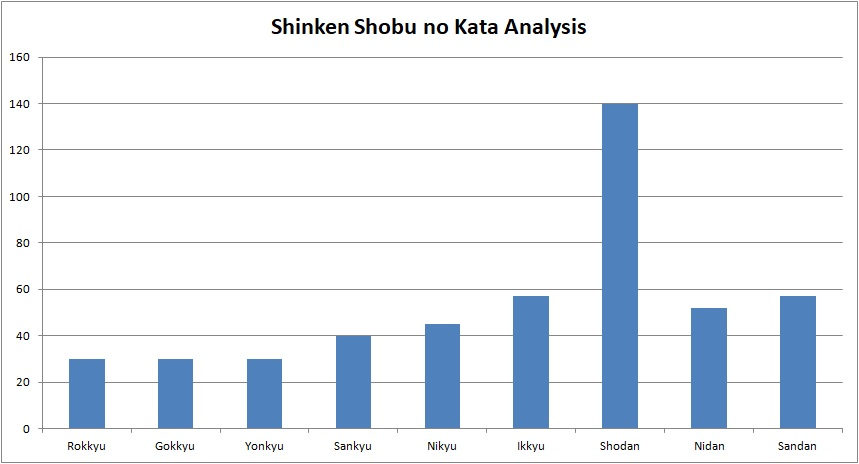
I respect that commentor and their reasoning behind their comment, and they are not wrong with regards to the numbers, but what also has to be remembered is that those numbers are averages. Four months for rokkyu (6th kyu) with 30 attack-defence combinations in the reflex grading and four months for shodan (1st dan) with 140 attack-defence combinations in the original shodan grading, and now four months for part one and then part two with approximately 70 attack-defence combinations in each part.


In order to achieve the 10-year timeframe for shodan, one would have to be successfully completing the earlier, less arduous gradings at a faster rate than one every four (actually 4.8) months so that there would be more time to complete the more arduous gradings in ikkyu and shodan.

Debbie Clarke: 'I certainly never mentioned 10 years as a time frame even for Shodan. More likely 15- 20 years!!'

I mention Debbie by name because she is a very important person in the JDJ tradition. One who I respect highly and who is worthy of that respect. If she speaks, we should listen.

A short biography of Deb's can be viewed on this page on the Southern Cross Bujutsu website; the school that she founded when JDJ was still alive and with his blessing. As impressive as that biography is, it still does not do her justice.

When initially drafting this post, I started to elaborate on Deb's bio with an emphasis on her time with JDJ, however, it soon became an essay in itself because she achieved so much and was responsible for so much. She was a trailblazer in many respects. I will only elaborate on the shodan issue in this post.

Deb commenced training in 1966. She failed a kyu grade but came back to become the first female to be awarded shodan in 1982 by JDJ. She is the only person to undertake and successfully complete the shodan 140 attack-defence combination shinken shobu no kata reflex. She was one of the first shodans that JDJ graded and more than held her own with the male recipients. 

Deb is not naturally talented, as she would readily admit, but she is a study in resilience and hard work. There is far more than the above in Deb's life, and it is all a study in resilience and mental strength.

She once told me a story about how she, as a young nurse, was attacked from behind in a parkland and all she thought was that her defence was taking longer than she thought it would. And remember, she wasn't a black belt then ... and young (to paraphrase the book and movie title, We Were Soldiers ... and Young.' 

For Deb, shodan within the JDJ jujutsu grading system is more like '15-20 years!!' rather than the suggested 10 years. As I said above, if she speaks, we should listen, however, that timeframe is also a guesstimate, which the abovementioned calculations suggest.

Sensei
The following is part of a private message received in relation to my abovementioned FB post and as such I will not disclose the message sender's name, instead referring to them as X.

X: BTW, I was am (sic) instructor with jdj for more than 15yrs. I think your blog should explain the significance of black and white grading which jdj himself referred to me as X Sensei. 10 years grading shodan is the exception not the reality.

There are a number of issues that X raises in their message.

First, given that JDJ passed away on 5th April, 2003, 21 years ago (I cannot believe that it has been that long ago), X could not technically have been an instructor with JDJ. Being an instructor with a JDJ ryuha is not the same as being an instructor with JDJ in many respects, not the least of which is that one does not get the benefits of JDJ's instruction and culture as an instructor. The culture in all of the JDJ ryuha is very different to that in the original JDJ ryu.

Second, X suggested that my blog should explain the significance of black and white grading in the JDJ jujutsu grading system. 

Previous posts in this series of posts regarding the development of the JDJ jujutsu grading system has repeatedly explained that ikkyu, black and white belt, was the original instructor's grading. Ikkyu formed the basis for all of the dan (black belt) grades that were developed after it. It has also been noted that prior to the first dan grades being awarded in 1981, all of the instructors at the JDJSDS were ikkyu holders, with the exception of JDJ, and there were very impressive instructors among that cohort.

By the by, I believe that JDJ ikkyu holders are deserving of at least a shodan (a black belt) given a comparative analysis with other martial arts and their grading systems, which is wholly supported by this study of the development of the JDJ jujutsu grading system.  

The role of the ikkyu gradings needs to be reassessed given the development of the dan grades independent from the kyu grades and without a systems thinking approach being adopted.

Third, X suggests that JDJ referred to him as X sensei. This led me to consider the meaning of sensei and its relationship with senpai:

In Japanese martial arts, as well as in broader Japanese culture, the term "senpai" (先輩) refers to someone who is a senior or elder in a specific context, typically indicating someone who has more experience or has been in a particular group, school, or organization longer than the speaker or the person referred to as "kohai" (後輩), who would be the junior or younger member. The senpai-kohai relationship is deeply rooted in Japanese social and educational systems, emphasizing respect, hierarchy, and mentorship.

In the context of martial arts, a senpai is not just a senior student in terms of time spent in the dojo (training hall) but also someone who has attained a higher level of skill, understanding, and perhaps rank. Senpai are expected to lead by example, offer guidance, and help kohai learn the discipline, techniques, and etiquette of the martial art being practiced. This role is pivotal in maintaining the traditional values of respect, discipline, and the master-apprentice relationship in the dojo.

The term "sensei" (先生), on the other hand, refers to a teacher or master and is a title of great respect. In martial arts, a sensei is someone who has mastered the art to a significant degree and is responsible for teaching and guiding all students in the dojo. The sensei imparts not just techniques but also the philosophy, ethics, and deeper understanding of the martial art.

The relationship between senpai, kohai, and sensei is hierarchical but also deeply interpersonal and rooted in mutual respect and the pursuit of knowledge and skill. Senpai serves as an intermediary between the kohai and the sensei, embodying the teachings and philosophy of the sensei while also being more accessible to the kohai for guidance and support. This structure ensures that knowledge and traditions are passed down effectively and that the culture of the dojo is preserved and respected.

Thus, in Japanese martial arts, the concepts of senpai and sensei are integral to the learning environment, ensuring that teachings are transmitted with respect for tradition and with care for personal growth and community cohesion.

As far as I am aware, and I could be wrong, X was awarded ikkyu under JDJ but only assisted other instructors/sensei and was never responsible for their own class(es) in the JDJSDS while JDJ was alive. Even though ikkyu was the original instructor's grading and is designed to produce instructors as well as practitioners, does assisting a sensei entitle the ikkyu holder to be referred to as sensei? Or would it be more appropriate to refer to them as senpai?

In a previous post, I explain how JDJ asked me to take over the Melville branch from Paul Connolly after 1.5 years training and while only sankyu (3rd kyu; orange belt). Thus, after 1.5 years training and only sankyu, I was a sensei, without having undergone the ikkyu instructor's grade nor having assisted any sensei of any description in the JDJSDS. However, when I came to be an assistant to JDJ in his senior class at the JDJSDS, even when I was shodannidan, and eventually sandan, is it appropriate to refer to me in that capacity as senpai?

And lastly, X's '10 years grading shodan is the exception not the reality.' The three 'exceptions' are Robert Hymas, Peter Clarke, and myself, as discussed above.

The Issue with the Timing of Shodan
What is the issue with the timing to be awarded shodan in the JDJ jujutsu grading system? As it turns out, there are many issues.

If it takes 15-25 years for the average student who trains the average amount of time to be awarded shodan, is that reasonable? How long does it take to achieve a black belt in jujutsu/Japanese martial arts/martial arts in general? This is what my newfound authority (ChatGPT) has to say on the subject:

The time it takes to achieve a black belt in Japanese martial arts varies widely depending on several factors including the specific martial art, the dojo, the frequency of training, the curriculum, and the individual's dedication and ability. However, here are some general timelines for a few popular Japanese martial arts:

Karate: Typically, it takes about 4 to 6 years to reach black belt level. This timeframe can be shorter or longer based on the factors mentioned above. Some styles may require consistent training multiple times per week.

Judo: Generally, it takes around 3 to 6 years to earn a black belt in Judo. Again, this depends on the frequency and intensity of practice, as well as the dojo's specific requirements.

Aikido: Aikido often takes a bit longer, with many students taking anywhere from 4 to 7 years to reach a black belt. Aikido emphasizes continuous improvement and mastery of techniques, which can extend the time required.

Kendo: For Kendo, the path to black belt usually takes about 3 to 5 years. Progression in Kendo is also highly dependent on regular practice and competition performance.

Iaido: Similar to Kendo, achieving a black belt in Iaido generally takes about 3 to 5 years of dedicated practice.

It's important to note that in many Japanese martial arts, receiving a black belt does not signify mastery but rather a deep understanding of the basics and the beginning of a deeper study into the art. Also, different schools and organizations might have varying standards and requirements, so it's a good idea to check with the specific dojo or martial arts organization for their particular timelines and expectations.

A Google search will support ChatGPT's information. What this shows is that JDJ's 10 years, let alone 15-25 years is way beyond the norm.

This raises the question; does the length of time that it takes to gain a black belt in the JDJ jujutsu grading system reflect the quality of the award, or does it reflect the haphazard nature of the development of the JDJ jujutsu grading system? Can we produce the same quality, or even better quality, yudansha in far less time by understanding the development of the JDJ jujutsu grading system and reshaping said system? I am, of course, arguing in the affirmative.

In this way, JDJ laid the groundwork; it is up to those who follow in his footsteps to improve on JDJ's work. Are any of those teaching in JDJ ryuha living up to that potential?

Names Missing off the Instructors' List
In the previous post, I shared a question that arose out of my exploration of the development of the JDJ jujutsu grading system:

This exploration also makes me think: is shodan reflective of the 'level' of the likes of John Copley, Ian Lloyd, Tony Chiffings, Debbie Clarke, Hans de Jong, Darryl Cook, Justin Palandri, Steve Moller? Is ikkyu reflective of the 'level' of the likes of Robert Kirby, Vass D'Esterre (deceased), Peter Canavan, Warwick 'Zak' Jaggard, John Polton, Emma Glasson (nee Wouts), Gerald Wouts, Keith 'Keef' Hickey, Dave Palmer, Rodney Miller? All were instructors for JDJ at one time or another. Technically, under the JDJ grading system, yes, but is that an accurate reflection of their abilities, knowledge, and understanding, in particular when you consider what the nidan and sandan grades contribute to the yudansha's abilities, knowledge, understanding, and teaching abilities, and of course when the JDJ grading system is compared to that of many/most other martial arts grading systems.

After the above analysis, I have to amend the above comment. Not all who were listed were 'instructors' per se. Some assisted instructors, some did not assist nor instruct at all.

The point I was trying to make was, are the shodan and ikkyu levels reflective of the 'levels' of the mentioned JDJ jujutsuka? Would the shodan's be higher graded in all other jujutsu grading systems, and should those who hold ikkyu grades in the JDJSDS be more highly graded in the JDJ tradition?

X (see above) contacted me to include himself among the above, however, as I stated above, while they may have been awarded ikkyu and assisted instructors under JDJ, I'm not sure that they actually taught their own classes under JDJ.

A comment received and published on the previous post: 'A few names missing off that instructor list. Janet, Peter T, Heidi, Jamie F and think there were a couple of others whose names escape me.'

Janet Lake was awarded shodan under JDJ but I'm not sure if she ever taught under JDJ. She did go on to establish her own school (JDJ ryuha).

Peter Templeman also was awarded shodan under JDJ and did teach under JDJ. He had his own branch and was very popular with his students. He took a great interest in his students and was very invested in their grading performances, in a good way. He was very supportive of them, and they did him and his teaching proud at the gradings.

Heidi Romundt was awarded ikkyu under JDJ and did teach her own class. She was teaching at Hillary's at the same time as Hans de Jong and myself. 

Jamie Francis was the last person to be awarded shodan under JDJ. I do not believe that he taught for JDJ but he may have assisted other instructors at the JDJSDS. He later went on to establish his own school (JDJ ryuha) in the Margaret River region before relocating overseas.

I have a list of JDJ yudansha, courtesy of Greg Palmer, however, I do not have a list of holders of ikkyu that JDJ awarded. If readers would send in names and hopefully dates, I could compile a list of JDJ ikkyu holders. 

I do know of an earlier list of ikkyu who were JDJ instructors in 1974 before the shodan grading was developed and introduced: Warwick 'Zak' Jaggard, Rod Miller (later shodan), Alan Robson, Adrienne Barlow, and Ross Allanson. Adrienne would appear to be the first female ikkyu.


I believe that the female disembarking the moving Vespar scooter driven by Margaret de Jong along with JDJ is Adrienne when demonstrating ukemi waza at the Royal Show way back when.

Other ikkyu that I am aware of are Margaret de Jong (JDJ's wife), Vass D'Esterre, John Poulton, Paul Seaman, David Palmer, Peter Hegarty, Peter Canavan, Robert Kirby, David Green, Michael Boland (?), Dennis Dunn, ... Emma Wouts (nee Glasson), Gerald Wouts, Keith Hickey, although I'd need confirmation because I wasn't at the JDJSDS then.     


Sunday, 28 April 2024

JDJ Jujutsu Yudansha Register

You will recall from the previous post that a commentor to that post referred to a register of Jan de Jong (JDJ) senior grades. That inspired me to develop such a register.

My intention is to develop a register of JDJ jujutsu yudansha, ikkyu holders, and instructors. Ultimately, the register will be a permanent feature of this blog located on the right border (if I can remember how to do that again).

Greg Palmer developed a register of JDJ jujutsu yudansha which is presented below with comments:

Shodan

Robert Hymas (1981)

Peter Clarke (1981)

John Copley (1981)

Ian Lloyd

Tony Chiffings

Debbie Clarke

Paul Connolly

Greg Palmer

Hans de Jong

Steve Moller

John Martyr

Jim Downing

Bob Bruscher

John Coles

Darryl Cook

Justin Palandri

Janet Lake

Peter Templeman

Maggie de Jong

Cyril Boutis

Jamie Francis

Only the dates of the first to be awarded shodan have been included in the above list.

If we take as a beginning date when JDJ commenced teaching in Perth, 1952, JDJ awarded 21 shodans in 51 years of teaching before his passing in 2003. The first, 29 years after he started teaching in Perth.

Males: 18; Females: 3.

Nidan

Peter Clarke (1991)

Robert Hymas (1992)

Paul Connolly (1992)

Greg Palmer (1996)

John Coles (1999)

Males: 5; Females: 0.

Time between shodan and nidan: Clarke 10yrs, Hymas 11yrs, Connolly 10yrs, Palmer 12yrs, Coles 7yrs.

This puts the available nidan gradings in the late 1980s.

Given the above, is my 7yrs more indicative of the average time to successfully complete the nidan gradings? The answer to that question is compromised in that I was working full-time as an instructor at the Jan de Jong Self Defence School from 1995 to 2000 inclusive.

Sandan

Peter Clarke (1999)

Robert Hymas (1999)

Paul Connolly (1999)

Greg Palmer (2000)

John Coles (2000)

Males 5; Females 0.

Time between nidan and sandan: Clarke 8yrs, Hymas and Connolly 7yrs, Palmer 4yrs, Coles 1yr.

The timing for the first four may have been impacted in that JDJ was developing the sandan grades, however, my 1yr from nidan to sandan ... 12 parts to the sandan grading as we've seen in previous posts to this blog on the development of the JDJ jujutsu grading system. And Greg and I were not training all that intensively. A couple of nights a week at his home dojo at best. The gradings are not easy (see previous blog posts) and no standards were compromised.

Yondan

Peter Clarke (1999)

Greg Palmer (2002)

Clarke was promoted to yondan immediately upon completion of sandan.

Robert Hymas and Paul Connolly were promoted directly to godan from sandan.

Godan

Peter Clarke (Nov 2002)

Robert Hymas (Nov 2002)

Paul Connolly (Nov 2002)

Time between yondan or sandan as applicable: Clarke 3yrs, Hymas and Connolly 3yrs.

Rokudan

Peter Clarke (Mar 2003)

Robert Hymas (Mar 2003)

Paul Connolly (Mar 2003)

Time between godan and rokudan: five months.

JDJ passed away 5th April 2003.


PS: Why did JDJ stop at rokudan? Why did he rush to rokudan for Clarke, Hymas, and Connolly? Is it because he had learned post the development of his grading system to ikkyu and shodan that many/most other Japanese martial arts grading systems complete their 'technical' grades at rokudan and then honorary grades are only issued after rokudan? This and other related propositions will be explored in future posts.

PPS: Added to the shodan list is Micheal Rendell thanks to a reader. That makes 22 shodans in 51 years, and 19 males, 3 females.

Wednesday, 17 January 2024

The Development of the JDJ Jujutsu Grading System Part 3.5: The Mon System and JDJ's Blocking Techniques Classification

This post follows on from the previous post concerning blocking techniques in the Jan de Jong (JDJ) jujutsu mon grading system. Specifically, this post looks at JDJ's classification of blocking techniques that he introduced into the mon grades.

Classification

You will recall from a previous post that the core of all learning is the identification of similarities and differences. One of the proven highly effective means of identifying similarities and differences is classification. Many in the martial arts think of classification as simply being an administrative exercise. They could not be more wrong, as I explain in my book on the science behind all fighting techniques:

Lackoff (1987) warns against such a dismissive attitude. He suggests that there is nothing more basic to our thought, perception, action, and speech than classification and that without the ability to classify we would not function at all, either in the physical world or in our social and intellectual lives.'

JDJ's Classification of Blocking Techniques

JDJ's classification of blocking techniques involves six categories: hard, soft, pushing, pulling, grabbing, and empty. Exploring those categories and the classification system itself is revealing.

Yoseikan Budo Kuzushi and JDJ's Classification of Blocking Techniques

You will recall from a previous post that JDJ included unbalancing (kuzushi) sections in his mon grades. These sections involved unbalancing techniques from hand grabs: e.g., normal single wrist grip - normal unbalancing. These attacks and techniques are taken straight from Yoseikan Budo (YB).

The JDJ classification of blocking techniques was introduced into the mon system to complement the unbalancing from hand grips, but for moving attacks. This is seen in their use in the various sections in the mon grades, however, it is explicitly seen in the Unbalancing (Kuzushi) - Blocking (Uke) sections in 5th mon and 9th kyu (both part of the mon system; see previous post).

You will recall from the previous post that one of Nakayama's blocking possibilities is unbalancing the opponent with a block. Do the blocks in JDJ's classification unbalance an opponent with the blocking technique?

JDJ's Classification of Blocking Techniques, Unbalancing, and Pencak Silat

JDJ did not originally develop his classification of blocking techniques to compliment the tehodoki kuzushi. He developed it to classify the response to an attack in the pencak silat he taught. This classification was then introduced into his pencak silat grading system. In this way, JDJ was conceptualising 'blocking techniques' as being uke waza.

Uke Waza

Uke waza is often translated in karate as being blocking techniques, however, it actually translates as receiving techniques; techniques used to receive an attack.

In this way, uke waza includes evasive body-movements (EBM), aka taisabaki, and so-called blocking techniques.

There are three ways of dealing with a moving attack in order to avoid injurious contact with the body: (1) 'block' the attack (see below), (2) move the attacking limb or object off the line of attack (deflection), or (3) move off the line of attack (EBM). There are three ways of repositioning oneself to execute a counterattack from a moving attack: (1) 'block' the attack, (2) move the attacking limb off the line of attack (deflection), or (3) move off the line of attack.

The last sentence was in response to a comment received on my Facebook post sharing the previous blog post. I share their conception of taisabaki in that it repositions tori to execute a technique, however, they are only half right. The avoiding injurious contact with the body from an attack aspect of taisabaki can never be forgotten or minimised.

Taisabaki is taught within the JDJ teachings in terms of an EBM to avoid injurious contact with the body. In doing so, it does not necessarily reposition tori in an optimum position to execute a decisive technique. When I began instructing my students that taisabaki is used to avoid injurious contact with the body and to reposition in order to attack, the positioning, distancing, and timing problems they experienced previously tended to sort themselves out. It also changed their mindset from being prey trying to avoid being eaten to being a counterattacker, a fighter.

PS: Uke means to receive. Ukemi is often translated as breakfalls, however, it actually means to receive through or with the body. In this case, ukemi is a biomechanically accurate description of breakfalling techniques. The force applied to the body when landing from a fall is based on Newton's third law of motion: for every action there is an equal and opposite reaction. Newton's 'action' and 'reaction' means mechanical force. In the case of ukemi, the falling body applies force to the landing surface upon impact, and the landing surface applies a reaction force to the falling/landing body, which ukemi is designed to absorb in a way that reduces the risk of injury (see my book on the science behind all fighting techniques).

Unbalancing (Kuzushi) - Blocking (Uke

You will recall from the previous post that an Unbalancing (Kuzushi) - Blocking (Uke) section was included in the 5th mon and 9th kyu gradings. Included in these sections were the demonstration of pushing, pulling, and grabbing block against a low punch and a brushing block against a downwards hit.

A pushing block involves an EBM (irimi) and a pushing force being applied to the opponent's attacking arm to unbalance the opponent (see first image above). A pulling block is the same except the EBM is either nagashi or irimi senkai and a pulling force is applied to the opponent's attacking arm for the same purpose (see image to the right). 

As explained in my book on the science behind all fighting techniques, mechanical force is defined as a push or a pull (see my post published in 2013 that explained the use of the mechanical concept of force to understand all techniques). Whenever an 'object' starts, stops, speeds up, slows down, or changes direction, a force caused that change in motion. As I explain in the aforementioned book, Jigoro Kano, founder of Kodokan Judo, was the quintessential martial arts biomechanist when he described kuzushi as being a push or a pull in his Kodokan Judo.

A grabbing block involves an EBM and 'grabbing' the opponent's attacking arm (see image to right). Unbalancing occurs when the EBM positions tori a small distance away for uke's attacking arm and the grabbing motion pulls said arm to tori's body thereby unbalancing uke. In force-related terms, this involves a pulling force being applied to uke's attacking arm at right angles.

I cannot remember any defence included in the JDJ jujutsu grading system that uses this type of 'block', not in its purest form at least. An example of its practical use might be in a grabbing-pulling motion when unbalancing uke in a circular motion which is a common tactic in YB and aikido, and JDJ's jujutsu and aikido. If so, why not demonstrate that in the grading rather than a technique that is never used?


Brushing block is as described. It brushes the opponent's attacking arm, like brushing dirt of their sleeve. It does not deflect the attacking arm. It doesn't have to because the EBM has taken care of the problem of avoiding injurious contact with the body (see previous post) The attacking arm stays on course without interruption. See below for an illustration of a brushing block (ignoring the strike to the throat).

There is no 'grabbing'. There is no pulling. There is no pushing. How does a brushing block unbalance an opponent? After all, it is included in the section of the grading in which the grading candidate demonstrates unbalancing an opponent using a block? When I asked two of the senior instructors this question, it was suggested that the unbalancing comes from the 'brush' slightly adding to uke's forward motion thereby slightly unbalancing them in that direction. Being polite, that is the very definition of a shoehorned answer/explanation.

If that was a shoehorned answer/explanation, then the answer to the same question in relation to empty blocks is a shoehorned answer/explanation par excellence.

PS: I challenge all students who are engaged in training with JDJ ryuha were these gradings are still employed to ask their instructor how a brushing block unbalances an opponent, which it is supposed to do given that it is included in a section of the grading that examines unbalancing techniques.

Empty Block

JDJ's empty block is no block at all. It is an EBM used to avoid injurious contact with the body. Empty block is part of JDJ's blocking techniques classification but is never mentioned in JDJ's jujutsu grading system. Why not?

JDJ's classification of blocking techniques was used in the JDJ jujutsu grading system to classify unbalancing techniques used against moving attacks. How does an empty block, no block at all and only an EBM, unbalance an opponent? When I asked this question of the senior instructors, it was suggested that by not being where the opponent expected, the opponent would topple forward having not met the expected resistance to the force applied by their attack. That may well happen, however, are you going to base your tactics in a physical confrontation on that assumption?

Hard and Soft Blocks

The hard-soft blocking techniques dichotomy is an oft discussed dichotomy in the martial arts and martials arts literature. It is usually discussed in terms of explaining the superiority of soft blocks over karate hard blocks. Often this argument is supported scientifically with the aid of the concept of forces, an argument that is flawed and shows the lack of understanding in terms of theory that many in the martial arts have.

Examples of the hard karate blocks are the basic high, middle, and low blocks of karate. The example given of soft blocks is deflections. It is suggested that more force is required to be applied with the hard karate blocks than with the soft deflections.

Karate Moves for Beginners

What the arguers do not understand is that these hard karate blocks are in fact deflections (for the most part; see below).

The argument is often that the hard karate blocks apply force against force whereas deflections do not, thus the latter being more efficient. The hard karate blocks do not apply force against force. The apply force at an angle to the attacking limb, thus deflecting the trajectory of the attacking limb. More force is applied to deflect the attacking limb in this case, therefore the only question is, why is more force applied in the case of hard blocks than soft blocks? Is the answer found in Nakayama's blocking possiblity #1 which is the block being used as an attack to discourage further attacks (see previous post)?

What is a 'block'?

Let's go back to the beginning ask the basic question: what is a block? The general definition is to make the movement or flow difficult or impossible. It's to put something in the way of something. 

3 Techniques to Defeat a Block | Joe Daniel Football

The martial arts has a tendency of using terms without reference to their general meaning. There is no better example than that of throws and takedowns in the martial arts. A definitive distinction between these two classes of techniques is abscent in martial arts theory, and those proposed are either incomprehensible or plain wrong, until the one that I proposed in my book on the science behing all fighting techniques. My definition is supported by the general definition of throw and takedown, which the martial arts seem to have ignored.

The abovementioned argument in support of the superiority of soft deflections over hard karate blocks is that the latter apply force against force. The above presented a counter-argument, however, there are exceptions.

Are there true blocks in the martial arts, ones that apply force against force, ones that are put in front of an attack? A shin block is one. 

Gracie and Danaher distinguish between evasion and blocking in their Mastering Jujitsu (2003):

Evasive skills allow you to avoid strikes without contact. There are easy on your body and require proficient motion skills. Blocking allows you to safely absorb impact (rather than avoid it), and it requires sound conditioning and stance skills. (p. 77)

Their blocks include covering block, palm block, double-forearm block, and shin block. The shin block is referred to above as a true block. The double-forearm block (see right image) will be the only other Gracie and Danaher block considered here:

From your fighting stance, turn toward the incoming blow as you simultaneoulsy step away from it slightly. Bring your forearms together and tuck your chin, crunching your upper body inward, like a turtle retreating into a shell. (p. 78)

Aside from never having seen this block used or taught, other than in boxing where huge gloves provide the protection, why is the double-forearm block being used when the step away, the EBM, has taken the defender out of range of the attacker? Even if there is a valid answer, that question should always be asked when a block is used in conjunction with an EBM.

Returning to karate hard blocks. In addition to being deflections, they can also be true blocks depending on the direction of the attack and the body position of the defender. For instance, age uke (rising block, aka high block) is a deflection against a punch but is a true block against a downard hit with no EBM employed. A low block is a true block employed against a low roundhouse kick.

The Dog's Breakfast

You can see that the concept of blocking techniques as applied in the JDJ jujutsu mon grading system is a bit of a dog's breakfast, as it is in the martial arts in general (as I demonstrated in the chapter on blocking techniques in my book on the science behind all fighting techniques). But what to do about it? That is the question that is being raised throughout this examination of the development of the JDJ jujutsu grading system. What would you do?


Thursday, 15 February 2024

The Development of the JDJ Jujutsu Grading System 3.8: 7th Kyu

The final grade in the mon system is 7th kyu, red belt. 

The titles of the below sections are taken from the grading sheets in Jan de Jong: the man, his school and his jujutsu system (Jan de Jong Self Defence School, 1997).

Breakfalls (Ukemi)

Bridgefall, and backwards flat, sideways flat, forwards roll, sideways roll separately over an obstacle. 

The bridge fall, aka o mae ukemi, is the same as in the previous grading.

While responding to a comment on my Facebook post sharing the previous blog post, I remembered that I neglected to explain why sideways roll is so uncommon in the martial arts. It's because most ukemi comes from judo and there is no need for a sideways roll from judo techniques.

I was also reminded that there are some (aikido) that teach a backwards roll that starts to resemble a Jan de Jong (JDJ) sideways roll. That is true, but it is more of a backwards roll than a JDJ sideways roll, however, having said that, it is worth noting because a JDJ sideways roll transitions into a backwards roll.

This is one of the aims of these series of posts, if not this entire blog, and that is to encourage those engaged in martial arts to engage in critical thinking, to seek insights that produce a new and better understanding, rather than just teaching and training what is taught.  

For progression, the o mae ukemi could have been performed over an obstacle in this grading. There is a 'trick' to performing o mae ukemi over an obstacle. 

The trick to performing o mae ukemi over an obstacle, I discovered by observing John Poulton  (ikkyu) in the instructors class way back when. John Poulton is front left, beard, in this photo taken from the JDJSDS Yearbook 1986 - Hakusho. He was performing o mae ukemi over obstacles when none of the other instructors pictured could and ever did. It is simply a forwards roll that you don't come out of; a forwards roll terminating in a backwards flat. :)

There is a lot of history in that photograph. Do the current JDJ ryuha know and study that history and share it with their students? Who can name all in the photograph and their legacy? This blog is about preserving and understanding the history of the JDJ tradition.

Wakai no Kata

You will recall from the 'Historic Ikkyu Part 1' post that JDJ developed wakai no kata to replace Yoseikan Budo's (YB) happoken and sanbogeri. He then moved the kata to nikyu and included it in 7th kyu, the last of the mon grades before the kyu system. Happoken taught blocking and striking skills and sanbogeri taught kicking skills. JDJ's wakai no kata is designed to teach blocking, striking, and kicking skills.

The issue of using a block in conjunction with an evasive body-movement (EBM) that was discussed in a previous post is present in this kata.

Last year I saw a JDJ ryuha yudansha demonstrate this kata while teaching it to their students. I would fail that performance if a grading candidate presented it for their 7th kyu grading, let alone a yudansha that has supposedly performed it in two gradings. 

JDJ's wakai no kata includes pencak silat's depok and sempok stances. Same stance but looking forward or backward. It is an extremely versatile stance in terms of an EBM and setting up for strikes, kicks, and unbalancing. 

In the abovementioned performance, the performer did not perform the stances correctly (or simply did not know how to do so), which nullified their tactical effectiveness.

Then of course there was the issue that the kicks were poorly executed, wafting upwards rather than 'shooting' in and out, and the timing of the defensive combinations was all wrong. Basically, it was a blur from start to finish interrupted only by the performer being unbalanced when performing the depok and sempok stances. 

These issues were also common with the performances within the Jan de Jong Self Defence School (JDJSDS), including that of most of the instructors.

The abovementioned JDJ ryuha refers to this stance as a 'cross stance' (kosa dachi). That is a reference to a Japanese karate stance which is 'similar' to the pencak silat depok and sempok except that karate does not realise or understand the potential of this stance.

I attended a seminar co-jointly hosted by Wally Jay and George Dillman while I was living in London. Dillman was on the pressure point bandwagon at that stage, but he also presented his 'study' of karate kata which included a Shotokan kata where this stance is performed. He explained that this stance is entirely useless but that it was a 'secret' of the kata because it was part of a turning move when executing what the JDJ tradition knows as hachi mawashi (hair-chin turning). When Dillman asked what is the point of this stance before his 'explanation', I wanted to put my hand up and say that it was a major feature of a very effective martial art taught to one of the most populous nations on the earth, but I didn't.

Throwing Techniques (Nage Waza)

This is the first time in the mon system that throwing techniques have been introduced. There are four throwing techniques from specified attacks: single lapel grip (low) - hip throw; single lapel grip (high) - shoulder throw; low punch - minor inner reaping; and low punch - minor outer reaping.

Body Movements (Taisabaki)

'Defender's choice of attack, using any block.' 

The issue of 'blocks' and the demonstration of these body-movements as defences has been discussed in previous posts.

All five of YB's basic body-movements are included in this section, along with dodging (kawashi).

The dodging body-movement was included in this grading due to Greg Palmer's lobbying. I argued that dodging was simply a variation of either flowing or sliding body-movements, which I went on to demonstrate in my taisabaki no kata grading in sandan. It was a 'teach the teacher' moment, however, even though they agreed with me, it is still retained in this grading.

To challenge the reader's understanding of this body-movement that they are either training and grading or teaching, is the dodging body-movement as taught a variation of flowing or sliding? Even though JDJ used a dodging body-movement often in his demonstrations, why and how is it different to the one included in this grading? Also, identify the defences in the kyu and dan grades where this dodging body-movement is used in a defence.

Unbalancing (Kuzushi)

Normal single wrist grip - Normal and same side unbalancing

Reverse single wrist grip - Reverse and same side unbalancing

Same side single wrist grip - Normal and same side unbalancing

The unbalancing from single wrist grips is taken straight from YB, however, JDJ is building on YB's teachings. What is JDJ trying to teach/impart with the two forms of unbalancing from the same single wrist grip? Did the instructors (a) understand this lesson, and (b) teach this lesson along with the techniques?

In his later years, JDJ was teaching this lesson and referred to kuzushi and hazushi for the two types of unbalancing. Hazushi means disengagement or release according to the glossary in Jan de Jong: the man, his school and his jujutsu system (Jan de Jong Self Defence School, 1997). 

The basic idea is that with normal and reverse unbalancing, the captured hand is disengaged whereas with same side unbalancing it is not. This then facilitates one of the nine basic joint-locking techniques taught by the JDJ tradition and which is demonstrated in the mon grades. Same side unbalancing does not necessarily disengage the hand grip, turns the elbow up, thus facilitating straight arm lock, side wrist lock, and wrist crust. Normal and reverse unbalancing disengages the hand grip and keeps the elbow down thus facilitating the other six joint-locking techniques. 

This is a valuable and sophisticated lesson in versatile tactics, a unique one developed by JDJ, that is often not understood within the JDJ tradition. This leads to the question, should it be included in the relatively lowly grades of the mon system?

Locking Techniques (Kansetsu Waza)

'Two attackers defender's choice of attack.' 

The issue of the appropriateness of this stress element in these early gradings has been discussed in numerous pervious posts in this series.

The three kansetsu waza in this grading are arm entanglement (ude garami), side wrist lock (yoko tekubi hishigi), and wrist hand throw (tekubi te nage). The latter two are known by different names in aikido. This completes the nine basic kansetsu waza taught within the JDJ tradition.

Basic Blocks and Attacks (Uke and Atemi)

Three punches and one kick - four basic karate-style blocks. 

There is no unbalancing - blocking section as included in 9th kyu

These blocks are often taught in conjunction with an EBM. As has continually been questioned in numerous posts, e.g., The Mon System and Blocking Techniques, what is the purpose of the block when used in conjunction with an EBM. It's not to avoid injurious contact with the body because the EBM takes care of that problem. This is a question that should be asked and answered as it would demonstrate insight and understanding.

The defences in this section include a karate-style block followed by a punch. This should be taught as an alternative to the singular use of EBMs, or just avoiding an attack. It would be a useful tactic to employ in the free fighting gradings of ikkyu and the dan grades.

Reflex (Shinken Shobu no Kata)

Fifteen defences from holding, strangulation, punching, kicking, stick, and knife attacks. There are two 'restraining techniques' included in the 15 defences, which is to say a pre-emptive application of a joint-locking technique.

All of the defences have been demonstrated in this or previous gradings, as they should be.

There is a 'stick-overhead attack.' 

Last year, I observed a number of classes of a JDJ ryuha where this same attack was used in the lessons. It would appear that uke did not know how to hit a person with a stick. If they made contact with tori, it would be with the butt of the stick held in the hand of uke. This obviously affects the distancing of the defence. With a lot of practice, the student would become proficient at defending themselves against an attack that was trying to hit them in the head with the butt of the stick, however, if someone was actually trying to hit them with a stick, they would literally fall short. 

This was also a common fault in the JDJSDS.

The lesson to be learned here is to teach the students how to attack properly first, and then teach the defence.

This was something lacking in the JDJSDS as well.

Wednesday, 4 November 2015

Demo Bloopers

My previous post got me reminiscing. I remembered some of our demonstrations, and there were a lot of demonstrations, both domestically, nationally, and internationally.

I remember my first demonstration. Everybody was busy so myself and my training partner were to give the demonstration with Sensei Paul Connolly providing the initial guidance. He instructed us, orange belts at the time, to demonstrate unarmed defences against a bo (6'6" staff) ... even though we'd never used one before. Fair enough.

We'd trained jo and therefore could adapt to bo and did so quite well even if I do say so myself. I was attacking with the bo and my partner was defending. We'd gone through our routine and on the last attack-defence we both looked at each other ... nothing. We couldn't remember the attack or defence. We circled each other in the hope that one of us would remember, but nothing. In the end I just attacked with a roar and he defended with whatever.

Then there was the time that we were demonstrating nunchaku techniques at a Dutch festival in Perth where Shihan Jan de Jong was the patron. Our nunchaku techniques involve ensnaring to execute all manner of techniques rather than just striking. The very first defence ensnared my wrist and brought it back behind me to cause me to fall to the ground (a takedown technique). As the nunchaku passed my face, one end hit my nose and broke it.

I laid on the ground, snorted out blood clots from my nose, jumped up and attacked again to be once again dispatched with. This happened for the entire demo. I made sure that my attacks were directed so that I would not land on the blood clots I was snorting on the ground and that it would be fast and furious so that there was no time for blood to be seen on my face or uniform.

At the end of the demo, we bowed and walked towards our group, and then my nose cascaded with blood. We were arranged in front of the St John Ambulance display, and when they saw me walking towards them they stopped clapping and guided me into the ambulance for attention.

Then there was the time in Sweden where Sensei Maggie de Jong and I were going to demonstrate kenjutsu (sword art) techniques. When we were demonstrating, Maggie attacked and I defended. I was training third dan at that stage, Maggie was first dan. I was super fast, Maggie was not. I had defended well in advance of Maggie's attack resulting in her sword slicing through the top of my left pointer finger. There was so much blood that when I was at the toilet basin, the blood was coming out of the joints in the pipes. There is now permanent nerve damage to the top of that finger.

Lesson to learn from that experience. Speed is nothing, timing is everything.

There was also the time that Maggie and myself were practicing for a demo in Java, Indonesia at a motel. I got the slightest of grazes in the practice session. We gave the demo in a dried rice paddy field in the country, a scene that could have taken place in an Asian marital arts movie. A day later I had a high fever, sweating, and couldn't straighten my leg. Jan de Jong took one look at the red line running from my groin to my leg and drove me to a hospital in Semarang where I was diagnosed with blood poisoning. Apparently a day later would have been a day too late.

Then there was the Norway jujutsu summer camp. At the end of the week, all of the instructors at the camp were to put on demonstrations. Our team was comprised of Jan de Jong, Maggie, myself, and a Danish instructor who is a good friend of ours. I was to attack ... for everyone. As they announced who was to demonstrate it would be Jan de Jong and John Coles, Maggie de Jong and John Coles, Danish fellow and John Coles. Every group of defences, I was attacking. Maggie did this magnificent foot sweep with a jo that had me upside down and doing a 360 before landing on my head. Jan de Jong was demonstrating jo techniques and missed the initial catch but made up for it when he took me down and applied the jo to my throat ... damaging one of the cartilages in my throat. For six months there was this clicking sound in my throat when I swallowed.

I was suppose to have two groups of defences to demonstrate with the Danish chappy attacking. Jan de Jong some how forgot those groups and so nobody got to see if I could actually defend myself or not. Insult to injury I'd say.

The generation before me also had their stories. A demo at the WACA had one female student have a knife plunged into her leg but carried on as if nothing had happened. Another person, who will remain nameless but who is a police officer, was handcuffed by Jan de Jong only for them to find that they had forgotten to bring the key along with them. This police officer jujutska was taken home handcuffed.


Oh God, the memories come flooding back. De Jong would demonstrate the use of the short stick, a baton, where it is initially held in a concealed position. A use of the baton from that position is to flick it to the attackers groin when they are attacking. For the first and only time in my jujutsu life, I wore a groin guard on that European tour. De Jong flicked and it made contact with my groin guard with an audible noise. I reacted with a bit of a flinch and the audience went 'ooo ahh'. De Jong, ever the showman, warmed to this idea and the hits got progressively harder with the same audience reaction. One day in Holland, I attacked, De Jong flicked, no audible noise ... other than my groans as I lay on the ground with my knees around my ears grabbing my groin. I had forgotten to wear the groin guard. De Jong stood over me and said, 'You forgot to wear your protection today man.' No shit Sherlock.

And there was the same time at the same dojo where De Jong was explaining his lesson in Dutch and looked at me for an attack that he had just described. I DON'T SPEAK DUTCH. He was looking insistent and not wishing to embarrass him, I attacked ... with whatever attack I chose. The next thing I knew I was on the flat of my back with De Jong standing over me asking me why I attacked like that. 'BECAUSE I DON'T SPEAK DUTCH.' He laughed and explained to the audience, in Dutch, what had just happened and they all laughed as well. Very funny.

We did many demos, there were many people that did many demos, and I'm sure they all have their own stories. So many stories.