Saturday, 25 November 2023

Ken Tai Ichi no Kata Example

Ken tai ichi no kata is a kata included in part four of Jan de Jong’s jujutsu shodan grading. It involves the ‘[d]emonstration of katana techniques and the unarmed application’ (Jan de Jong Self Defence School, 1997, Jan de Jong: the man, his school, and his ju jitsu system, author). The kata is designed to demonstrate the similarities between katana (sword) and unarmed techniques (Why? That is a question that can and should be raised. Some other time perhaps).

The final sword technique in the kata involves both uke and tori assuming aigedan kamae (grading sheet), or gedan-no-kamae (lower-level posture). Kamae refers to combat-engagement posture. Gedan means lower-level, which in this case means that the sword is pointing in the direction of uke but towards the ground. This combat-engagement posture is inviting an attack (a tactical lesson that should be learned from this kata but which is not understood or taught by most).


JDJ instructed that uke attacks with a downward strike while tori does not use an evasive body-movement (referred to as taisabaki) to avoid injurious contact with the body or to reposition themselves to attack, and tori raises their sword no higher than uke’s throat. JDJ was explicit and consistent with those instructions. 

The only problem is, if uke and tori perform the attack and defence as instructed, they both die. It ends in a mutual slaying. What’s going on here? That question is how Klein operationalises his curiosity path to insight that can lead to a new and better understanding (see post #3 in this series).

I raised this question with my instructors, and when I say instructors, I mean all of the main instructors in the JDJSDS as I trained extensively under all of them (see post #3 in this series). I don’t deal well with inconsistencies (inconsistencies are one of the five paths to gaining insight according to Klein (see post #3)). I received no answer to my question from any of the aforementioned instructors.

I raised this issue when training with another of JDJ’s instructors. He defended JDJ’s instructions, adopting the common ‘teach as you are taught without question’ approach (see previous post). Out of frustration, I suggested a physical demonstration.

He attacked. I defended exactly as JDJ instructed. Fortunately, he did not follow through with his attack otherwise I would have been cleaved in half, head to groin. He, on the other hand, was left a little confused when blood started to trickle down his front from the wound he sustained on his neck when he advanced onto the tip of my sword.

When I studied my instructors performing this defence, I found that they performed the defence by doing one of three things: (1) rely on uke not to follow through with their attack (compliant attacker), (2) use an evasive body-movement to avoid injurious contact with their body, and/or (3) raise their sword higher than the throat in order to deflect uke’s blade. But they didn’t explicitly teach either or all of those defensive moves as it would have gone against JDJ’s explicit and consistent instructions.

It is easy to criticise (or so they say), but what did I do in my grading? In all honesty, I cannot remember. I had to have done something because I’m still here. What did I teach? I taught the ‘workarounds’, however, I also shared with my students the problems in the propagated instructions of the defence.

Why didn’t I go to JDJ with my concerns? That is a good question, and one that I am only now asking myself. It was because I was a junior instructor and I had raised the issue with all of my instructors, the senior instructors in the school. I adopted the same attitude as I’ve recently observed in a JDJ ryuha (‘branch of the current’): it’s in the grading so do it as taught, faults and all.

I now have the answer to the problem of this suicidal defence as taught, which has provided insights that led to a new and better understanding.

The Answer: Part 1
We were teaching for Jan-Erik Karlsson (JEK) in Sweden in the mid-90s when we had a day off. JDJ spent the time with JEK, however, I had noticed that JEK had an extensive library which included an extensive collection of martial arts books. I asked JEK if I could spend time perusing his library, to which he generously gave permission.

I came across a lever-arch file with a photocopied book. One of the front pages featured a photo of Minoru Mochizuki. I recognised that photo because the first copy of Fighting Arts International that I purchased had a photo of Mochizuki on the front cover and the featured article was about him. At that time, we knew that JDJ had trained with Mochizuki but that was about all.

Reading the photocopied book, or at least looking at the illustrations given that the book was in Japanese, I ... was ... gobsmacked.

When I shared my ‘gobsmackedness’ with JDJ and JEK, the latter kindly gifted me the photocopied book (Giho Nihonden Jujutsu (Traditional Japanese Jujutsu)).

You cannot understand how world-changing reading this photocopied book was at that time. Remember, this was pre-YouTube. In that book was a lot of what we were teaching. There were the taisabaki and the way we teach them. There were the unbalancing (kuzushi) techniques from hand grips that we teach. Both of these elements form a part of all of the mon grades at the front end of the grading system and are part of the dan grades at the back end. There was happoken no kata from 8th kyu and itsitsu no kata from 2nd kyu. There was also ken tai ichi no kata from shodan.


JDJ, as I came to understand, never revealed the source of his teachings. He did not reveal that he was teaching the taisabaki, kuzushi from hand grips, happoken no kata, itsitsu no kata, ken tai ichi no kata from Mochizuki’s Yoseikan budo. This challenged the notion, which is still strongly held and promoted by most JDJ ryuha, that we were learning/teaching Tsutsumi Hozan Ryu jujutsu.

Many of the illustrations in Mochizuki’s Giho Nihonden Jujutsu were single hand-drawn images (see image above), so I still did not have an answer to my problem. That would come later with the purchase of two Mochizuki DVDs.

The Answer: Part 2
It was after JDJ passed away that I found a website selling martial arts DVDs that offered Mochizuki's Yoseikan Sogo Budo volumes 1 and 2. Upon purchase and viewing those DVDs, I was watching all of the above and more, and here was the answer to my question of more than 20 years.
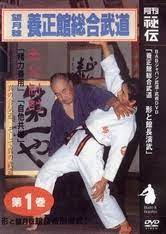

JDJ had ‘misremembered’ the attack. The attack was a straight thrust with the sword. JDJ’s explicit and consistent instructions were effective against a straight thrust with the sword (and it better matched the unarmed attack). The defence worked and tori did not die. It’s just that JDJ misremembered the attack.

It was that simple, however, why didn’t anyone else raise this inconsistency (see above)? Why wasn’t anyone else curious (another of the five paths to insight that Klein identified; see post #3). Where was their insight and understanding?

This was the beginning of, or part of, my journey of discovery about JDJ’s teachings that has led to a new and better understanding.

Epilogue
After JDJ passed away in 2003, I went on to share my insights and Giho Nihonden Jujutsu with a couple of JDJ’s senior instructors. They had never heard of the book nor understood how much of JDJ’s teachings came from Yoseikan budo.

Among other things, this reinforced the idea that JDJ got his teachings from a variety of sources and that he did not disclose those sources when teaching. It reinforced the idea that JDJ was considered the ‘fount of all knowledge,’ and nobody studied anything outside of his teachings (e.g., see suwari waza no kata in a future post). It also showed that JDJ occasionally ‘got things wrong’ and that a bit of curiosity and scepticism did not go astray.

Post Series, 'Faults', Insights that Lead to a New and Better Understanding, Teaching Unquestioningly What One is Taught

As they say at the beginning of some American TV shows: ‘Previously’ ...

This series of posts were initially intended to focus on the ‘faults’ (for want of a better word) in Jan de Jong’s (JDJ) teachings in order to ‘see further by standing on the shoulders of giants.’

The first post got sidetracked when it tended to focus on Greg Palmer as being the best teacher at the Jan de Jong Self Defence School (JDJSDS) because he was a professionally trained teacher. I still stand by that argument, however, that’s not what this series of posts are intended to explore.

I use the word ‘explore’ intentionally. As it turns out, and frustratingly so, my learning process tends to involve exploring ideas by writing about them. If I was writing a book, as I am on another subject, I wouldn’t necessarily share my learning process. I’d use it in drafting the book but then I’d only share the final product. That’s not the process, or hasn’t been, with writing this blog. Instead, I’ve been taking the reader along with me on my often-convoluted journey to gaining insights that lead to a new and better understanding. Sorry for that.

The reference to ‘insights’ that can lead to a ‘new and better understanding’ is explained in the previous post.

It seems that I feel this constant need to have to explain myself. Why? I suppose it comes down to: who am I to find fault in the teachings of JDJ and his senior instructors? I may, or may not, provide further support (see CV extract in previous post) for the fact that I am qualified to find fault in their teachings in a future post, however, I will press on without that full explanation.

I want it to be clear though; finding fault is not about ‘tearing down,’ it is about ‘building up.’ It is about seeing further by standing on the shoulders of giants. If one teaches unquestioningly what one is taught, one is standing in the shadow of giants, if giants they were.

The question of teaching unquestioningly what one is taught ... I was introduced to ChatGPT while involved in another project. I’m becoming a fan :): ‘What are the problems with teaching unquestioningly what one is taught?’:

Teaching what one is taught unquestioningly, also known as rote learning or uncritical acceptance, can have several drawbacks. While there are situations where memorization and acceptance of information are necessary, encouraging critical thinking and independent inquiry is generally considered more beneficial for individuals and society. Here are some issues associated with teaching without encouraging questioning:

Lack of Understanding: Rote learning often involves memorizing information without truly understanding the underlying concepts. This can result in a shallow understanding that may not be retained or applied effectively.

Inflexibility: Individuals taught to accept information uncritically may struggle to adapt to new situations or perspectives. Critical thinking skills are essential for problem-solving and adapting to an ever-changing world.

Stifled Creativity: Rote learning tends to focus on reproducing information rather than encouraging creative thinking. Creativity and innovation thrive when individuals are encouraged to question, explore, and think beyond the established norms.

Limited Analytical Skills: The ability to analyze and evaluate information critically is crucial in various aspects of life, including decision-making and problem-solving. Rote learning does not foster these analytical skills.

Difficulty in Applying Knowledge: Students who are taught to memorize without understanding may struggle to apply their knowledge in real-world situations. Understanding the context and principles behind the information is essential for practical application.

Dependence on Authority: Rote learning can foster a dependence on authority figures and established information sources. This dependence may hinder individuals from seeking alternative perspectives or questioning the status quo.

Reduced Motivation: Students who are not encouraged to question or think critically may lose motivation and interest in their education. The joy of learning comes from understanding, exploring, and engaging with the material, not just memorizing it.

Inability to Navigate Information Overload: In today's information-rich world, the ability to critically evaluate and filter information is crucial. Rote learning does not equip individuals with the skills needed to navigate the vast amount of information available and make informed decisions.

Lack of Resilience: The ability to overcome challenges and setbacks often requires resilience and problem-solving skills. Rote learning does not contribute significantly to the development of these attributes.

It's important to strike a balance in education by promoting a mix of rote learning and critical thinking. Encouraging students to question, analyze, and understand the material enhances their cognitive abilities and equips them to navigate the complexities of the world effectively. Educational systems that promote a balance between memorization and critical thinking are generally considered more effective in preparing individuals for success in various aspects of life.

I couldn’t have said it better myself, and I mean that literally, although I wouldn’t have said it using so-called ‘American English.’

Teaching unquestioningly is part of the JDJ tradition, as it is in most martial arts. This series of posts are intended to change that and ‘encourage students to question, analyse, and understand the material to enhance their cognitive abilities and equip them to navigate the complexities of the world effectively.’ :)

The next post is designed to quickly get us back on track. It is a ‘story’ that demonstrates the faults-insights leading to a new and better understanding relationship within the JDJ tradition. The next post will be released at the same time as this post in order to quickly ‘continue the flow.’ This will be quickly followed by a series of posts about the development of JDJ’s jujutsu grading system which will provide insights that lead to a new and better understanding of JDJ’s teachings that possibly extend beyond that single application realm.

Wednesday, 15 November 2023

Who Was The Best Teacher at the JDJSDS Revisited

The first post in this series has garnered a lot of interest. There have been some defensive comments, which is only to be expected, but there have also been some supportive comments, for which I am grateful and encouraged.

I do appreciate receiving comments as they make me think about what I'm sharing. As this post shows, I'm not above going back and clarifying issues, nor am I above changing my views if evidence is presented that indicates an error in those views. In fact, writing and receiving comments is a big part of my learning experience.

Some of the comments that I received in response to my first post caused me to revisit that post. To make it clear, the intention of this series of posts is to identify and explore certain 'faults' in the teachings of the Jan de Jong (JDJ) tradition in order to learn from them and improve on the impressive body of work that JDJ put together over his lifetime.

Kaizen
Why do I focus on 'faults'? That was a question that I came to ask myself when engaged in the project described in the first post and which precipitated this series of posts. Upon reflection, it is because I have a kaizen mindset.

Kaizen
is a Japanese word that literally means 'change for the better.' It is the philosophy behind the continuous improvement ideology.

The 'dark side' of a kaizen mindset is a focus on things that can be changed for the better in order to continuously improve, aka faults. This focus is sometimes not appreciated, even when it is intended to improve things for the better, as I have found.

When I have discussed the kaizen concept with certain members of the JDJ tradition, they endorsed the concept. Kaizen is good. Changing for the better is good. Continuously improving is good. However, when faults are pointed out in what they are doing, the response is often not so good.

One of the reasons why they respond negatively can be found in the work of Wilfed Bion. I came across his work when engaged in a group project during my MBA. Long story short, Bion is a WWI tank commander who went on to become one of the most influential figures in psychoanalysis. In his work on group dynamics, he suggested that there are two groups: the 'work group' and the 'basic assumption group' (the 'as if' group).

The work group is the group that works to accomplish the task that the group was formed to accomplish. The basic assumption group act 'as if' they are working to accomplish the task that the group was formed to accomplish, and they believe they are doing so, but their priority is something else, e.g., maintaining the status quo. There are examples of this that I have encountered in the JDJ tradition.

I have a kaizen mindset and am most definitely part of the work group (at least in certain areas of my life).
  
Insight and Understanding
The learning from 'faults' in the teachings of the JDJ tradition is also about gaining insights that lead to a new and better understanding. This is consistent with cognitive psychologist Gary Klein's views on the subject in Seeing What Others Don't: The Remarkable Ways We Gain Insights.

The five triggers for gaining insights that Klein identifies are: connections, coincidences, curiosity, contradictions, and creative desperation. Klein also identifies obstacles to gaining insights: stupidity, forgetfulness, lack of alertness, delusion, flawed beliefs, inexperience, passivity, over-confidence, and rigid reasoning styles. Many of those triggers and obstacles will be seen in action in this series of posts that in essence is about gaining insights that lead to a new and better understanding of the techniques in the JDJ jujutsu grading system and the grading system itself.

What I can say at this stage is, first, teaching and doing what is taught unquestioningly is an obstacle to gaining insight and understanding (and it is not kaizen). Second, insights that can lead to a new and better understanding can only be gained if one goes looking for answers to questions. An example of that will be clearly demonstrated in a future post that focuses on Ken Tai Ichi no Kata which is part of the shodan gradings.

Instructors
As I said above, the intention of this series of posts is to identify and explore certain faults in the teachings of the JDJ tradition for the purposes of kaizen, insight, and understanding. I seem to have been sidetracked in the first post by my discussion regarding Greg Palmer being the best teacher in the Jan de Jong Self Defence School (JDJSDS). An assertion that I stand by, but which is not intended to diminish the teaching efforts of the other instructors in the school. 

My focus on Greg for that post came about through the project that I was engaged in where I was identifying faults in certain teachings. In order to support my assertions, I referred to the fact that I had trained extensively under JDJ's 'senior instructors' and JDJ himself.

I identified the 'senior instructors' in the first post as Peter Clarke, Robert Hymas, and Paul Connolly because they are the only ones to be awarded rokudan by JDJ. I was focused on them because they are instrumental to the story about the development of the JDJ jujutsu grading system which I was working on because it explained some of the faults that I was discussing (see next post).

The instructor I was working with responded to my training experience with the fact that they too had trained under the 'senior instructors' and JDJ. Fair point.

It was around this time that I was questioning who was I to find fault in the teachings of my instructors and JDJ? In order to explore and answer that question, I developed a martial arts-related curriculum vitae (CV) for myself. 

The difference between 'trained extensively under' and 'trained under' came to be a point of differentiation (see below). I also came to realise another point of differentiation was that I trained also extensively under Greg Palmer, in fact, he was probably the biggest influence on my knowledge and understanding.

Greg was a professionally trained teacher and thus his approach to teaching came from a professionally trained teacher's perspective. That enhanced the learning experience not only for his students but also for himself. His technical understanding was so well regarded that when he and I went to do the theory gradings in nidan and sandan, JDJ would say that there was no need to examine our theory knowledge and understanding because he knew that it was there.

An email from a respected source reminded me that all of the instructors had an input into my knowledge and understanding. And when I say 'all', I do mean all as I trained under all of them. It was remiss of me not to acknowledge them in the first post and my only defence is that I was locked into tunnel vision as explained above.

In addition to the 'senior instructors' and Greg, I trained extensively under Ian 'Lloydo' Lloyd and Robert 'Rob' Kirby, and to a lesser extent under Debbie 'Deb' Clarke, Hans de Jong, and John Copley.

The abovementioned respected source accurately described Lloydo as 'a very practical bloke who [was] not as dynamic as others, had a good understanding of the mechanics of [techniques].' That is a fair assessment. The not being dynamic means that he was very compact in his movements. His unique method of punching caused me to question how it was so effective and I have included the findings of that question in my book on the science behind all fighting techniques.

Apparently 'lol' is outdated these days, but I did smile when I demonstrated this form of punching on a couple of highly graded students this year, 40 years after being taught it by Lloydo, and they were surprised at the force applied from such a compact movement. :)

The 'core of all learning' is the identification of similarities and differences. The four proven highly effective means of identifying similarities and differences are classification, comparison, creating analogies, and creating metaphors. Greg obviously used these strategies to teach, however, so did Lloydo. He was a master at using the creating metaphors strategy to teach techniques. Forty years on and I'm still using his 'bear claw' metaphor to teach yoko tekubi hishigi.

Rob was unique to the JDJ instructor pool in having trained and graded highly in another martial art (taekwondo). He also had police training under his belt which is regimented and informed by teaching theory. JDJ would later go on to explain that this approach, informed by his involvement with the SAS, produced superior results and was the impetus for his introduction of the mon grades into his grading system (see later posts). Rob was also unique within the JDJ instructor pool in knowing how to train students rather than just teach them. This is one of the things that I took from him to produce some of the best performances by students in gradings according to JDJ.

Herein lies a valuable lesson - the difference between teaching and training. For the most part, training was left up to the individual student at the JDJSDS, with the exception of Rob's classes, and then later mine.

Deb's greatest influence on me was probably when I was assisting her teaching the women's self defence (WSD) course that she developed. The course is ingeniously put together and is not just another WSD course taught by a martial artist. This involvement caused me to study and research WSD for a chapter in my second book on a new and better understanding of our natural and learned responses to a threat. 

CV Extract
I explained above that when I was questioning whether I was qualified to find fault in the teachings of the JDJ 'senior instructors' and JDJ himself, I wrote a martial arts-related CV for myself. I also referred to a differentiating factor being the difference between 'extensively trained under' and 'trained under.' When I started writing that CV, I started with my training, and I was quite surprised by the results even though I lived those results.

Most people start training by attending one or two classes a week and maybe doing a bit of extra training. I started training (April 1983) by attending at least two classes a day, six days a week, and doing a lot of extra training. Just taking the classes into account, that means that my one week's training was the equivalent of most other's 6-12 weeks; my one year's training the equivalent of most other's 6-12 years; and my five year's training the equivalent of most other's 30-60 years training. And that was basically my commitment for 20+ years. 

As explained above, my training involved training under all of the instructors at the JDJSDS, to varying degrees, and so I was exposed to all of their experiences.

From the commencement of my training at the JDJSDS, I graded every grading weekend (every three months) and I excelled in each of those gradings. That should come as no surprise given the abovementioned training regime.

After 1.5 years training, graded 3rd kyu (orange belt), and having never assisted an instructor teaching at the JDJSDS, I was asked by JDJ to take over the Melville branch from Paul Connelly. Ironically, being graded 3rd kyu made me ineligible for inclusion in the 'instructors' class. Within five years I was invited into the 'instructors' class, even though I had been instructing for a number of years prior to that invitation and by then it included instructing at the JDJ hombu

I taught for JDJ from the time that he first invited me to do so and was a full-time instructor for five years in the mid-to-late 90s where I taught more classes and private lessons than any other instructor and I was the chief examiner on more gradings than any other instructor.

In 1985, my training was supplemented when I was invited to join Greg's demonstration team for his nidan grading (Ju Jitsu no Jitsuen). This involved intensive training under Greg's supervision twice a week for six months (in addition to the abovementioned training regime). JDJ acknowledged that Greg's demo was the best demo that was presented for the nidan grading. That demonstration and team then went on to represent JDJ and the JDJSDS in a State Open competition organised by Brian Mackie.

There are also personal attributes. A kaizen mindset. An analysist by nature, nurture, and now pathology. A systems thinker (seeing connections; see Klein above) that enables me to see the forest and the trees. High attention to detail. Obsessive.   

There is a lot more to my CV than the above (which may or may not be presented in a future post). The point is that I am more than qualified to find fault in the teachings of the JDJ instructors and tradition. And I only do so in the pursuit of kaizen and insight that can lead to a new and better understanding.

Next Post
The JDJ jujutsu grading system was long considered to be 'best practice' by those in the JDJ tradition. As it turns out, not so much, in fact, it is a possible 'extinction event' for the JDJ tradition if adopted unquestioningly. 

The following is a comment that I received in relation to the first post: 

I appreciated the input of all the teachers at JdJ they each had a different perspective/approach. Where I think problems lie is the assumption that every student wants to become an instructor and so have a perfect understanding of the theory and practice. To my mind this has meant that the grading system has become very unwieldy and overly long.

That is a very astute observation and analysis. One that I have long shared. The words that I use to describe the JDJ jujutsu grading system are disjointed, overly cumbersome, and overly burdensome. I also describe it as a first attempt that is in need of modification. 

The next post will look at the development of the JDJ jujutsu grading system. I will explain how it came to be and describe some of the conceptual problems in the grading system that are a product of its development. This analysis can provide the opportunity for insights to be gained that can lead to a new and better understanding that might pave the way for the continued existence of JDJ's teachings.


Monday, 6 November 2023

Series Warning (Red Pill) and Qualification

Following the reactions to my previous/first post in this series, it would appear that I should have included a warning and qualification in that post.

This series of posts is intended to explore the 'faults' in some of the teachings of the instructors in the JDJ tradition. In this way, it is taking the 'red pill':

The red pill and blue pill represent a choice between the willingness to learn a potentially unsettling or life-changing truth by taking the red pill or remaining in the contented experience of ordinary reality with the blue pill. The terms originate from the 1999 film The Matrix.

If the reader wants to maintain the status quo, take the blue pill and read no further.

If the reader takes the red pill and reads future posts, they will be exposed to potentially unsettling and/or life-changing truths in relation to the teachings of the JDJ tradition and its instructors, however, there is a huge upside in doing so ... not the least of which is that they might be able to see further by standing on the shoulders of giants.

I am generally not a 'believer' of any sorts but rather follow in the tradition of Bertrand Russell:

In science men change their opinions when new knowledge becomes available; but philosophy in the minds of many is assimilated rather to theology than to science. The kind of philosophy that I value and have endeavoured to pursue is scientific, in the sense that there is some definite knowledge to be obtained and that new discoveries can make the admission of former error inevitable to any candid mind. For what I have said, whether early or late, I do not claim the kind of truth which theologians claim for their creeds. I claim only, at best, that the opinion expressed was a sensible one to hold at the time when it was expressed.

Theology = belief = 'an acceptance that something exists or is true, especially one without proof.' 

One cannot argue against a believer because proof is irrelevant to the believer. While loyalty is an admirable trait, blind loyalty, not so much. One cannot argue against the blindly loyal because they are by definition blind. One cannot argue against a member of the 'as if' group whose primary motivation is the preservation of the status quo when their stated motivation is in effective and efficient technique (this will be discussed in the next post).

I don't believe, I know. I am, as Russell said, prepared to change what I know when facts are presented proving otherwise. I knew that JDJ and his instructors were right about everything, until facts were presented otherwise. Those facts often originated in questions about some of their teachings which paradoxically came about because they were good teachers. In this way, I came to see further by standing on the shoulders of giants. 

It turns out that this series of posts may be interactive of sorts. This is where I continue to learn, by thinking about the comments that are received. I never dismiss comments, even abusive ones, and I always give them due consideration. I suppose this is part of my message - question what is being taught. Don't accept what I say without question if it doesn't jibe with your understanding, but understand your understanding.

I received the following comment from a former instructor who I respect highly. They are knowledgeable and thoughtful, as in thinking about what they say; they are loyal, but not blindly so:

Irrespective of who the best instructor was or is, it should be about self-improvement and understanding- take what is good, learn from what isn’t.

There is no equivocation here in saying 'they are not wrong,' rather, I will say unequivocally that they are right. The problem here is that one cannot learn 'from what isn't' unless one knows 'what isn't.' One cannot learn if they accept what is taught unquestioningly. One obviously has to do so when starting out, however, with experience, understanding should develop which may lead to questioning the original teaching.

My advice for what it’s worth is that - techniques are for analysis, Instructors/trainers will always be unique and are therefore to LEARN from - good and bad.

Their advice is worth a great deal. The reference to 'techniques are for "analysis"' is a whole subject in itself, as future posts will demonstrate. The idea that instructors/trainers will always be unique and are to learn from - good or bad, is again spot on the money, however, that cannot happen if their teachings are received unquestioningly. 

The qualification is, as alluded to above, the reference to faults in teachings is not a reference to faults in all of the teachings. A great deal of the teachings are without fault, however, I am drawn to the faults, as I will explain in the next post, but only in the spirit of kaizen, to change for the better. And in those faults, insight that can lead to a new and better understanding resides, as the abovementioned respected former instructor suggests.

A qualification to the qualification is that the jujutsu grading system that JDJ developed is a major problem. One which has the potential of seeing the demise of the JDJ tradition. This will be discussed in further detail in future posts.

Friday, 3 November 2023

Who Was the Best Teacher at the Jan de Jong Self Defence School?

I was recently engaged in a project where I had to analyse the teachings of a Jan de Jong (JDJ) ryuha instructor. I was drawn to the faults in their teachings, which, given that they were basically teaching what they were taught, means that I was finding fault in not only their teachings, but also those of their instructor, JDJ's senior instructors, and JDJ himself. 

I know, I know, finding fault in JDJ's senior instructors and JDJ's teachings is sacrilege within the JDJ tradition, however, it is also where unique insights may be gained which can lead to a new and better understanding of what we teach and practice. After all, as the popular saying goes, more is learned by failure than success.


For clarification, when I refer to JDJ's 'senior instructors', I mean Peter Clarke, Robert Hymas, and Paul Connelly. They are the 'anointed' ones. JDJ developed, as will be seen in a future post, the nidan and sandan gradings for the sole purpose of the trio completing them so that JDJ could award them higher honorary grades as they were to be his legacy. JDJ awarded the trio rokudan (6th dan) shortly before he passed away in April 2003.

The intention here is to roll out a series of posts associated with the originally mentioned process, including why I am drawn to faults and why I am qualified to find faults in the teachings of the aforementioned instructors. This post starts the ball rolling.

In attempting to assist the first mentioned instructor, I identified faults in their teachings, explained them, and offered solutions. In doing so, I attempted to explain why I am qualified to do so and why I possess unique insights that has led to a new and better understanding about what we do. As part of that explanation, I explained that I had trained extensively under JDJ and all of his senior instructors (see above). The aforementioned instructor countered with the fact that he too had trained under JDJ and the senior instructors, although not so much under Connelly, and even myself.


Fair enough, and then I thought about it, as is my want. Which instructor was instrumental in the development of my abilities to seek and gain insights that led to a new and better understanding? Which instructor was instrumental in my abilities to identify faults in what their instructors teach them and to learn from that? 

As it turns out, it was the best instructor in the Jan de Jong Self Defence School (JDJSDS). One missing from the 'senior instructors' list but one who also completed the grading system by being graded nidan and sandan by JDJ: Greg Palmer. 

Greg was awarded yondan by JDJ along with the abovementioned trio's rokudan, however, remember that in the JDJ tradition, honorary grades are awarded based on contribution and not on expertise or knowledge. In the latter regard, I would argue that Greg was the legacy trio's superior.

Why was Greg Palmer the best teacher at the JDJSDS? As it turns out, the answer is very simple. Greg was a trained and qualified teacher. A 'real' teacher.

Qualified teachers are generally not well respected in Australia. Even if they are afforded some level of respect, it is generally limited to teaching in their classrooms at their schools. But qualified teachers are starting to be appreciated as superior teachers/coaches as the recent experience in the Australian Football League (AFL) attests. The two head coaches of this year's AFL grand finalists are former teachers. They both served apprenticeships under Alastair Clarkson who is considered to be one of the greatest modern-day AFL coaches, and he is a former teacher. 


Having said that, I am fortunate to have trained extensively under, and with, Greg. We graded nidan and sandan together - the unintended consequences of the development of the nidan and sandan gradings :). Greg was a major influence on my JDJ experience. He was my instructor, training partner, mentor, and friend.

If I see further, it is in large part due to standing on the shoulders of this giant - Greg Palmer.


Wednesday, 31 May 2023

Request for assistance to obtain a copy of the 1906 Tsutsumi Masao and Higashi Katsukuma book

I've recently been asked to assist in investigating the Tsutsumi Hozan ryu (THR) lineage with respect to establishing Jan de Jong (JDJ) as part of that lineage in teaching THR jujutsu.

As part of that investigation, it has been suggested that Jiu-Jitsu die große Kunst der Selbstverteidigung und vollendeten Körperausbildung, Tsutsumi Masao and Higashi Katsukuma, Berlin, 1906 contains text that says: 'The performance of the students is divided into seven levels, which are reflected in the different colours of their belts.' The colours were in order from beginners to advanced kyu grades: red, yellow, white, green, orange, purple, black and white.

That coloured belt kyu grading system reflects JDJ's original grading system when he began teaching in Perth, Western Australia.

This is an important issue as the conceived wisdom is that the coloured belt kyu grading system (in judo) did not originate until the 1930s, albeit in the UK and or France.

Was there an earlier version of the kyu grades coloured belt system, and even the kyu grades themselves, than is currently considered to be the commonly conceived wisdom? If so, this would be a genuine contribution to the general body of knowledge concerning the judo grading system that went on to become adopted in various forms by many/most martial arts in the world.

With respect to the lesser issue, did JDJ participate in that kyu grading system and therefore used it when commencing teaching in Perth? Are the kyu grades from yellow through to black and white the original THR teachings that JDJ was taught, in the way he was taught (shinken shobu no kata)? Or, given that JDJ had a copy of this book, did he appropriate the grading system (not the content) in that book as his own in order to sure-up the credentials of his teachings? That was, and is not, an uncommon thing to do as is seen in the many schools that attach themselves to JDJ's teachings to sure-up their credentials of their teachings.

When googling Jiu-Jitsu die große Kunst der Selbstverteidigung und vollendeten Körperausbildung, there were no hits directly for that book, however, when googling the authors, there was a hit for Die Selbstverteidigung (Jiu-Jitsu) nebst einem Anhange über Kuatsu (Wissenschaft der Wiederbelebung Verunglückter).

If anyone has a copy of either book or know the locale of a copy of either book, I'd appreciate a heads up.

Thank you,


Friday, 23 December 2022

JDJ Jujutsu Grading Analysis Series #5: Nidan and Sandan

You will recall from the second post in this series that Jan de Jong developed his shodan grading based on his needs for black belt instructors to accompany him when teaching in Europe at that time. 

You will recall from the abovementioned post that the nidan and sandan gradings were developed by JDJ to complete the 'technical' grading system so that he could promote his senior instructors to higher grades on an honorary basis, which they richly deserved. 

You will also recall from that post the following graphic of the shinken shobu no kata gradings in the JDJ jujutsu grading system.


This analysis brings to light an issue within the martial arts in terms of gradings.

Gradings are supposed to be related to progression. Progression in what and how is that assessed?

There is progression in JDJ's SSnK gradings in terms of the number of defences to be demonstrated in a 'reflex' fashion. Isn't that just a collection of defences? That is how JDJ's jujutsu system has been uncharitably described, but it is something that should be considered.

Is the progression that the defences in higher gradings are of a higher degree of difficulty? In this case, no! In fact, if the defences increase in degrees of difficulty with each higher grading, the efficacy of the fighting system should be questioned. The higher the degree of difficulty, the greater chance for an error in performance in a 'real-life' situation.

Many aikido grading systems have the same defences/techniques and/or kata demonstrated in each successive grading. The progression is subjective, which is not necessarily a bad thing. The candidate is expected to perform the same defences/techniques and/or kata 'better' with each successive grading. That is progression, but it also relies on a system with core defences/techniques, tactics, etc. What are the core defences, techniques, tactics of JDJ's jujutsu system? I defy anyone to attempt an argument in support of that question.

One of the ways in which the JDJ grading system fails is in the dramatic escalation in the SSnK defences in shodan and then a return to the norm in nidan and sandan. The nidan and sandan defences are not of a higher degree of difficulty in terms of performance or attack than that of shodan. Hell, you could teach and expect a student at the rokkyu level to do many of the defences in nidan and sandan.

Word of advice to those within the JDJ grading system in any of the ryuha that have not significantly changed the grading system, those attempting nidan and sandan, it is significantly less onerous than shodan in terms of the SSnK grading; it is significantly easier and should take significantly less time to train and grade. I should know because that was my experience when I trained and graded the SSnK gradings in nidan and sandan.

However, this is one of the reasons why I am totally opposed to time restrictions imposed on practical gradings within the JDJ jujutsu grading system. They make no sense. In fact, JDJ was also totally opposed to such restrictions. If you're good enough to do the grading you deserve the grading, irrespective of time between gradings. 

That is why I was able to complete the technical grading system along with my instructors. Only five were graded sandan by JDJ: Peter Clarke, Rob Hymas, Paul Connelly, Greg Palmer, all my instructors, and me. I had obviously spent significantly less time within the JDJ jujutsu system than all of my instructors, however, I was their technical equivalent and was thus graded to the same level as them.

The JDJ jujtusu grading system needs serious adjustments. It is a good system, a world-class system, but it needs serious adjustments so that it makes constructive sense. There is a lot more to the JDJ dan grading system than SSnK gradings, and those gradings tend to make constructive sense, but the heart of the JDJ grading system is the SSnK gradings.